
The Hamburg Liner "Deutchland's" Victory, winning the blue riband from the Kaiser Wilhelm der Grosse, when crossing the Atlantic from New York to Plymouth in 5 days 7 hours and 38 minutes
The Deutschland's Victory
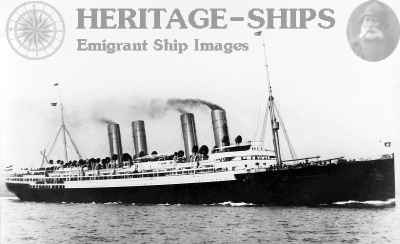
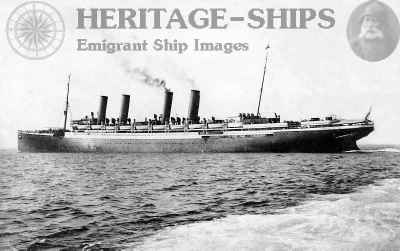
At the turn of the twentieth century, speed had become an important symbol of prestige in the fierce competition between the major North Atlantic steamship companies. The rivalry was not only between British and German lines. Germany's two leading companies, the Hamburg America Line (HAPAG) and Norddeutscher Lloyd, were also competing for the distinction of operating the fastest transatlantic steamships.
In September 1900, this rivalry resulted in a remarkable encounter between HAPAG's Deutschland and Norddeutscher Lloyd's Kaiser Wilhelm der Grosse.
A Race Across the Atlantic
The two steamships departed New York for Europe on the same Tuesday, with the Deutschland leaving about an hour and a half after her rival. Both ships were making their first eastbound voyage of the season over the northern route.
Despite her later departure, the Deutschland caught up with the Kaiser Wilhelm der Grosse and passed her around noon the following day. From then on, the HAPAG liner continued to increase her advantage.
At 2:08 on Monday morning, the Deutschland arrived at Plymouth with about 600 passengers aboard. She had completed the 2,912-nautical-mile passage from Sandy Hook in 5 days, 7 hours and 38 minutes, averaging 23.36 knots. Her best day's run was 549 nautical miles.
Reckoned at the Lizard, she had beaten the Kaiser Wilhelm der Grosse by approximately 5½ hours, despite having left New York later.
The voyage also improved the Deutschland's own previous record by 4 hours and 7 minutes. Her captain, Herr Albers, was confident that the ship was capable of an even faster crossing.
The Fastest Atlantic Liners
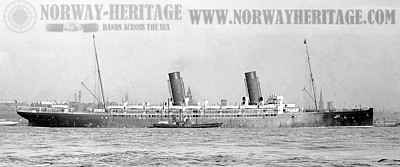
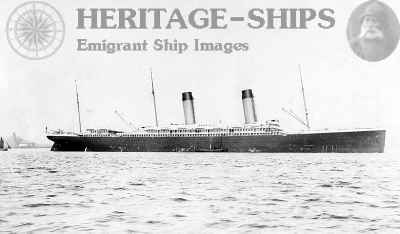
The achievement placed the Deutschland at the forefront of the North Atlantic speed competition. For comparison, the British Cunard liner Lucania had crossed the Atlantic in 5 days, 20 hours and 45 minutes in 1894.
The Kaiser Wilhelm der Grosse, meanwhile, covered the 3,076 nautical miles from Sandy Hook to Cherbourg in 5 days, 17 hours and 18 minutes, averaging 22.40 knots. Her captain and chief engineer denied that their ship had been racing the Deutschland, and her captain maintained that unfavorable conditions had prevented an even faster passage.
The record also raised questions about whether the pursuit of ever greater speed made economic sense.
British shipping interests were not universally impressed by the German achievement. The shipping journal Syren and Shipping, quoted by The Sphere, argued that operating a large liner at the speed of the Deutschland involved enormous additional expense. Higher speeds required much greater coal consumption, larger engine-room crews and more stokers, as well as increased expenditure on machinery and maintenance.
The comparison was made with the White Star liner Oceanic, which had not been designed to compete for speed records. According to the contemporary estimate, operating the Oceanic at speeds comparable to the Deutschland would have added many thousands of pounds to the cost of each Atlantic crossing.
The Deutschland's victory was therefore more than a spectacular demonstration of engineering and speed. It also illustrated a fundamental question facing the North Atlantic shipping companies at the beginning of the twentieth century: how much was the prestige of being the fastest ship on the Atlantic actually worth?
Based on a contemporary account published in The Sphere, September 15, 1900.
Leave a Comment
Comments are reviewed before they appear publicly. Fields marked with * are required.