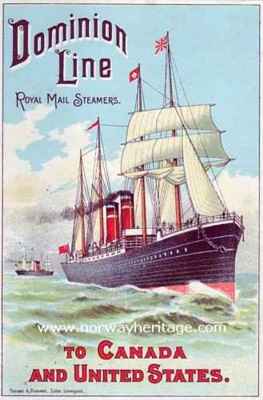
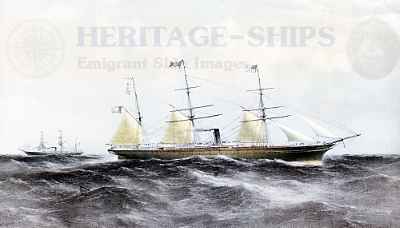
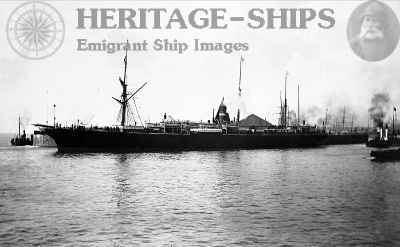
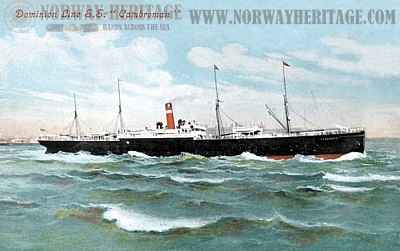
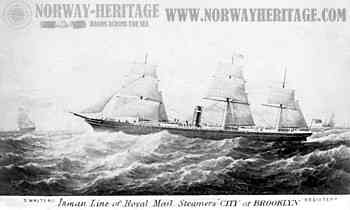
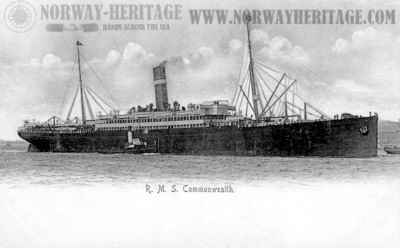
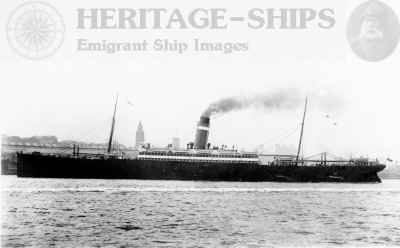
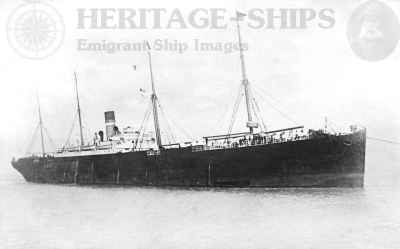
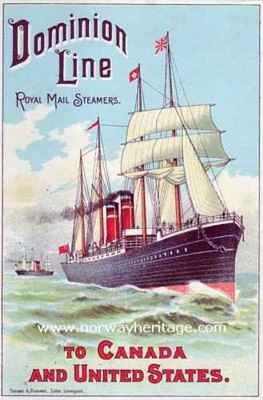
The Dominion Line was established in 1870 as the Liverpool & Mississippi Steamship Company, initially operating between Liverpool and New Orleans. The company's first steamship, the St. Louis, sailed from Liverpool for New Orleans in October 1870.
The company soon expanded into the growing Canadian trade. On May 4, 1872, the Mississippi departed Liverpool on the company's first sailing to Quebec and Montreal. The Canadian service was advertised under the name Dominion Line, and on August 29, 1872, the company was reorganized as the Mississippi & Dominion Steamship Company Limited. Within a few years, it was generally known simply as the Dominion Line.
The Canadian service developed rapidly. During the navigation season, the principal route was Liverpool–Quebec–Montreal, becoming a weekly service in 1874. When the St. Lawrence was closed by ice during the winter, the company's steamships served other North American ports, including Halifax, Portland, Boston, Philadelphia, and later Baltimore.
It was common for the major steamship companies to establish extensive networks of agents throughout Europe to advertise their services and sell tickets to prospective emigrants. Competition for passengers was intense, particularly in areas where several companies and their agents competed for the same emigrant traffic.
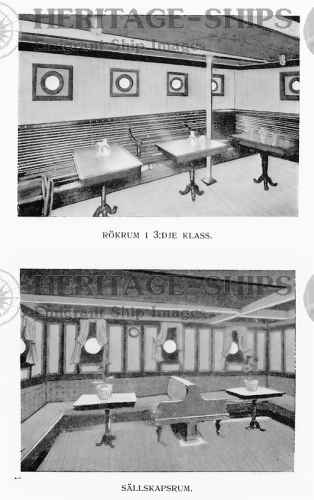
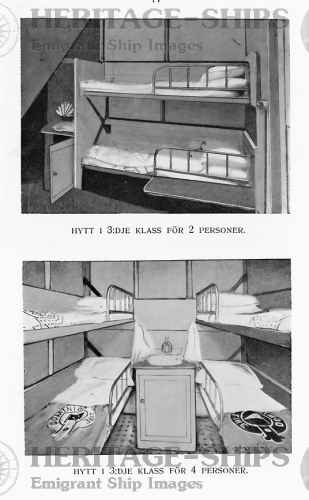
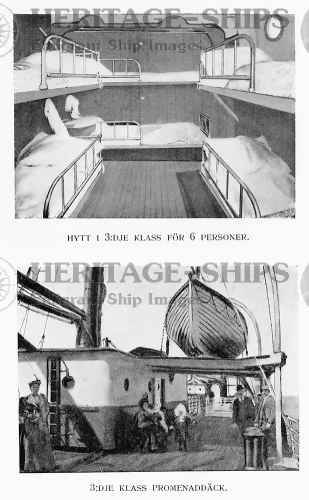
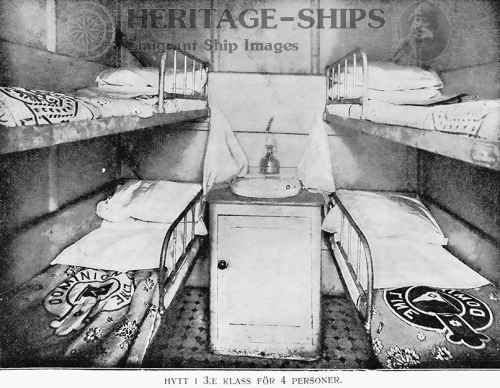
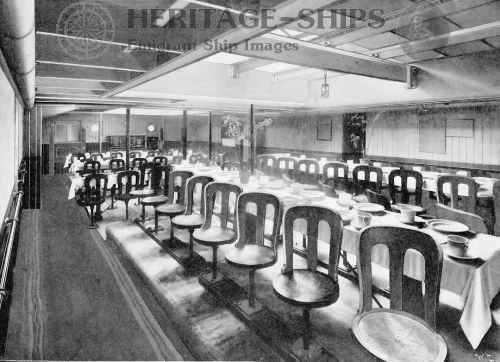
This competition encouraged the steamship lines to continually improve their services, particularly in terms of speed, comfort and accommodation. Such improvements were prominently emphasized in advertisements, in which companies regularly claimed advantages over their competitors.
Satisfied passengers were also valuable for attracting new customers. Emigrants sometimes received benefits or other incentives in return for providing letters of recommendation describing their experiences with a particular line. These testimonials could subsequently be used by agents and shipping companies to promote their services to prospective emigrants.
The Dominion Line and Norwegian Emigration
The Dominion Line established representation in Norway at an early stage of its Canadian operations. In 1873, M. R. Raffel was the company's general agent in Christiania (Oslo). He was authorized to arrange the transportation of emigrants by steamship via Hull and Liverpool to Quebec or New Orleans, with onward transportation to their final destinations in America.
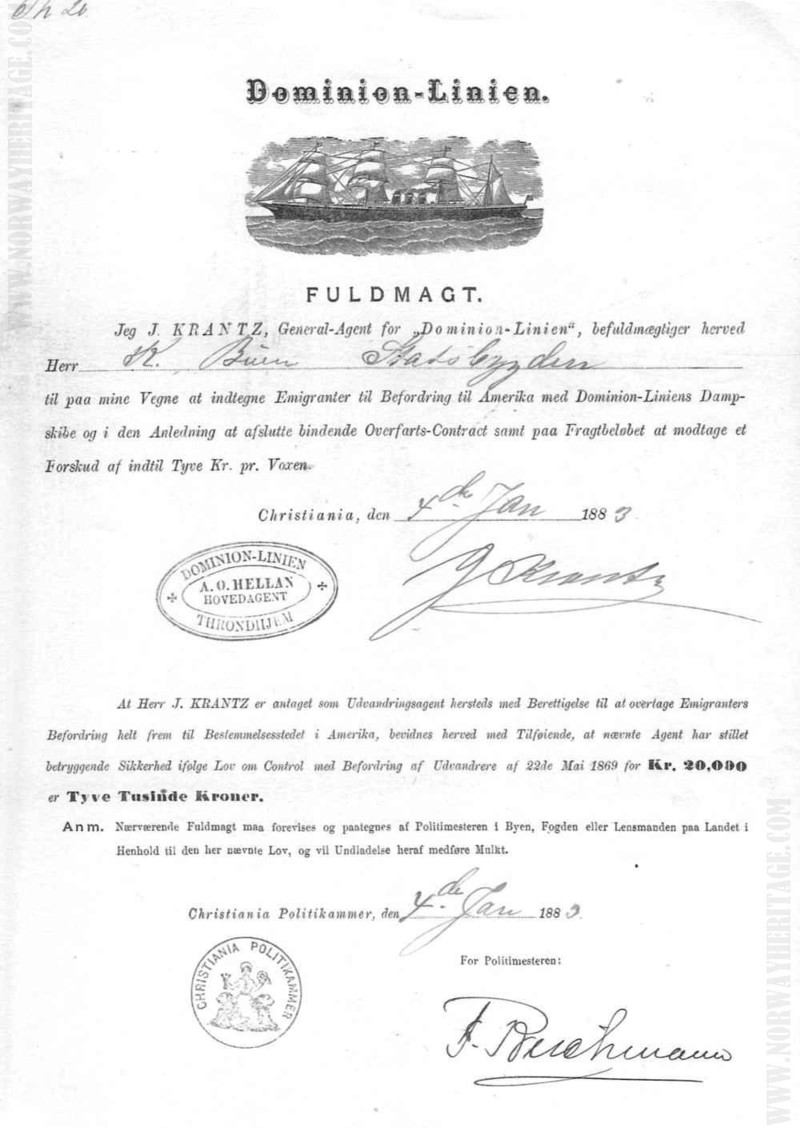
By 1880, the company was represented in Christiania by Joh. Krantz. His authorization similarly covered the transportation of emigrants via Hull and Liverpool to North America and onward to their final destinations. In Trondhjem, the Dominion Line was represented by head agent A. O. Helland from 1881.
Traveling with the Dominion Line
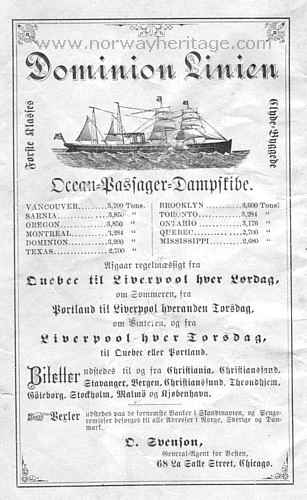
An advertisement published in a Trondhjem newspaper in 1880 provides an insight into how the Dominion Line offered transportation to Norwegian emigrants at the time. The company advertised two routes across the Atlantic. The northern route served Quebec and Montreal during the summer, while winter traffic was directed through ports including Halifax, Boston, Portland, New York and Philadelphia. A southern route provided transportation to New Orleans and Galveston, with onward travel to destinations such as San Antonio.
The Dominion Line did not operate its own feeder service from Norway. For Norwegian emigrants, the Atlantic crossing was therefore only one stage of a longer journey involving several connecting services. Passengers from Trondhjem first traveled to England by feeder steamer, commonly arriving at Hull. For a considerable period, much of the feeder traffic between Scandinavian ports and England was carried by Wilson Line steamships. From Hull, the emigrants continued by railway across England to Liverpool, where they boarded the Dominion Line steamship for the Atlantic crossing.
After arriving in North America, emigrants whose final destinations lay farther inland continued their journeys by rail. The range of destinations advertised in 1880 illustrates that the transportation sold to emigrants extended beyond the ocean passage itself. Through the company's network of agents and connecting transportation services, emigrants could arrange their journey from Norway to destinations far beyond the North American ports at which the transatlantic steamships arrived.
A Network of Agents
Dominion Line advertisement from an 1883 booklet issued by O. Svenson.
By 1883, the Dominion Line had developed a substantial network of head agents in Scandinavia:
Joh. Krantz, Jernbanetorvet No. 11, Christiania A. O. Helland, Fjordgaten No. 10, Trondhjem Caspar Dreyer, Bergen H. Hauge, Stavanger J. E. Furo, Christiansund F. A. Nielsen, Christiansand J. E. Sørenson, Sillgatan No. 41, Göteborg P. Christiansen, No. 7 Nyhavn, Copenhagen
These head agents formed part of a much wider organization of local agents and subagents through which the transatlantic companies reached prospective emigrants. They advertised departures, sold tickets, provided travel information, and arranged the different stages of the journey from Scandinavia to destinations throughout North America.
The agency network continued on the other side of the Atlantic. In Chicago, the Dominion Line was represented by O. Svenson, general agent for the Western States, with his main office at 68 La Salle Street. Svenson had previously been the general agent of the National Line in Christiania from 1867 to 1871.
The American agencies played an important role in the emigrant traffic because a considerable number of tickets were prepaid in the United States by relatives and friends who had already settled there. The sale of tickets was therefore not confined to the country of departure but formed part of an agency network extending across both sides of the Atlantic.
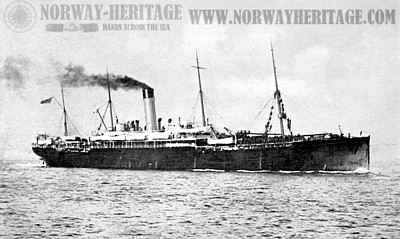
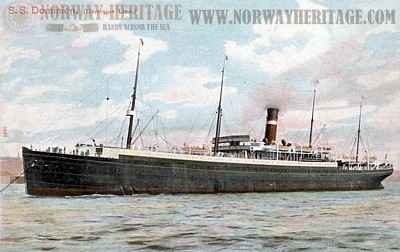
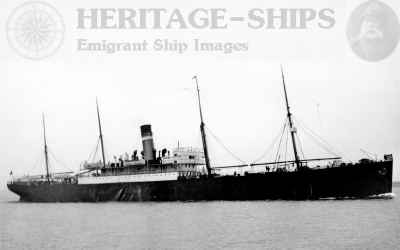
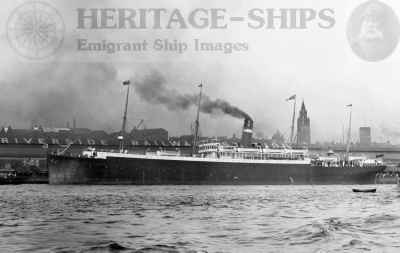
By the early 1880s, the Dominion Line was firmly established in the Canadian passenger trade. Its fleet included ships such as the Dominion, Ontario, Montreal, Toronto, Sarnia, and Oregon. The larger Vancouver, which entered service in 1884, became one of the company's most important ships of the period. In 1885, the Dominion Line also obtained a share of the Canadian mail contract.
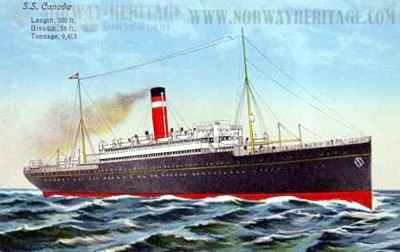
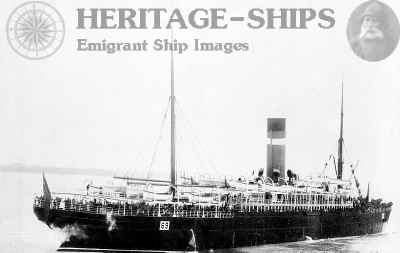
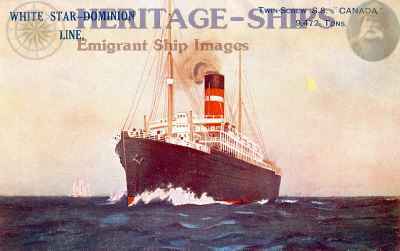
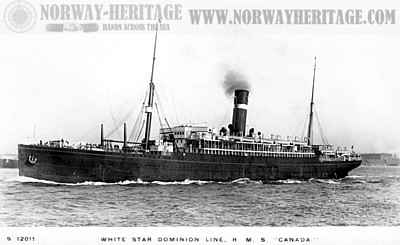
The fleet continued to develop during the 1890s. The Labrador entered service in 1891, followed by the considerably larger Canada in 1896. The latter initially sailed to Quebec and Montreal before inaugurating a successful winter service between Liverpool and Boston.
In 1894, Francis Bennett became the new general agent for the Dominion Line in Christiania (Oslo).
It was common for the transatlantic shipping companies to maintain agents in America as well as in Europe. In this case, O. Svenson, the Dominion Line's general agent in Chicago, advertised the company's services in an 1883 booklet. Such agencies made it easier for earlier emigrants to purchase prepaid tickets for relatives and friends who were to follow them from Norway.
The International Mercantile Marine Company
In 1902, the Dominion Line was acquired by the International Mercantile Marine Company (IMM), bringing it under the same control as the White Star Line and several other major North Atlantic shipping companies. The individual companies initially retained their separate identities, but ships and services were gradually reorganized within the group.
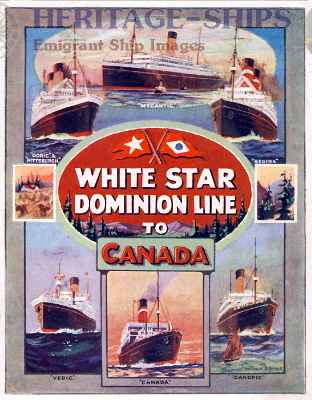
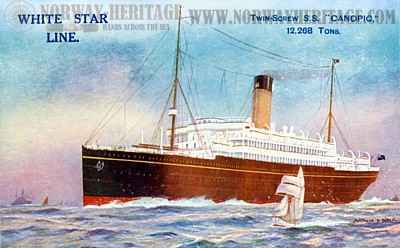
In 1909, the Canadian passenger service became known as the White Star-Dominion Line Joint Service. Two large steamships originally intended for the Dominion Line as Alberta and Albany entered service instead as the White Star liners Laurentic and Megantic. Together with the remaining Dominion Line ships, they maintained the Canadian service.
The White Star-Dominion name continued to be used after the First World War. In 1926 it was replaced by White Star Line (Canadian Services), and the Dominion Line name disappeared from the North Atlantic passenger trade.
The Loss of the Scotsman
The Dominion Line suffered several shipwrecks during its history. One of the best known was the loss of the Scotsman, which had entered the company's passenger service in 1895. She was wrecked in the Strait of Belle Isle in September 1899, with loss of life.