The White Star Line became one of the best-known shipping companies on the North Atlantic. Although remembered today particularly for the great liners Olympic and Titanic, the company had already been carrying emigrants between Europe and North America for four decades before those ships entered service.
For Norwegian emigrants, the White Star Line formed part of a much larger transportation system. Its transatlantic steamships did not sail directly from Norwegian ports. Instead, passengers travelled first by feeder steamer to Britain, continued across the country by railway, and then boarded a White Star steamer for the Atlantic crossing. Through an extensive network of Norwegian agents, emigrants could purchase a through ticket covering the different stages of the journey from Norway to their final destination in North America.
The Beginning of the White Star Line
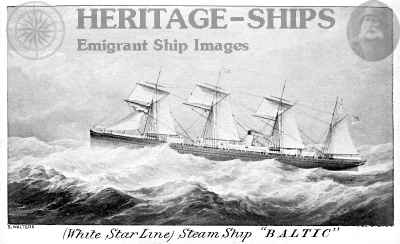
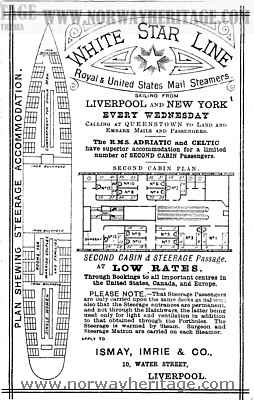
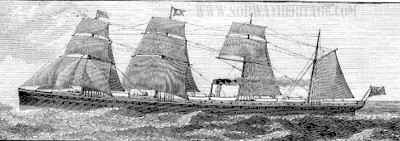
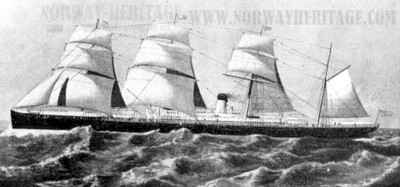
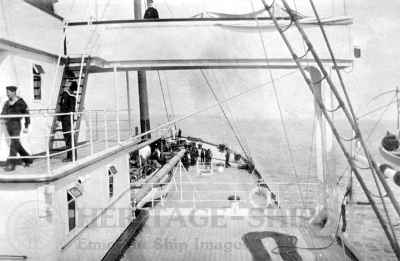
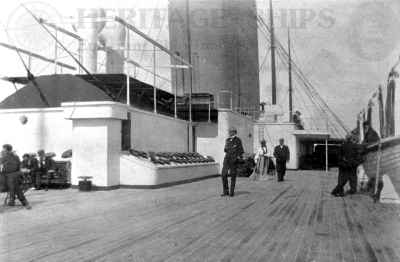
White Star Line advertising card showing second cabin plan and steerage accommodation on the early White Star Line steamers Adriatic and Celtic. — Buy a copyThe S.S. Britannic (1) — Buy a copy
The White Star name was considerably older than the steamship company with which it later became associated. Thomas H. Ismay acquired the name and house flag of the former White Star Line of sailing packets in 1868. The Oceanic Steam Navigation Company Limited was formally established on September 6, 1869, and from the beginning was generally known as the White Star Line. A close relationship was established with the Belfast shipbuilders Harland & Wolff, which would continue throughout the company's history.
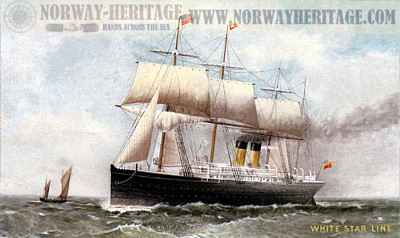
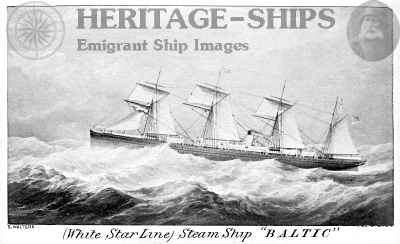
The first of the new steamships, Oceanic (1), was launched in 1870 and placed on the Liverpool–New York route in March 1871. She was followed by Atlantic, Baltic (1) and Republic (1), and later by the slightly larger Adriatic (1) and Celtic (1). establishing a regular weekly service.
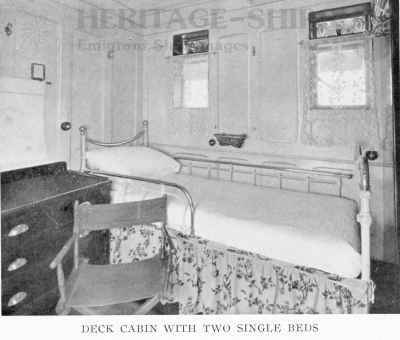
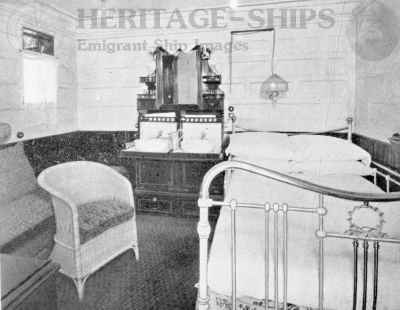
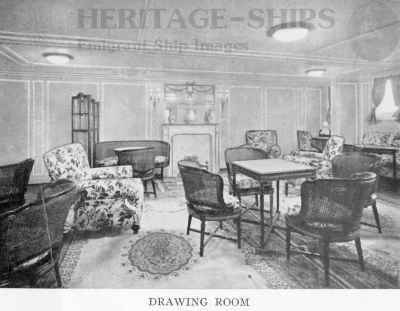
Breaking into the established North Atlantic passenger trade was initially difficult. The Oceanic carried only 64 passengers on her maiden voyage, but White Star gradually established a reputation through innovations in passenger accommodation. Traditionally, first-class accommodation had been situated toward the stern, but White Star placed the principal first-class rooms amidships, where there was less vibration from the propeller. Cabins were enlarged, portholes increased in size, and passenger spaces were designed to provide improved light and ventilation.
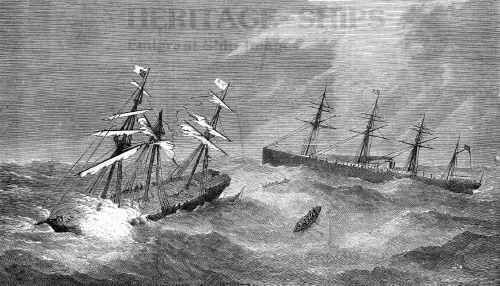
The company soon became popular and a great numbers of emigrants crossed the Atlantic ocean on White Star Line ships in the decades after the line was established. Unfortunately, they were not without mishaps, and in 1873 the S.S. Atlantic was wrecked near Halifax with the loss of 545 lives.
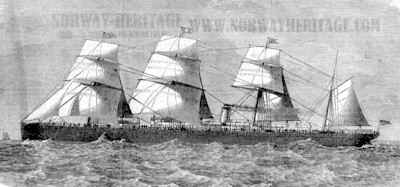
The Britannic (1) and Germanic, entering service in 1874 and 1875, represented the next stage in the development of the fleet. The Britannic could accommodate about 200 first-class and 1,500 steerage passengers, demonstrating the importance of emigrant traffic to the company's North Atlantic business.
Wihite Star Line in Norway
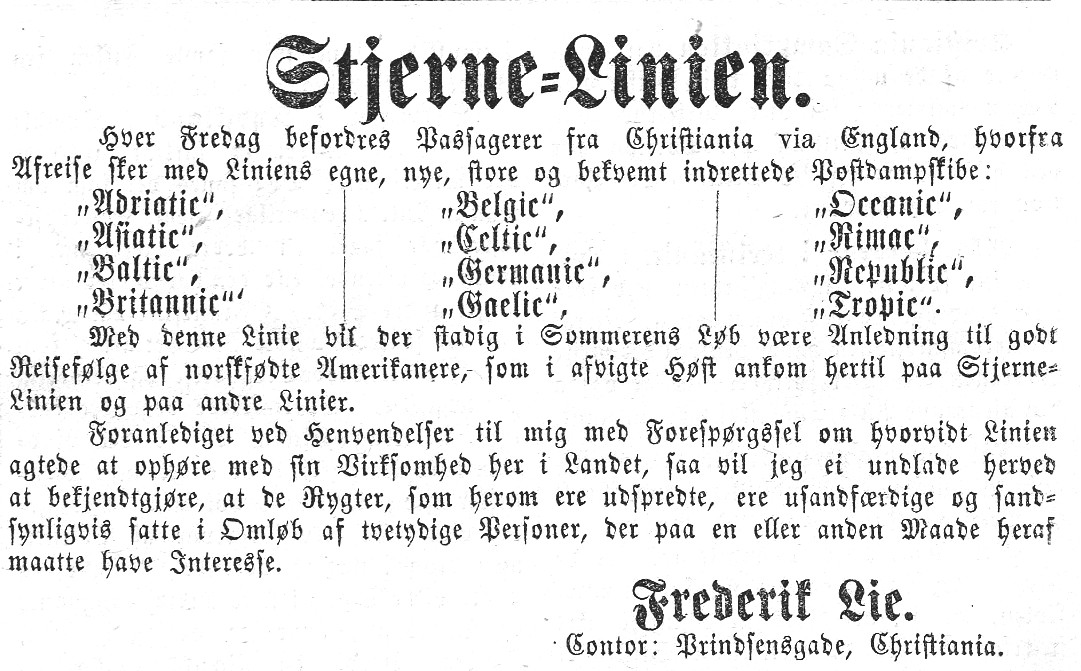
Norwegian advertisement for the White Star Line in the Norwegian newspaper VG, April 1873
White Star established representation in Norway almost immediately after beginning its transatlantic service. In 1871, Frederik Lie became the first general agent authorized to convey emigrants from Norway via Hull and Liverpool to New York and onward to their destinations in North America.
In Norway, the company was widely known as Hvide Stjerne Linien or simply Stjerne Linien. Like the other major emigrant lines, White Star developed a network of representatives throughout the country. The general agent in Christiania (Kristiania), present-day Oslo, represented the company nationally. From 1881 until 1910 this position was held by Ferdinand J. Elster.
Head agents operated in important cities and regional centers. The first White Star head agent in Trondheim was H. Hansen, appointed in 1872. Below them was a network of local sub-agents who advertised the line, provided information about fares and departures, and enrolled prospective emigrants. A passenger could secure passage by paying an advance, after which the necessary arrangements were made through the head agent and general agency. This organization enabled White Star to sell transatlantic transportation throughout Norway even though none of its ocean steamers sailed from Norwegian ports.
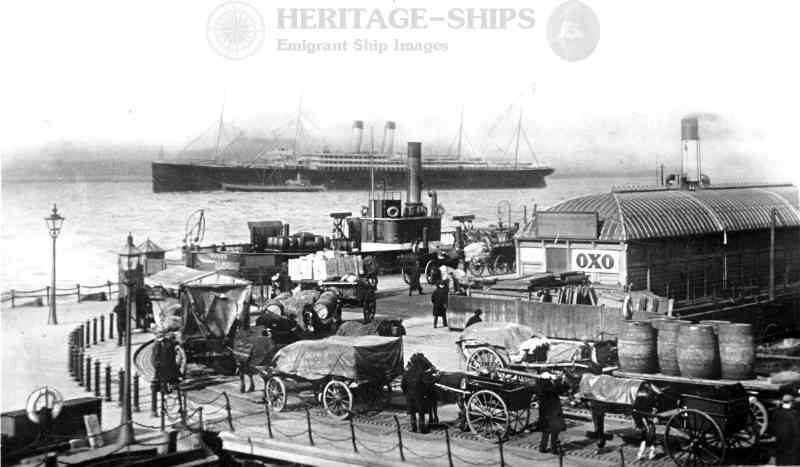
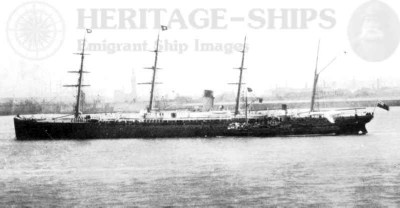
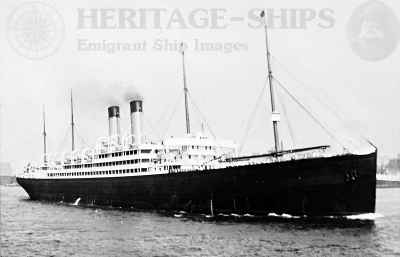
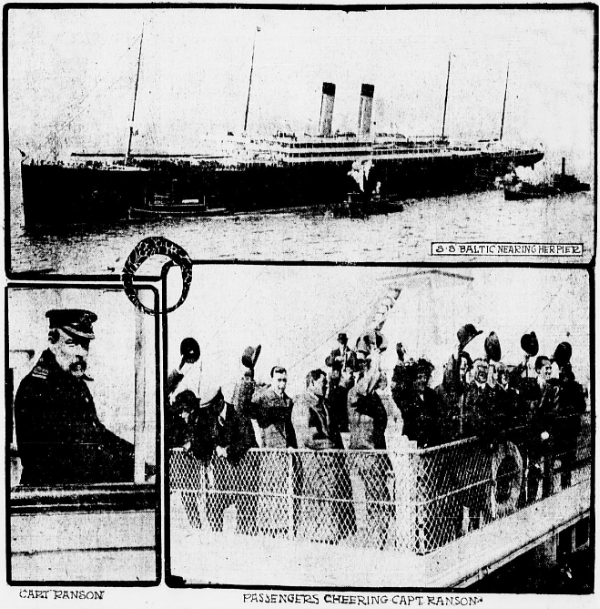
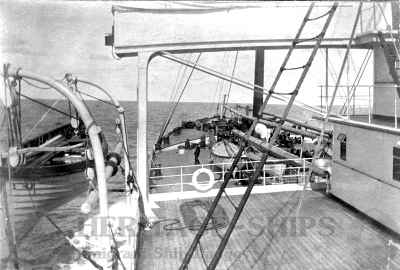
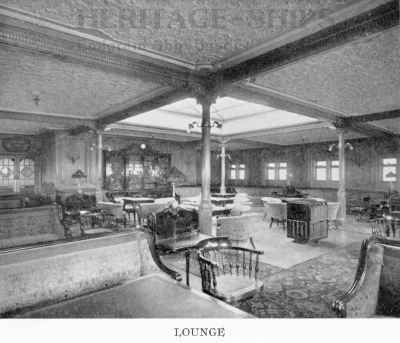
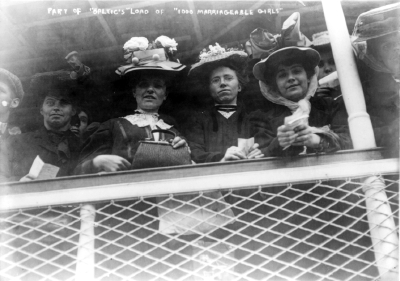
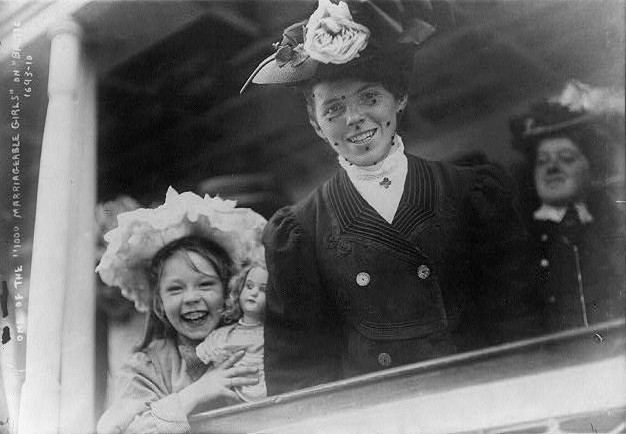
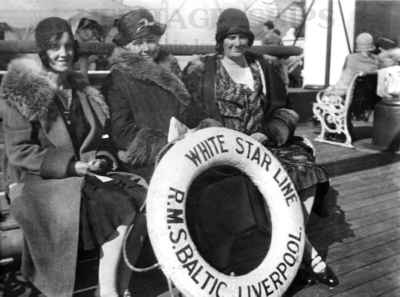
Baltic (2) at Liverpool
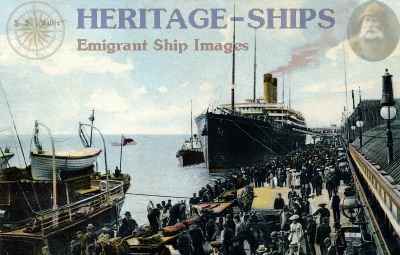
For most Norwegian White Star passengers during the nineteenth century, the journey to America consisted of several distinct stages coordinated under a single through ticket The first stage was normally made aboard a feeder steamer. British companies, particularly the Wilson Line of Hull, maintained regular services between Britain and Norwegian ports such as Kristiania (Oslo), Kristiansand, Stavanger, Bergen, Ålesund, Kristiansund and Trondheim. An advertisement issued by Frederik Lie in 1879 announced departures from Kristiania every Friday via England.
After arriving at Hull, the emigrants continued by railway across England to Liverpool, where they often had to spend one or more nights at one of the lodging houses selected by the line. They then boarded the White Star steamship for the Atlantic crossing to New York, normally calling at Queenstown, present-day Cobh, in Ireland.
Emigrants were met by the line's agents in Hull, Liverpool, and New York, where they received assistance with their baggage and arrangements for onward transportation. The Norwegian agents advertised that Norwegian-speaking interpreters were available aboard the ships throughout the journey as well as at the ports.
After reaching New York, passengers holding through tickets could continue toward their final destinations by rail. White Star advertising also offered through bookings to important destinations in the United States and Canada. The through-ticket system was particularly important for emigrants unfamiliar with the ports, railway systems and languages encountered during the journey. Instead of arranging each section independently, the passenger could purchase the different stages as one organized journey through the company's agency network.
Passenger Accommodation and a New Approach to Atlantic Travel
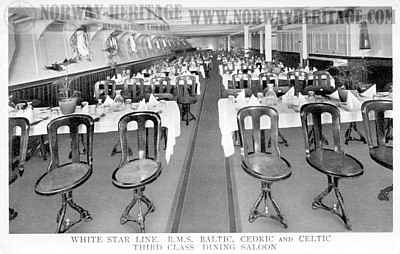
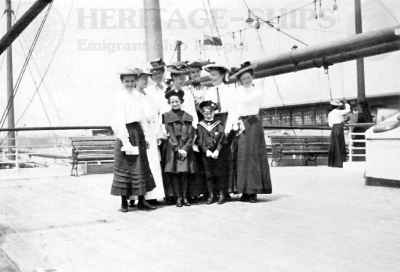
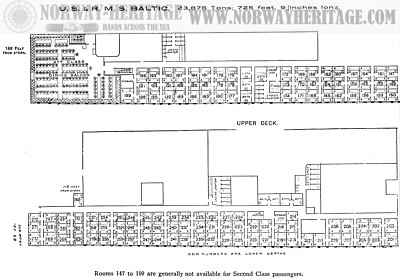
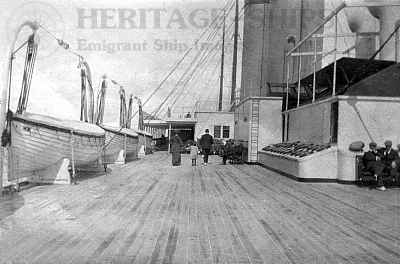
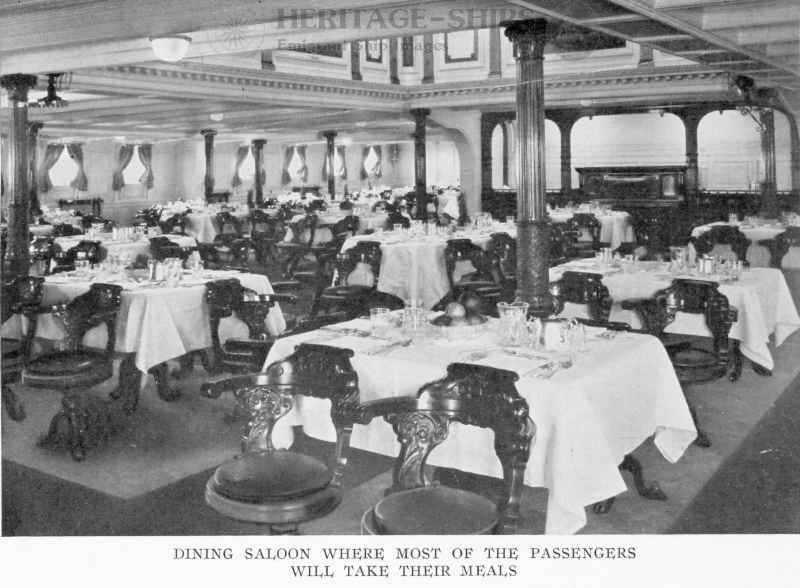
Baltic, Celtic and Cedric 3rd class dining saloon — Buy a copyPassengers on the Celtic (2) — Buy a copy
White Star placed considerable emphasis on passenger accommodation from the beginning. This extended beyond the cabin classes to the large numbers of emigrants travelling in steerage. An advertisement issued by Ismay, Imrie & Co. around 1876 specifically emphasized that steerage passengers were accommodated on the same decks as saloon passengers. Permanent entrances were provided rather than access through the cargo hatchways, while portholes and hatchways provided light and ventilation. The steerage accommodation was heated by steam, and each steamer carried a surgeon and a steerage matron.
These were promotional claims intended to distinguish White Star from its competitors, but they provide useful contemporary evidence of the features the company considered important when marketing its service to emigrants. By the beginning of the twentieth century, Norwegian advertising increasingly emphasized smaller rooms and accommodation suitable for families. An advertisement issued by general agent Ferdinand Elster around 1905 described the steerage as arranged with rooms for two, four, six or more passengers, with family accommodation particularly emphasized. The terminology was also gradually changing. The traditional designation steerage increasingly gave way to third class, reflecting a broader development toward treating emigrants as a distinct class of passengers rather than simply accommodating them in large open between-deck spaces.
One interesting example of this development was the Cymric. Originally designed partly for the cattle trade, she entered service in 1898. As opposition grew to carrying passengers and livestock together, space intended for cattle was instead converted into emigrant steerage accommodation.
At the same time, White Star's broader approach to transatlantic travel was changing. During the 1870s and 1880s, speed had been an important part of competition between the major Atlantic companies. Ships such as Adriatic, Britannic, Germanic and later Teutonic competed among the fastest vessels on the North Atlantic.
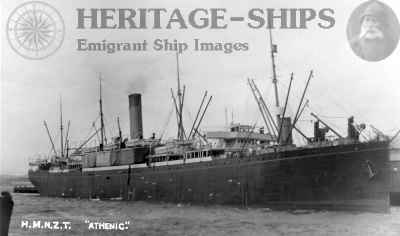
With the Oceanic of 1899, however, White Star increasingly emphasized size, steadiness, reliability and passenger comfort rather than record-breaking speed. Oceanic maintained a service speed of about 19 knots, and this philosophy was developed further with the Celtic, Cedric, Baltic and Adriatic, often referred to as the "Big Four." These large ships combined extensive passenger accommodation and cargo capacity with relatively moderate speeds. For emigrants as well as cabin passengers, the change was significant. The Atlantic crossing was increasingly marketed not simply in terms of how quickly the passenger could reach America, but also in terms of accommodation, space, stability and comfort during the voyage.
Corporate Expansion, the Great Liners, and Merger
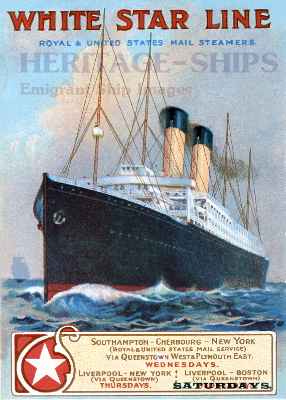
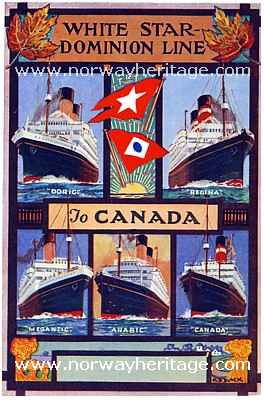
White Star - Dominion Line Canadian service — Buy a copy
In 1902, the shares of the Oceanic Steam Navigation Company were acquired by the International Mercantile Marine Company, the large American shipping combination organized by J. P. Morgan interests. The group also included the American Line, Atlantic Transport Line, Dominion Line, Leyland Line and Red Star Line.
The individual line names continued to be used, but the companies increasingly operated within the same shipping organization. This resulted in joint services and the transfer of ships and routes between associated companies. White Star also participated with the Dominion Line in Canadian services operated as the White Star-Dominion Line Joint Service.
In 1907 White Star established an express service between Southampton, Cherbourg and New York. The Adriatic made the first sailing in June, accompanied on the new service by Oceanic, Teutonic and Majestic.
This development eventually led to the construction of the enormous Olympic-class liners. The Olympic entered service in June 1911 and embodied White Star's established strategy of combining great size and elaborate passenger accommodation with moderate rather than record-breaking speed. Her sister ship Titanic departed Southampton on her maiden voyage on April 10, 1912 and sank after striking an iceberg four days later. The disaster came to dominate the popular memory of White Star, but it represented only one chapter in a passenger service that had already operated for more than forty years.
The First World War severely disrupted the company's services, and several ships were lost. After the war, Olympic returned to the Southampton service, joined by the former German liners Majestic and Homeric. White Star also continued to participate in emigrant traffic, including services from continental Europe to Canada during the 1920s.
Economic difficulties increasingly affected the company during the late 1920s and early 1930s. In 1934 White Star and its long-time rival Cunard were brought together, with British government support, as Cunard-White Star Limited.
Finding Norwegian Passengers in Historical Records
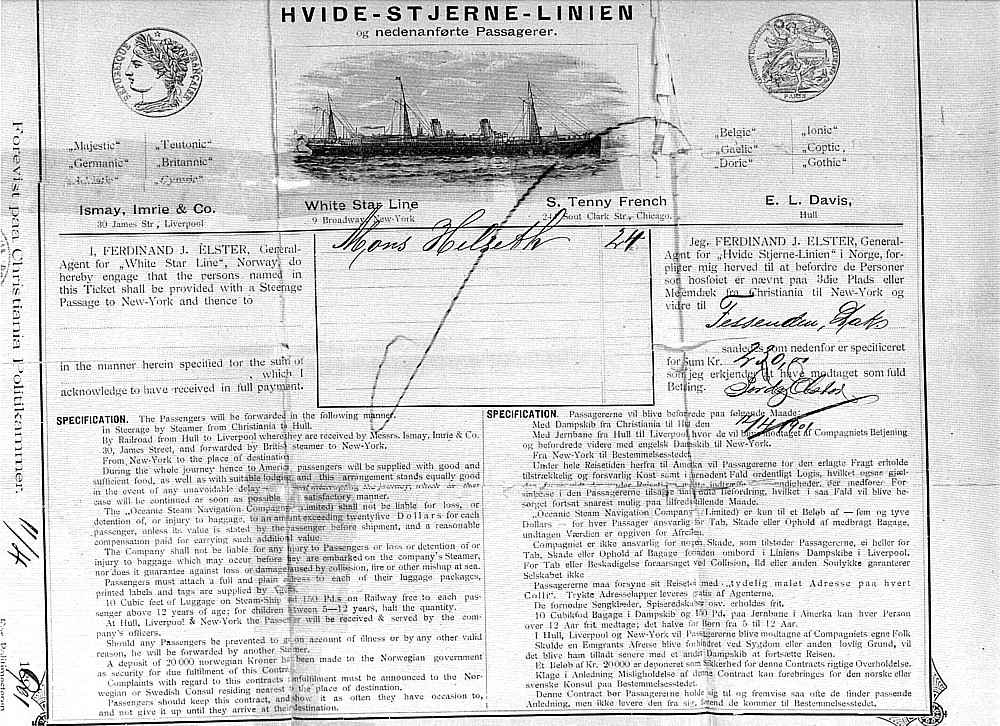
White Star Line passenger contractCredit: Jodi Helseth
The Norwegian records created in connection with emigration are particularly valuable for reconstructing individual journeys, but they can also cause confusion when trying to identify the ship on which an emigrant crossed the Atlantic.
Under the Norwegian Passenger Act of 1869, authorized emigrant agents were required to enter into written contracts with their passengers, and financial security had to be deposited to guarantee fulfillment of the agreements. The contracts were subject to police supervision, and departing emigrants were registered by the authorities. These records, commonly known as the Police Lists or Emigration Protocols, generally include the emigrant's name, age, place of origin or residence, destination and the agent or shipping line with which the passenger had contracted. For the White Star passengers, however, the ship named in a Norwegian record should not automatically be interpreted as the vessel that carried the emigrant across the Atlantic.
A passenger might be registered as travelling with Hvide Stjerne while the ship listed was a Wilson Line steamer. This was entirely consistent with the journey described above: the Wilson vessel carried the passenger from Norway to Britain, while the White Star liner was boarded later at Liverpool. Consequently, the Norwegian Police Lists often identify the feeder voyage but not the transatlantic steamship.
Fortunately, additional White Star agency records have survived. Records from general agent Ferdinand J. Elster include Christiania passenger lists covering the years 1883–1923. These are particularly valuable because they can give both the feeder ship from Norway and the transatlantic steamer, together with additional information concerning the fare. Similar passenger material survives for Trondheim for the years 1911–1924. When these sources can be combined, it may therefore be possible to reconstruct the different stages of an emigrant's journey: the ship that left Norway, the journey through Britain, the White Star liner that crossed the Atlantic, and the passenger's final destination in North America.
Recommended reading:
The S/S Atlantic of the White Star Line, disaster in 1873 by Trond Austheim & Børge Solem - about the disaster and the Norwegian and Scandinavian passengers on the ship when it went down off Halifax in 1873. Recovering the dead, the cargo and valuables from the wreck of the S/S Atlantic - (Frank Leslie's Illustrated Newspaper Apr. 1873 - Transcribed by Børge Solem Aug. 2005) - The story and illustrations showing various incidents and phases of the operations of recovering the the dead, the cargo and valuables from the wreck of the S/S Atlantic conducted off Marr's Island in 1873. The White Star Liner Baltic Completes Maiden Voyage in 1904 - (NEW YORK TIMES Saturday July 9, 1904 - Transcribed by Jo Anne Sadler 2005), "Greatest Ship Built Comes to Port at New York - White Star Liner Baltic Completes Maiden Voyage - STEAMSHIP 726 FEET LONG - Made Trip from Liverpool in 7 Days 13 Hours and 37 Minutes-Brought 906 Passengers" Norwegian passengers on the S/S Titanic (by Per Kristian Sebak 2003) - When the legendary Titanic set sail from Queenstown, Ireland, her last port of call, on 11 April 1912, there were 31 passengers of Norwegian origin on board. This article tells the story of how the 31 traveled to the Titanic, and is mainly based on Chapter 3 in the book, "TITANIC - 31 Norwegian Destinies", which gives a comprehensive account of all 31 Norwegians on the ill-fated liner.