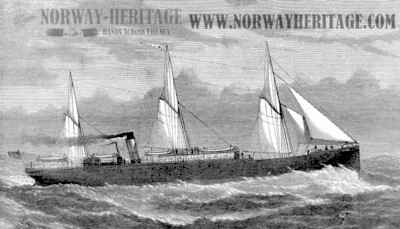
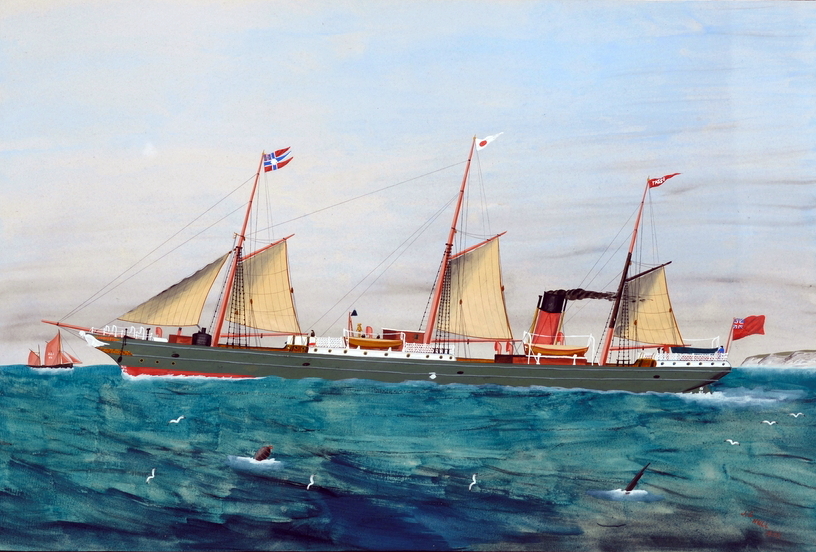
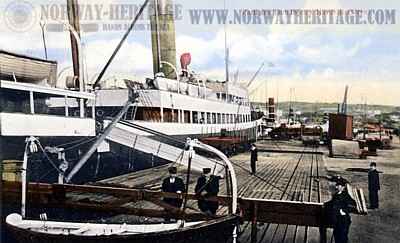
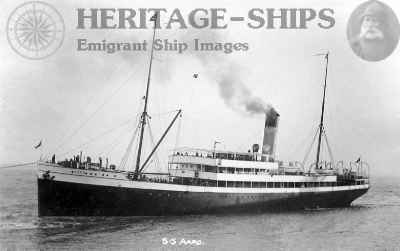
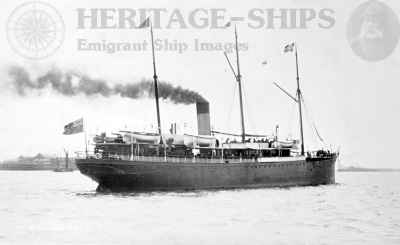
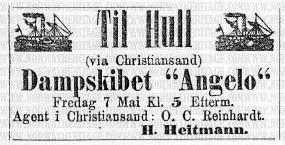
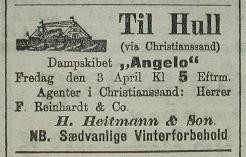
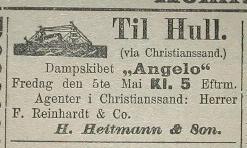
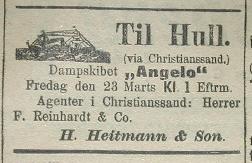
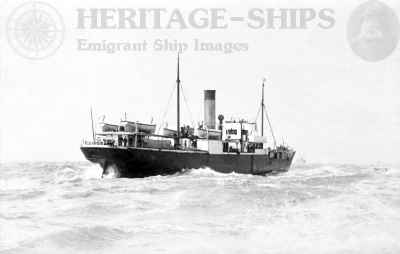
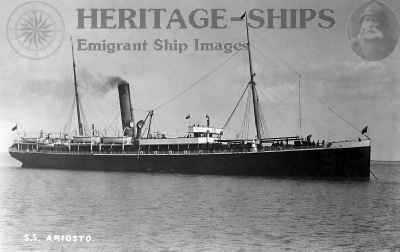
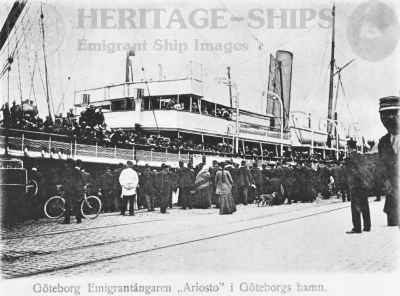
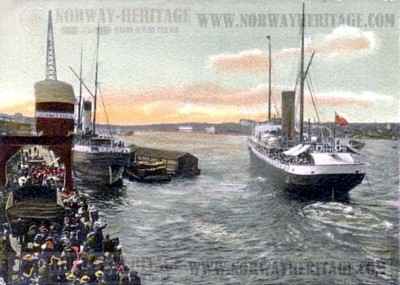
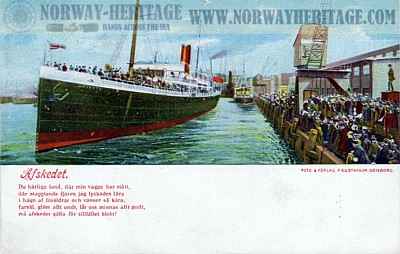
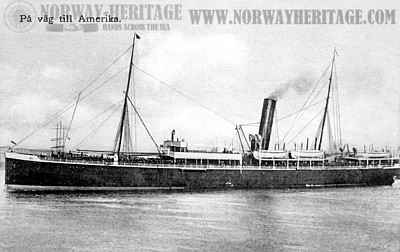
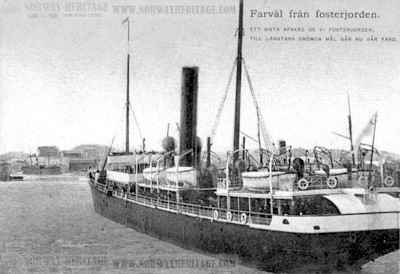
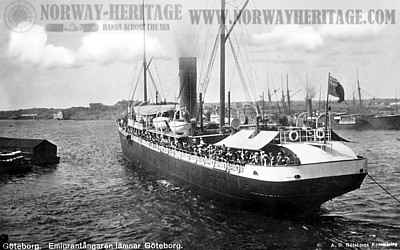
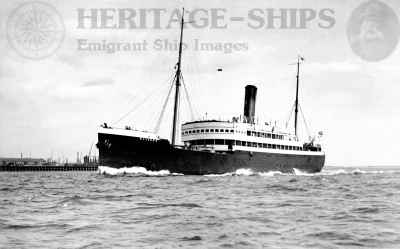
The S.S. Angelo — Buy a copyCredit: Trond Austheim
The Thomas Wilson Sons & Co. (the Wilson Line) of Hull played a vital role in Scandinavian emigration. Originally established as a sailing-ship enterprise in the early nineteenth century, the firm gradually built an extensive steamship network connecting Hull with Northern Europe and the Baltic well before the decades of mass emigration.
By the turn of the century, the Wilson Line operated one of Britain’s largest shipping fleets. Although the company established a Hull–New York route in 1875 and later ran transatlantic services from London, these ocean crossings played a minor role for Scandinavian emigrants. Instead, Wilson’s primary importance lay in providing the crucial North Sea link between Scandinavian ports and Britain's transatlantic transportation network.
When emigrant numbers surged, Wilson’s established routes seamlessly integrated into a broader network connecting local agents, British railways, Atlantic steamship companies, and North American rail systems. For tens of thousands of Scandinavians, a Wilson steamer provided the first leg of their journey. After landing in Hull, passengers traveled by rail to major Atlantic ports like Liverpool or Glasgow, where they boarded transatlantic liners operated by companies such as the Allan, Cunard, White Star, Guion, National, and State lines.
The Scandinavian Routes
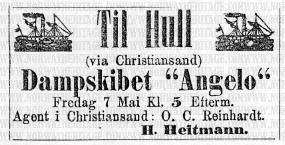
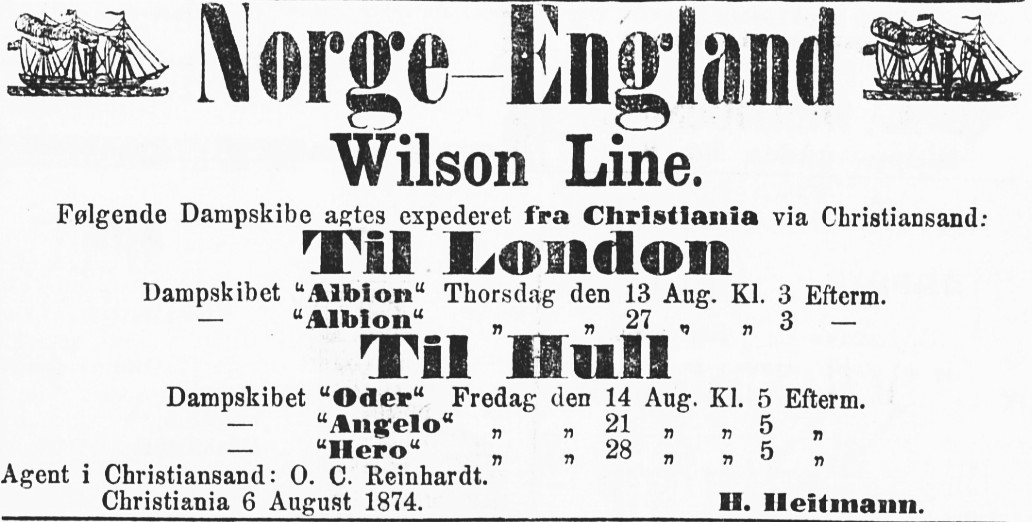
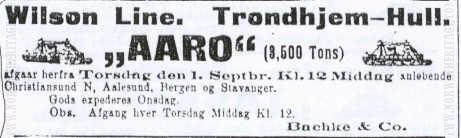
Announcement from the Norwegian newspaper Morgenbladet, 7th august 1874
Regular steamship communication between Hull and Scandinavia had begun by 1840, and from 1852 Wilson operated a regular service connecting Hull, Christiania (present-day Oslo), and Gothenburg.
Competition for the traffic between Norway and foreign ports was initially intense. A major breakthrough came in 1867, when Wilson reached an agreement with the competing Norwegian company Det Søndenfjeldske Dampskibsselskab. Under the arrangement, the Norwegian company retained its Christiania–Hamburg service, while Wilson was left to operate the Christiania–Hull route without competition from that company. A contemporary Norwegian newspaper described the agreement as a truce and claimed that Wilson had already gained what amounted to a monopoly on the route. Following this agreement, Wilson also entered into contracts with the major transatlantic shipping lines, becoming their exclusive carrier of Scandinavian emigrants from Norwegian ports to Hull for several decades.
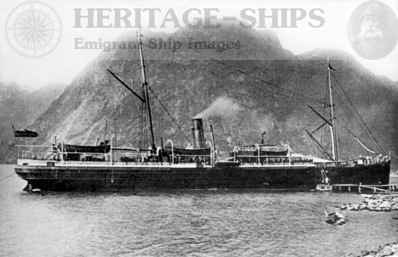
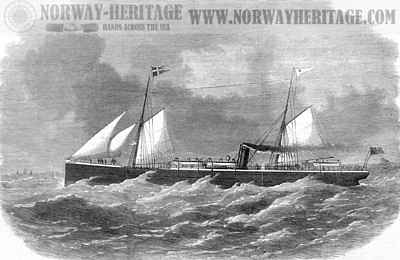
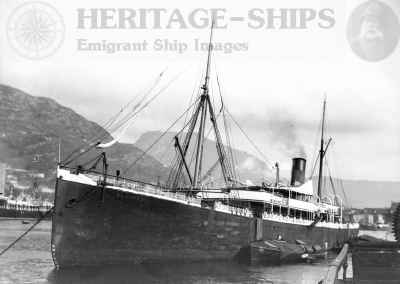
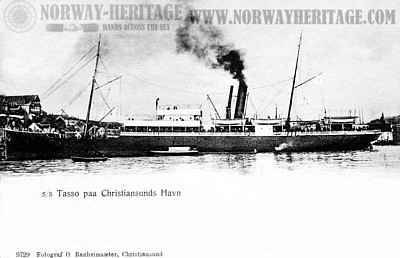
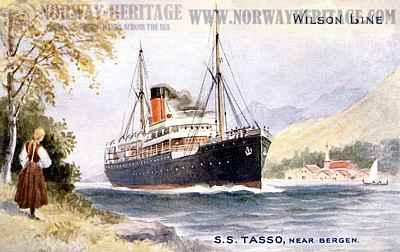
S.S. Hero — Buy a copyThe S.S. Tasso (1)Credit: The Maritime Museum in Trondheim
These agreements strengthened Wilson's position at a time when Scandinavian emigration was expanding rapidly. The company already possessed established routes and the operational infrastructure needed to handle the growing traffic. Its regular Norwegian services were progressively extended: a Christiania–Christiansand–Hull service is documented from 1867, while regular connections between Trondhjem and Hull appear in the late 1860s. The northern services subsequently followed different routes along the Norwegian coast, with calls at ports including Christiansund and Aalesund. Bergen and Stavanger became regular ports of call on the Hull services during the 1870s.
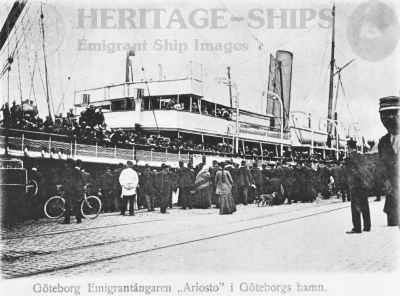
Larger steamships were introduced as traffic increased. The Argo entered service in 1867, followed by the Orlando and Rollobuilt in 1869–70, at approximately 1,500 gross tons each and capable of accommodating 800 to 900 passengers. Larger vessels followed, including the Romeo in 1881 and the Ariosto in 1890. These were combined passenger and cargo steamers, carrying substantial quantities of general goods in both directions. Contemporary records reveal a remarkably varied trade, ranging from bulk commodities to manufactured goods. Norwegian exports included large quantities of fish, among them dried fish and salmon, which were carried on the same vessels as the passengers.
While Hull remained the principal gateway for emigrants, Wilson also operated regular services between Christiania and London from 1870. The London service carried general cargo and regular passengers and later also became part of Wilson's growing British tourist traffic to Norway.
For many years, Wilson held a dominant position in the regular passenger and cargo traffic between Norway and Britain. This position was increasingly challenged from 1890, when a regular Norwegian service between western Norway and Newcastle was established. Generally known as the England Route, it was a government-subsidized mail, passenger and cargo service, initially operated jointly by Det Bergenske Dampskibsselskab, Det Nordenfjeldske Dampskibsselskab, and the shipowner P. G. Halvorsen. The new service provided Wilson with serious competition for traffic between Norway and Britain.
The Feeder System: Connecting Norway to the Atlantic Ports
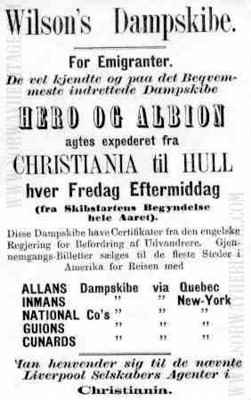
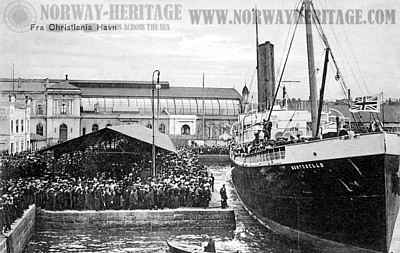
Advertisement for the Wilson Line: "The Hero and Albion to be expedited from Christiania to Hull every Friday PM (from the start of the season all year)"The S.S. Montebello departing Kristiania — Buy a copy
The Wilson Line occupied an unusual position in the transatlantic emigrant market, as it served as an important feeder carrier for passengers booked with several competing North Atlantic lines. For the Norwegian emigrant, the passage to America involved a carefully coordinated multi-stage journey. It began at a local Norwegian port aboard one of the Wilson Line's feeder steamers, which carried passengers across the North Sea to Hull (or London). Upon arrival in England, emigrants transferred to the railway and travelled across the British mainland to the major departure ports of Liverpool or Glasgow. Only there did they board the ocean liners that would take them across the Atlantic to North America, before completing the final leg to their destination by rail or riverboat in the New World.
A contemporary advertisement for the Wilson steamers Hero and Albion illustrates this arrangement particularly well. The vessels were advertised as sailing from Christiania to Hull every Friday afternoon. Prospective emigrants were informed that tickets could be purchased for onward travel with several major Atlantic companies, including the Allan Line via Quebec and the Inman, National, Guion, American and Cunard lines via New York, Boston or Philadelphia.
Passengers purchased their through tickets from the Norwegian agents representing the respective Atlantic companies. Wilson could therefore carry emigrants booked with competing lines aboard the same North Sea steamer. Once in Britain, the passengers continued according to the route and company specified in their contracts. This arrangement also explains why Wilson steamships appear so frequently in Norwegian emigrant records. The ship recorded when the emigrant departed Norway might be a Wilson steamer, while the Atlantic crossing was later made aboard an Allan, Cunard, Inman, White Star, or another company's vessel.
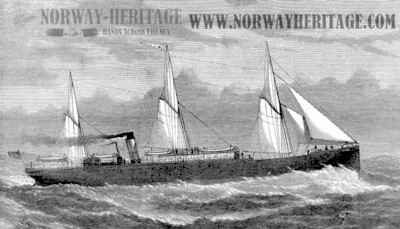
The voyage to Hull, including calls at intermediate Norwegian ports, normally took about three days from Christiania and about four days from Trondheim. Conditions experienced by emigrants aboard Wilson's steamships are unusually well documented because British authorities investigated the Scandinavian emigrant traffic through Hull during 1881 and 1882. In September 1881, a British Board of Trade official travelled from Christiania to Hull aboard the Angelo specifically to inspect the accommodation and treatment of emigrants travelling to America.
Conditions aboard were relatively basic compared with the large transatlantic liners. Emigrants travelled in designated passenger compartments with sleeping berths arranged for the voyage. Agents representing the different Atlantic companies attended to their respective passenger groups before departure, and arrangements were made to keep families together where possible.
The official reports provide a mixed picture of conditions aboard. Food was regarded favourably and described as plentiful and well prepared, with sufficient fresh water available. Other aspects, particularly sanitary arrangements, attracted criticism, while improvements to sleeping berths and ventilation were among the matters receiving attention from the authorities.
Passenger numbers could be substantial during the height of the emigration season. On one day in July 1882, the Romeo from Gothenburg brought 550 adults to Hull, the Angelo from Christiania 170, the Hero from Trondheim 102, the Bravo from Copenhagen 102, and the Domino from Bergen 68. Together with passengers arriving aboard other vessels, more than a thousand emigrants reached Hull that day.
A contemporary account by an emigrant travelling from Christiania provides a detailed description of the first stage of the journey to America aboard the Wilson Line steamship Hero.
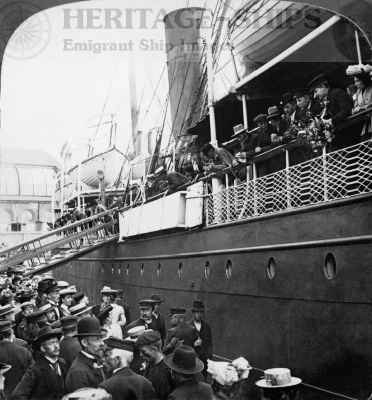
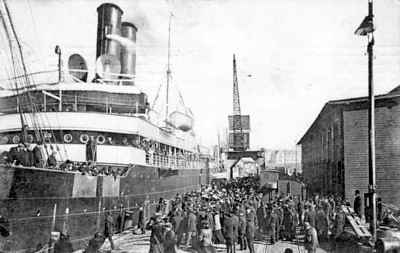
The Hero departed from Christiania on May 3. The pier was crowded with emigrants, relatives and other people who had gathered for the departure. Shortly after the passengers had boarded, the steamer left Christiania and proceeded down the fjord. As the ship passed Akershus Fortress, a salute was fired in honor of the King's birthday. The emigrants interpreted it as a favorable farewell and responded with cheers and the waving of hats and handkerchiefs.
More than 350 passengers were said to be aboard. Many remained below in the between-decks accommodation, where passengers of all ages had taken possession of their berths and arranged their boxes, food containers and other belongings around them. The narrator described the scene as crowded and noisy, with families trying to keep their places and look after both children and luggage. There were not enough berths for everyone, and those who had been unable to secure one spent the night sleeping on the floor of the deck.
The first evening meal consisted of tea and two substantial slices of bread and butter, with additional food available from the steward for those who wanted more. The weather remained fine while the Hero steamed down the Christiania Fjord, and many of the male passengers spent the evening on deck.
The passengers aboard represented several different transatlantic steamship lines. The exception, according to the narrator, was the Anchor Line, whose passengers travelled by another route via Leith. Passengers booked with the same Atlantic company naturally began to form groups during the voyage. The narrator himself was travelling with the Inman Line.
The following morning brought fog and heavy rain. When the Hero reached Christiansand later that morning, additional passengers came aboard. Some passengers also left the ship there to join a vessel of the Baltic Lloyd sailing directly for America. At noon the Hero departed Christiansand and entered the open North Sea.
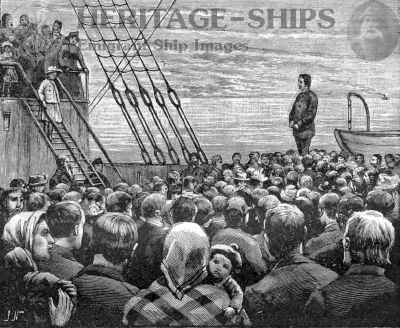
Sunday Service for the steerage passengers on a Wilson Line steamer — Buy a copy
As the Norwegian coast disappeared from view, conditions at sea began to deteriorate. The rain eventually stopped, but increasing wind produced a heavier sea and many of the emigrants became seasick. Those who remained on deck generally suffered less than those who stayed below, where the crowded conditions and poor air made the effects of seasickness considerably worse. Much of the food provided during the crossing went uneaten.
After several days at sea, the Hero arrived at Hull around noon on Monday. About an hour later, a tender came alongside to take the passengers and their baggage ashore. Before leaving the ship, the emigrants gave three cheers for steward Anton Abrahamsen and thanked him for his care during the North Sea passage.
At Hull, the passengers were met by an interpreter who accompanied the Inman Line passengers to the company's emigrant lodging house close to the docks. There they were served a substantial meal of hot meat soup, meat, bread and potatoes.
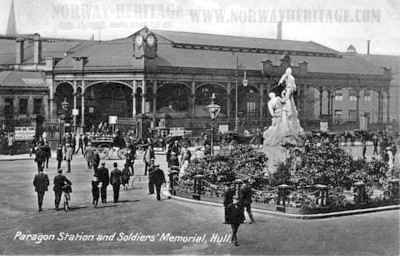
At about seven in the evening, the passengers went to the railway station. Their baggage had already been transported there separately. At eight they departed Hull by express train for Liverpool. The railway carriages included first-, second- and third-class compartments, and the narrator found himself in a first-class carriage, where he slept throughout most of the night.
The journey across England took place almost entirely in darkness, so the emigrants saw little of the countryside through which they passed. After travelling through a succession of towns and industrial districts, they reached Liverpool at about four o'clock the following morning. He later boarded the S.S. City of Brussels for the transatlantic crossing.
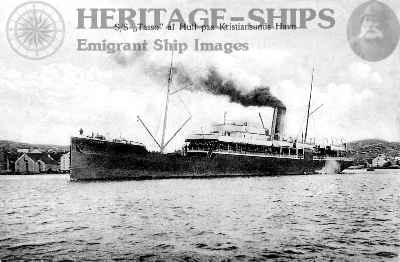
Ingeborg Olsdatter Øye left Kristiansund aboard the Wilson Line steamship Tasso on April 30, 1880, on the first stage of her journey to America. Her diary provides a personal account of conditions aboard one of the steamers carrying Norwegian emigrants across the North Sea to Hull.
The Tasso, which had arrived from Trondhjem, departed Kristiansund at about five in the morning with around 400 emigrants aboard. The weather was already stormy, and many passengers soon became seasick as the ship continued south along the Norwegian coast and out into the North Sea.
Ingeborg found the ship extremely crowded, particularly the sleeping accommodation. The designated sleeping quarters were so full that she and four other passengers spent one night sleeping on deck under blankets. On the following night she found a place below, but described the room as overcrowded with men, women and children. Despite these conditions, her overall assessment of the Tasso was more favorable than she had expected. She thought the food was generally good, although she strongly disliked the black coffee served at breakfast. Breakfast consisted of coffee, bread and a biscuit with butter; meat was served for dinner, and tea and a biscuit for supper.
Life aboard was not entirely uncomfortable. When the weather permitted, passengers gathered on deck to talk, write and socialize. Ingeborg described lengthy conversations with other emigrants and noted that it was easy to find good company. She concluded that the Tasso itself was not as bad as she had feared and that the voyage would have been quite satisfactory had the ship not been so crowded.
Strong headwinds delayed the crossing. After leaving Kristiansund on April 30, the Tasso approached Hull at about three in the morning on May 3. Ingeborg recalled the first sight of England and the busy harbor filled with large ships. She was less impressed by Hull itself, describing its large stone buildings, darkened by coal smoke and dust.
From Hull she continued across England and was in Liverpool by May 4, ready for the next stage of her journey to America.
Transit in Hull: Coordination and Challenges
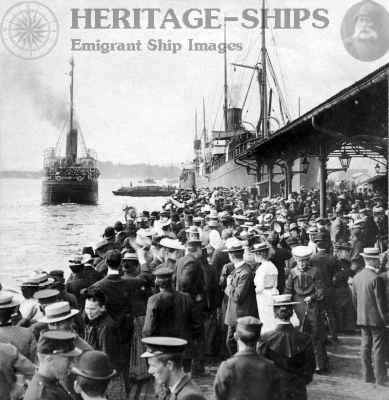
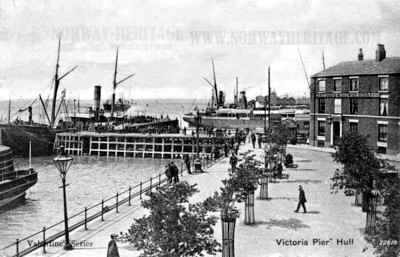
Wilson Line ship at Victoria Pier, Hull — Buy a copyThe railwaystation, Hull — Buy a copy
Hull functioned as a major transit point where incoming steamships had to connect with railways and the Atlantic services departing from other British ports. The movement of large numbers of emigrants required considerable coordination. Passenger numbers were telegraphed ahead so that agents could prepare for their arrival. As the steamship approached Hull, further notice could be given to ensure that representatives were ready at the docks.
After landing, the emigrants waited while their baggage was discharged and examined. The luggage was sorted according to the Atlantic steamship on which the passengers were booked and transferred to railway wagons. Agents representing the Atlantic companies met their respective groups, assisted with the baggage, arranged refreshments when necessary, and accompanied the passengers toward the next stage of the journey. Most emigrants bound for Liverpool crossed England by railway through Leeds, Huddersfield, and the Manchester area. When passenger numbers were sufficiently high, special emigrant trains were operated, sometimes consisting of as many as seventeen carriages. Passengers booked to sail from Glasgow continued north by rail.
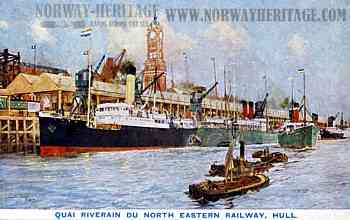
Steamship wharf at Hull with Wilson Line steamers — Buy a copy
The system could work efficiently, but the enormous seasonal movement of emigrants sometimes overwhelmed the facilities available in Hull. A Board of Trade report from 1882 described emigrants waiting on the docks among their boxes, incoming and outgoing cargo, dock labourers, and hawkers. No part of the quay or shed had been reserved exclusively for them, making conditions particularly uncomfortable during bad weather.
More serious difficulties arose when Atlantic steamers were full or large numbers of Scandinavian emigrants arrived within a short period. Hundreds of passengers could be delayed in Hull. Facilities existed for providing meals, but sufficient sleeping accommodation was not always available. One official report described occasions when emigrants, including families with young children, had been left to spend the night sitting among their boxes and belongings, sometimes without adequate shelter.
British officials argued that responsibility for the emigrants should extend throughout the journey covered by the contract. Where a passenger had purchased a through ticket to America, the companies involved could not regard their responsibility as ending with an individual sea or railway passage. The reports therefore called for better arrangements for feeding, sheltering, and forwarding emigrants during their transit through Hull. The investigations provide an unusually detailed picture of the practical realities behind the through-ticket system. What appeared to the emigrant as one journey required the coordination of shipping companies, railway companies, agents, baggage handlers, lodging houses, and transatlantic steamship services.
The Return Trade: British Tourists to Norway
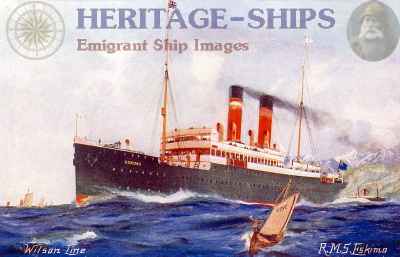
The S.S. Eskimo — Buy a copyAdvertisement for the Norwegian cruises 1897
The same North Sea network that carried thousands of Scandinavian emigrants to Britain also developed an important passenger trade in the opposite direction. British tourists represented a very different passenger market. While emigrants generally travelled in between-deck accommodation, tourists were offered first- and second-class passage, with cabins, staterooms, and saloon accommodation.
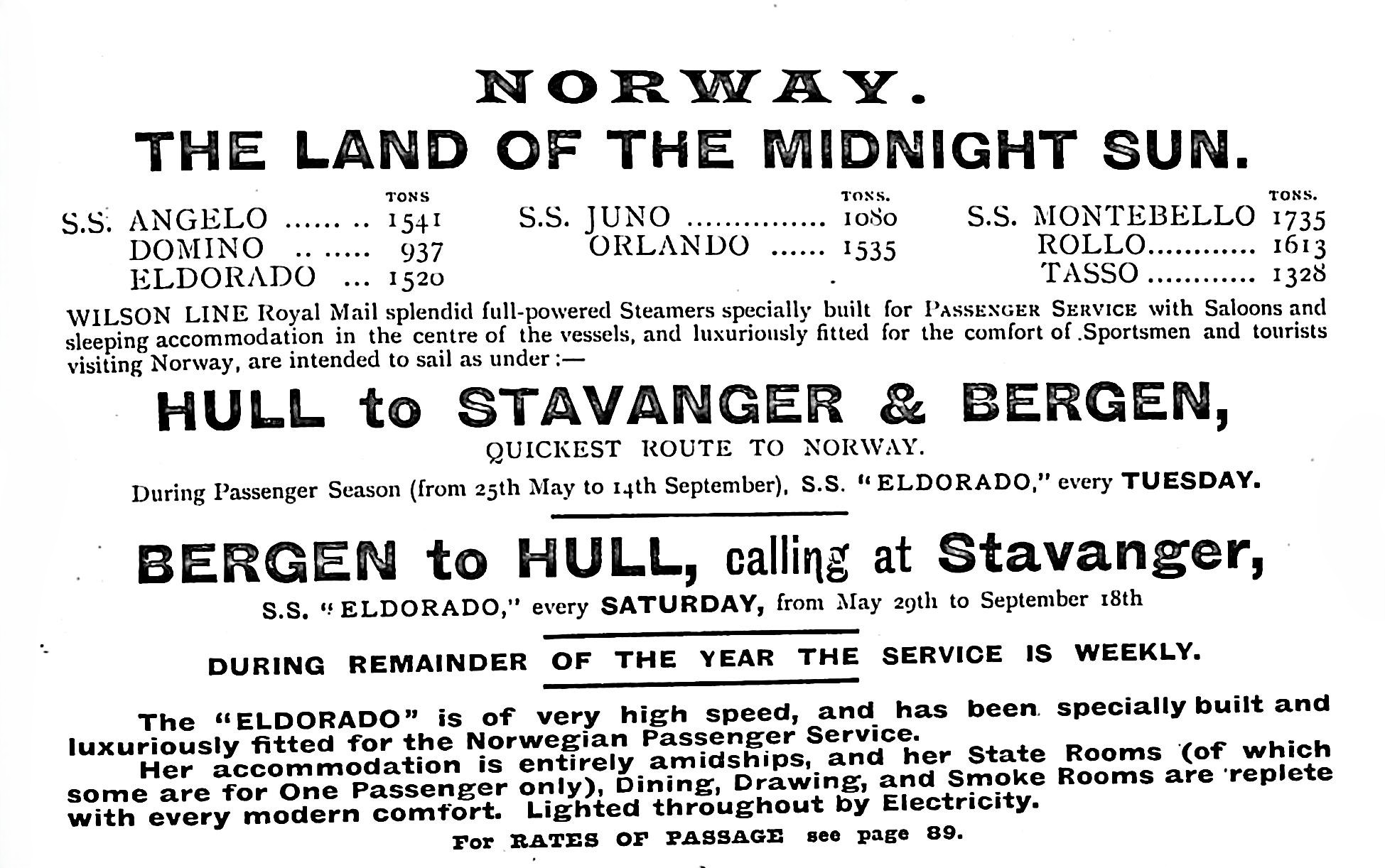
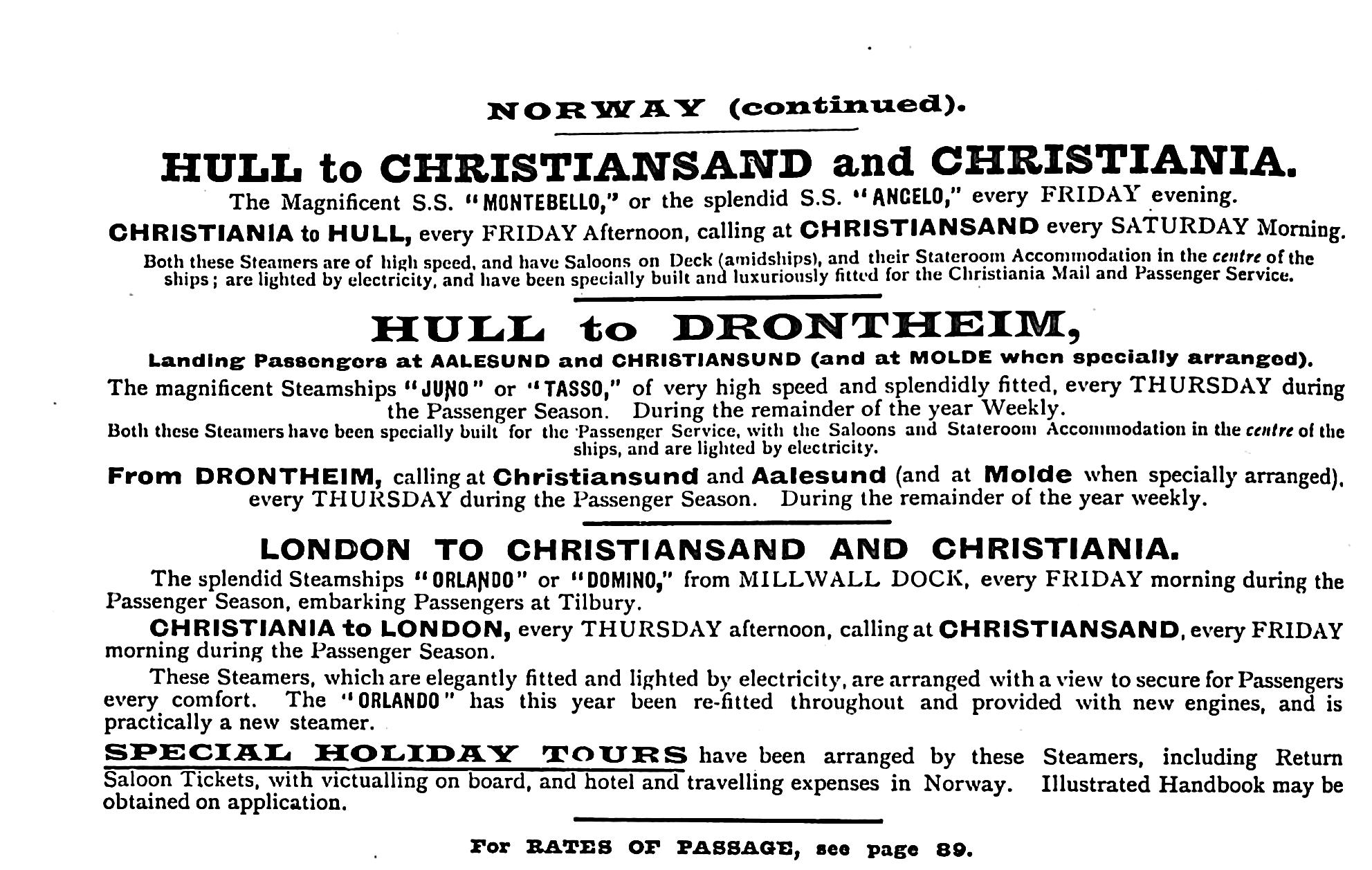
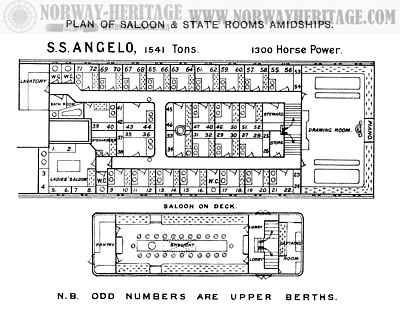
Long before Wilson began promoting organized tours to Norway, some of the steamers built for its Norwegian services provided substantial cabin accommodation. When the Domino was built in 1877 specifically for the Hull–Stavanger–Bergen passenger and cargo service, contemporary descriptions emphasized the standard of her passenger accommodation. She had sleeping cabins for 62 passengers, two separate ladies' cabins, second-class accommodation, and a 40-foot main saloon with dining tables, mirrors, and upholstered lounges. By the 1890s, Norway had become an increasingly popular holiday destination, and Wilson actively developed this market. The company's Norwegian passenger steamers provided accommodation intended for travellers seeking a comfortable voyage. A Wilson promotional booklet issued around 1897 included plans of the saloons and staterooms amidships aboard the Rollo, Ariosto, Romeo, Cameo, Domino, Orlando, Angelo, Eldorado, Montebello, Juno, and Tasso. The vessels were electrically lighted, and the company's advertising placed considerable emphasis on the standard of accommodation, meals, and service aboard. Tourist fares were offered for both first- and second-class travel.
Advertisement for the Norwegian cruises 1897S.S. Tasso (2) — Buy a copy
In 1895, Wilson introduced organized tours in southern Norway, with the Orlando and Domino sailing from London every Friday morning. The tours were designed to take British visitors beyond the coastal scenery for which Norway was already well known. Wilson's promotional material argued that travellers who merely cruised through the fjords and made occasional visits ashore had not really seen the country. Instead, visitors were encouraged to travel inland by railway, local steamship, and horse-drawn carriage.
Inclusive round-trip tickets combined the sea passage with transportation within Norway. Christiania and its surroundings were promoted together with destinations farther inland, including Telemark, Valders, and Gudbrandsdalen. The company also promoted travel outside the main summer season. According to Wilson's own advertising, the tours introduced in 1895 had already brought many hundreds of visitors to Norway by the time the booklet was published around 1897.
The tourist traffic formed an interesting counterpart to the emigrant business. The same steamers could serve markedly different passenger markets: Scandinavian emigrants travelling in between-deck accommodation on the first stage of their journey to America, and British visitors travelling in first- or second-class accommodation on holiday in Norway. Wilson's Norwegian services were therefore not simply emigrant routes, but part of a much broader passenger and cargo network connecting Norway and Britain.