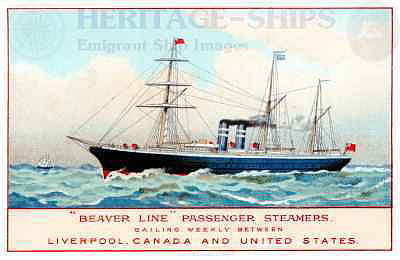
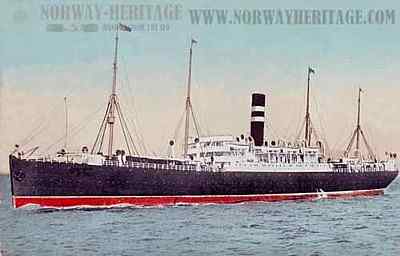
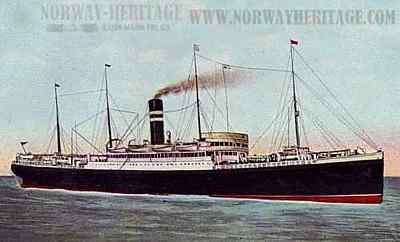
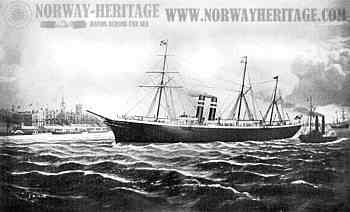
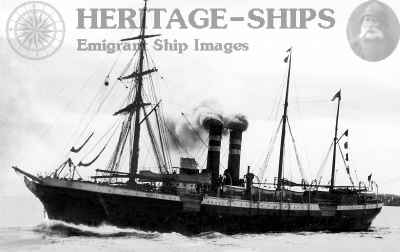
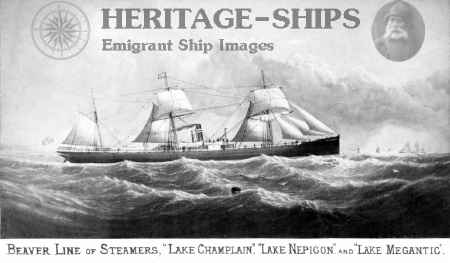
Advertisement card for the Beaver Line showing the steamship Lake Ontario. — Buy a copy
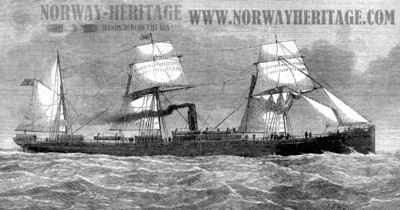
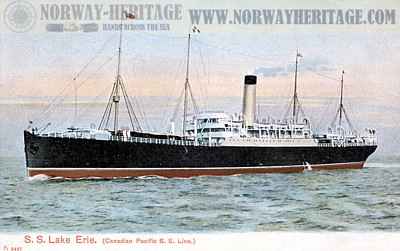
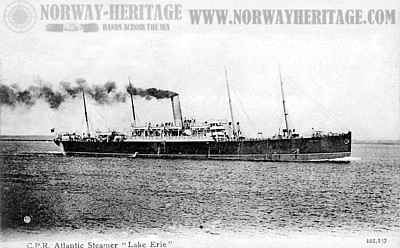
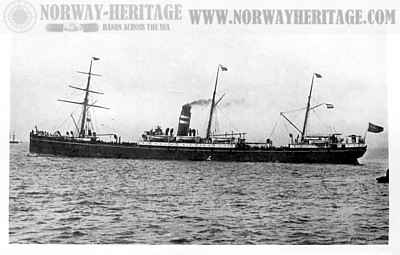
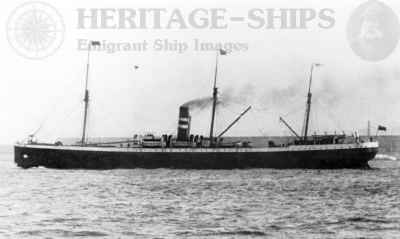
The Beaver Line was formed in 1867 as the Canada Steamship Company. The company initially ordered the iron sailing ships Lake Erie and Lake Ontario for a passenger and cargo service between Liverpool and Canada. They were later joined by the Lake Superior, Lake Michigan, and the second-hand Lake Saint Clair. The company's house flag featured a beaver, and the company consequently became widely known as the Beaver Line.
At a time when steamships were rapidly replacing sailing vessels on the North Atlantic, the Beaver Line soon began experimenting with steam. During the 1872 season, several steamships were chartered for passenger and cargo service between Liverpool, Quebec, and Montreal, including the Redewater, Harold, South Tyne, and Atholl. Further experimental sailings followed in 1873.
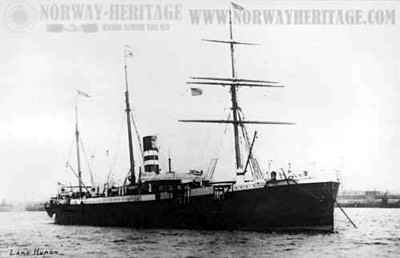
The principal route was between Liverpool, Quebec, and Montreal. As navigation on the St. Lawrence River was closed by ice during the winter, alternative ports had to be used. Portland, Maine, and Baltimore were served during the 1870s, and in 1881 the Lake Huron inaugurated a winter service between Liverpool and New York. Halifax, Boston, and St. John, New Brunswick, were also used during later periods.
The principal transatlantic routes were: Summer: Liverpool – Quebec – Montreal. Winter: Liverpool – St. John, New Brunswick
Norwegian Emigrants and the Beaver Line
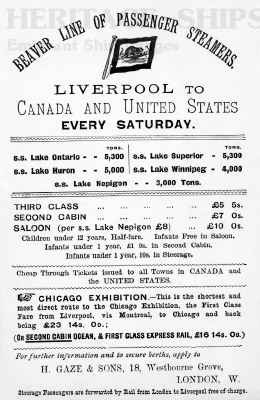
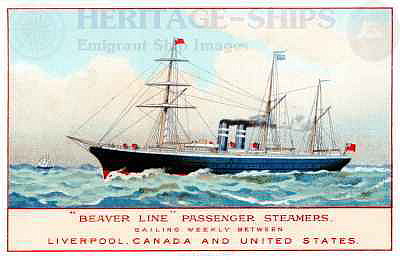
Beaver Line advertisement for passenger steamers from Liverpool to Canada and the United States. Passenger rates for third class (steerage), second class and sallon (1st. class). This image is from an old advertising card. Support Norway Heritage: Purchase a copy — Buy a copy
The Beaver Line appears to have played only a limited role in Norwegian emigration during its early years. This changed in 1883, when Ths. C. Hansen, the company's agent in Kristiania, was authorized to convey emigrants from Norway via Liverpool aboard Beaver Line steamships to North America and onward to their final destinations. In Norwegian advertisements the company was often referred to as the Bæver Linien, or simply as Bæver.
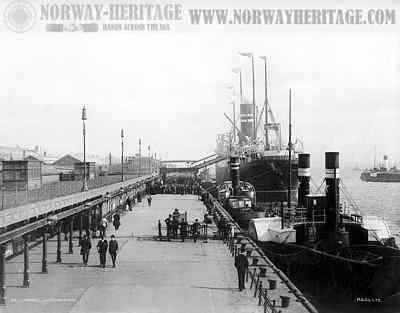
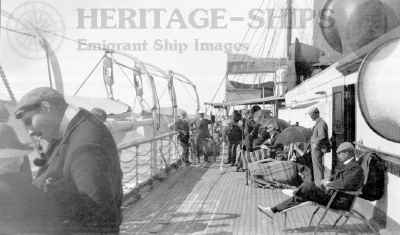
The Beaver Line did not operate its own feeder service from Norway or other Scandinavian coutries. Norwegian emigrants therefore traveled first to England, commonly aboard Wilson Line steamships to Hull. From Hull they continued by train to Liverpool, where they embarked on the Beaver Line's transatlantic steamships.
As with the other emigrant lines, the service offered to Norwegian passengers extended beyond the Atlantic crossing. Tickets could include the journey from Norway through England and onward transportation in North America. During the summer, emigrants could travel via Quebec and Montreal, while alternative ports were used during the winter when the St. Lawrence was closed to navigation.
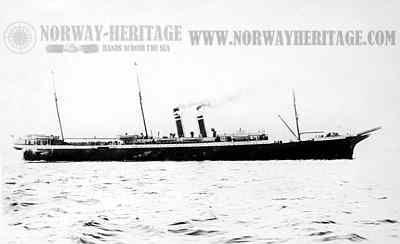
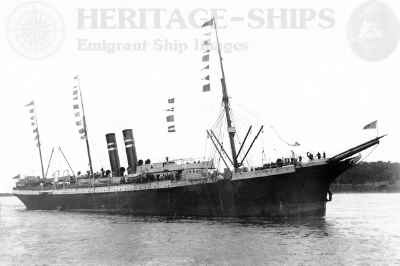
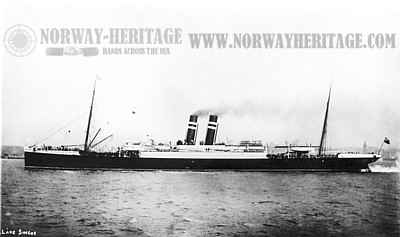
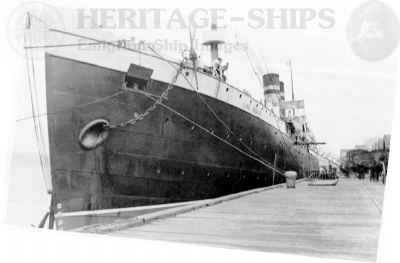
The Beaver Line expanded and modernized its steamship fleet during the 1880s. Among the new vessels was the Lake Ontario, which entered service in 1887 and represented a new generation of larger and more modern steamships. By this time the company's sailing ships were gradually disappearing from service.
Reorganization: - Elder Dempster & Co. - Canadian Pacific Line
Like many North Atlantic shipping companies, the Beaver Line experienced difficult conditions during the early 1890s. Financial problems led to the suspension of sailings in 1894. Operations resumed in 1895 under the management of D. & C. Maciver, with Quebec and Montreal remaining the principal summer destinations and St. John, New Brunswick, becoming an important winter port.
The business was reorganized in 1897 as Beaver Line Associated Steamers Limited. A weekly service was maintained from Liverpool to Canada, serving Quebec and Montreal during the summer and Halifax and St. John during the winter, with an intermediate call at Londonderry. Financial difficulties continued, however, and the service was withdrawn in 1899. Shortly afterwards, several of the former Beaver Line steamships resumed the Liverpool–Canada service under the name Beaver Line of Steamers (Elder Dempster & Co.).
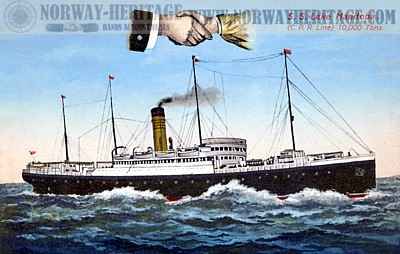
In 1903, the Beaver Line service was taken over by the Canadian Pacific Railway Company. Its authorization for Norwegian emigrant traffic covered transportation via England from Liverpool or Bristol to Quebec, Montreal, St. John, Halifax, or Boston, with onward transportation to final destinations in North America. The connection with the Canadian Pacific Railway provided emigrants with direct access to an extensive railway network after their arrival in Canada.