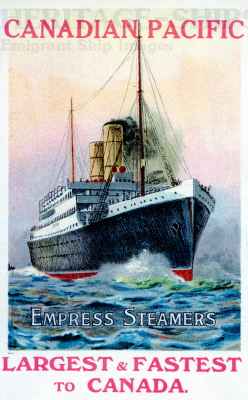
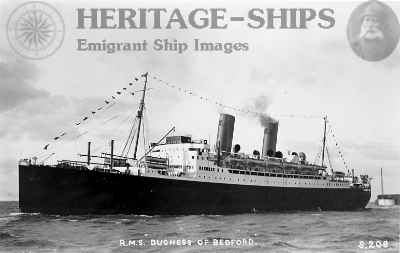
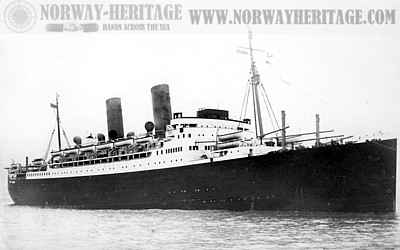
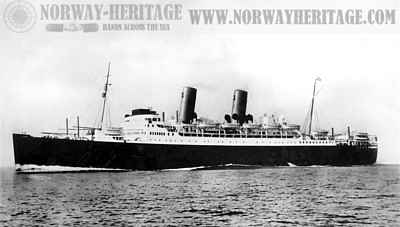
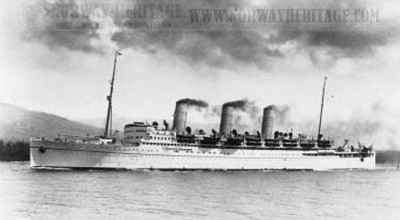
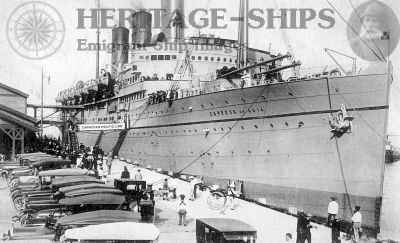
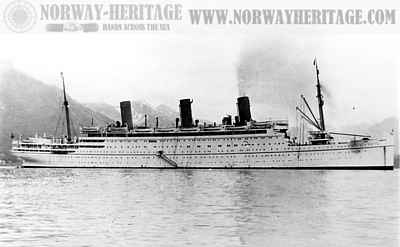
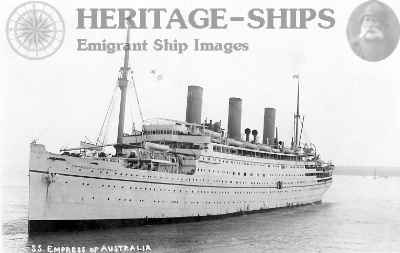
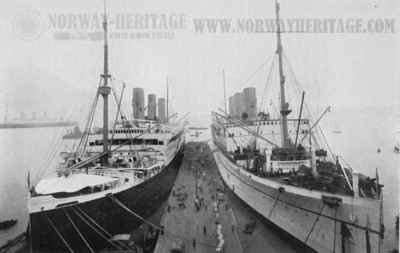
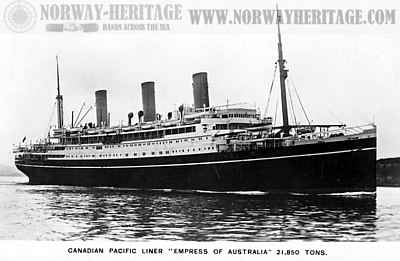
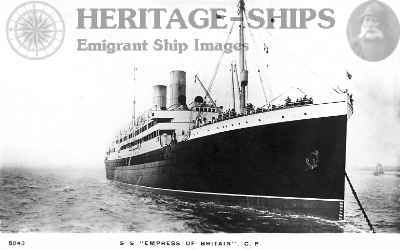
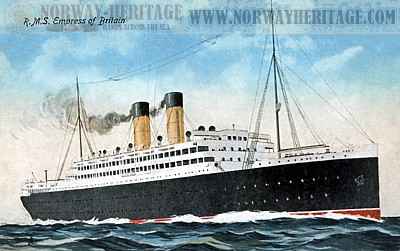
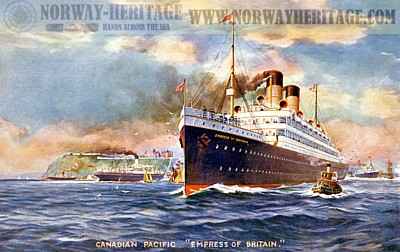
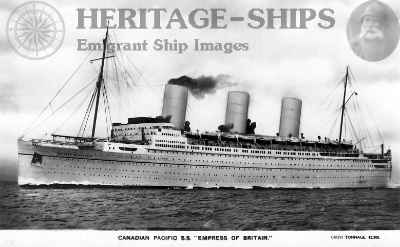
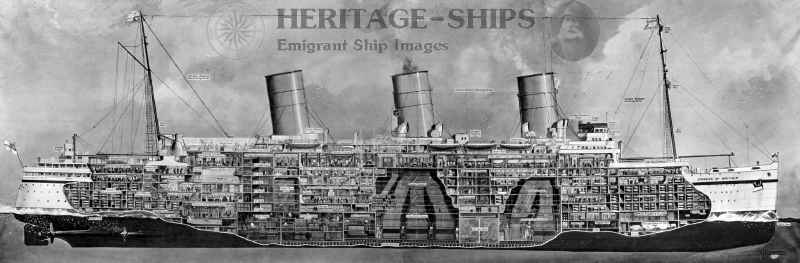
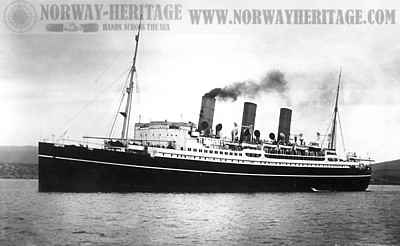
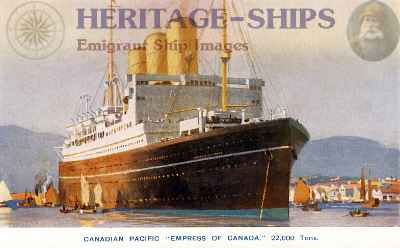
Canadian Pacific - advertising card - Empress Steamers to Canada — Buy a copy
The Canadian Pacific Railway Company was established in 1881 to construct and operate a transcontinental railway across Canada. As the railway system expanded, the company also became involved in steamship transportation. Its first major overseas service was across the Pacific, connecting Vancouver with ports in Japan and China.
For many years there were plans to establish a Canadian Pacific service across the North Atlantic, but it was not until 1903 that the company entered the transatlantic passenger trade. In that year Canadian Pacific acquired the Canadian shipping interests of Elder Dempster & Co., including the former Beaver Line and its fleet.
The established Beaver Line service was continued, with weekly sailings between Liverpool, Quebec, and Montreal during the summer and between Liverpool and St. John, New Brunswick, during the winter. Canadian Pacific thus inherited not only ships and routes, but also an established organization for carrying passengers and emigrants between Europe and North America.
An Integrated Transportation System
Canadian Pacific differed from many of the traditional transatlantic shipping companies in one important respect. The company operated an extensive railway network across Canada in addition to its steamship services. By entering the North Atlantic trade, it could combine the ocean passage with onward transportation over its own railway system. The contemporary history of the company emphasized that Canadian Pacific had thereby gained control of the Atlantic, rail, and Pacific sections of an extensive international transportation network.
This was particularly important for emigrants whose destinations lay far inland. Canadian Pacific could offer transportation extending beyond the port of arrival and connect passengers with destinations throughout Canada and farther west.
The company also actively sought emigrant traffic from continental Europe. In 1904, steamships operating between London and Canada began calling at Antwerp to embark continental emigrants.
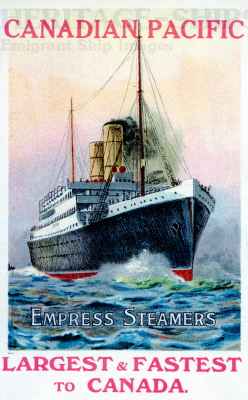
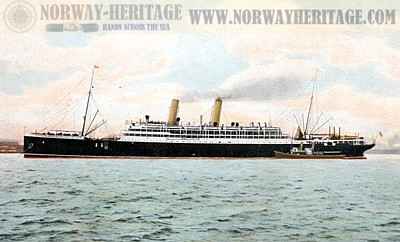
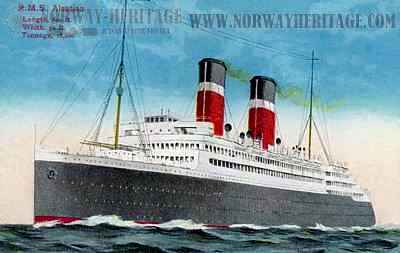
In 1906, Canadian Pacific strengthened its principal passenger service with the new Empress of Britain and Empress of Ireland. They sailed between Liverpool and Canada, supplemented by several of the former Beaver Line steamships. During the winter, Halifax was included as an intermediate port on the route to St. John.
Canadian Pacific and Norwegian Emigration
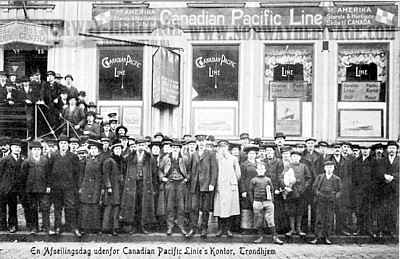
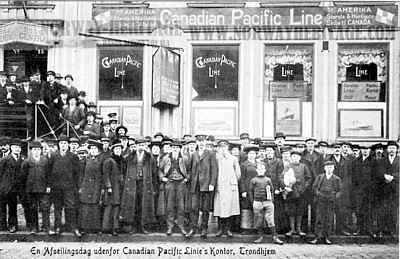
This picture shows emigrants waiting outside the Canadian Pacific Line office waiting for the departure. The office was situated in Fjordgaten near the railway station and the harbor. From the office the emigrants would be escorted by the agents to the steamer, waiting just 2 minutes walk away, to take them to England. In England they would transfer to the transatlantic steamer for the ocean crossing. — Buy a copyCopyright: Børge Solem
Canadian Pacific took over the Beaver Line's established organization for Norwegian emigrant traffic in 1903. The company's general agent in Norway was Albert Raffel in Kristiania, while in Trondhjem the company was represented by head agent Oluf Ruud.
The company's Norwegian authorization permitted emigrants to be conveyed via England from Liverpool or Bristol to Quebec, Montreal, St. John, Halifax, or Boston, and from there onward to their final destinations in North America. On October 13, 1903, the Kristiania police were informed that the Beaver Line had changed its name to the Canadian Pacific Railway Company's Atlantic Line.
Norwegian emigrants did not board the Canadian Pacific transatlantic steamships in Norway. They first traveled by feeder steamer to Britain and then continued to the port from which their Atlantic steamer departed. The journey sold by the agent could therefore consist of several separate stages operated by different transportation companies, even though the emigrant had purchased the arrangements through the Canadian Pacific organization.
Several of the company's agents in Norway were also involved in promoting land and settlement opportunities in Canada. Some had agreements to advertise or otherwise promote Canadian land to prospective emigrants. Their activities were therefore not necessarily limited to selling tickets and arranging transportation. They could also promote Canada as a destination and provide information about opportunities for settlement and employment.
This fitted naturally with Canadian Pacific's wider interests. The company transported immigrants across the Atlantic, carried them inland over its railway system, and had interests connected with the settlement and development of land in Canada. Transportation, immigration, settlement, and the development of the Canadian West were therefore closely connected parts of the company's activities.
The Canadian Pacific office in Trondheim provides a useful example of how the company's emigrant business was organized at the local level. Although arrangements varied from country to country and from port to port, similar networks of agents and local representatives were used throughout Scandinavia and other parts of Europe where Canadian Pacific sold tickets and recruited passengers.
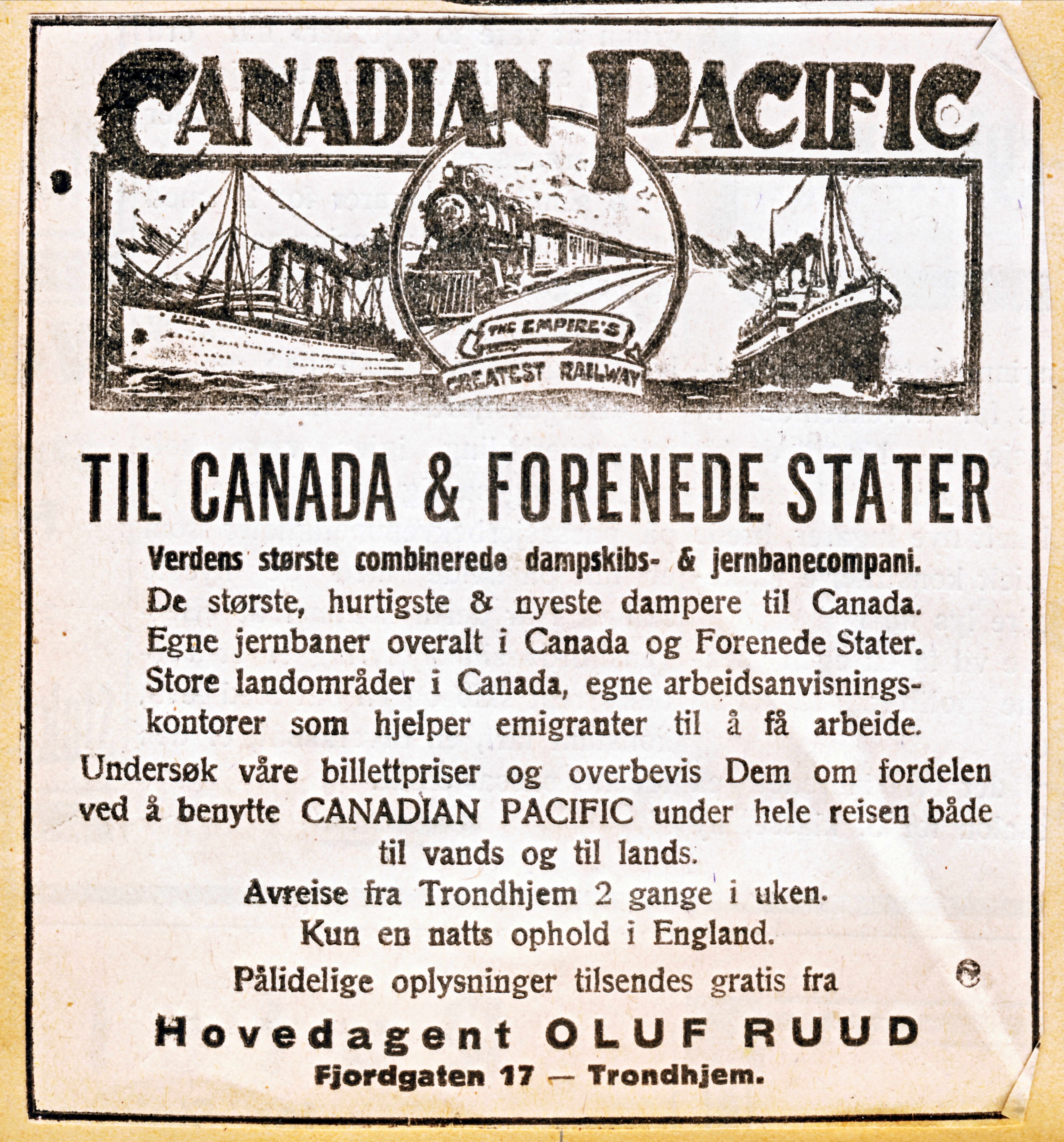
CANADIAN PACIFIC - TO CANADA & THE UNITED STATES
An announcement published in a Trondheim newspaper reads as follows:
The world's largest combined steamship and railway company. The largest, fastest & newest steamships to Canada. Its own railways throughout Canada and the United States. Large tracts of land in Canada, and its own employment offices assisting emigrants in finding work. Compare our ticket prices and convince yourself of the advantages of traveling by CANADIAN PACIFIC throughout the entire journey, both by sea and by land.
Departures from Trondhjem twice a week. Only one night's stay in England.
Reliable information supplied free of charge by
Head Agent OLUF RUUD Fjordgaten 17 – Trondhjem.
Oluf Ruud served as the company's agent in Trondhjem from 1905 to 1915. The office was for a long time situated in Fjordgaten, close to both the railway station and the harbor. This was a particularly convenient location for emigrants arriving in the city from the surrounding districts and from farther north.
The photograph above shows emigrants gathered outside the Canadian Pacific office awaiting departure. From the office, the passengers could be accompanied by the agents the short distance to the harbor, where they boarded the feeder steamer for England. After crossing the North Sea, they traveled onward through Britain and embarked on the Canadian Pacific steamship for the Atlantic crossing.
The Trondheim office was therefore much more than a place where tickets were sold. The local agent formed a link between the emigrant and the different stages of a much larger transportation system. Tickets and travel arrangements had to connect the feeder voyage from Scandinavia, the journey through Britain, the Atlantic crossing, and, when required, onward transportation by railway in North America.
The same basic principle applied throughout much of the company's European organization. Local agents represented Canadian Pacific in the areas from which emigrants originated, sold or arranged tickets, provided travel information, and connected passengers with the company's transatlantic services. In some areas, agents also promoted employment, settlement opportunities, and Canadian land.
Ruud advertised the Canadian Pacific service in the local newspapers and promoted Canada as a destination, including references to opportunities for employment there. The surviving material from Trondheim consequently provides a particularly useful example of how a large international transportation company reached prospective emigrants through a local organization.
One of the best-known Canadian Pacific steamships was the Empress of Ireland, which entered the Liverpool–Canada service in 1906 together with her sister ship, the Empress of Britain.
On May 28, 1914, 1,057 passengers boarded the Empress of Ireland at the harbor in Quebec City, for the first of the summer voyages to Liverpool. First class was filled with 87 passenger. Most were business leaders and wealthy persons
On May 29, 1914, the Empress of Ireland sank in the St. Lawrence River after colliding with the Norwegian collier Storstad in dense fog. More than 1,000 people lost their lives. The disaster also had a direct Norwegian connection through the Storstad and the Norwegian passengers aboard the Empress of Ireland.
Canadian Pacific and the Allan Line
The relationship between Canadian Pacific and the Allan Line became increasingly close during the years before the First World War. Canadian Pacific ships were already assisting with the Allan Line's mail service by 1910, and the two companies subsequently developed closer operational cooperation.
In 1915, Canadian Pacific Ocean Services Limited was formed to manage the combined shipping interests. The integration was completed on July 16, 1917, when Canadian Pacific Ocean Services took over the management, control, and general operation of the Allan Line steamships, together with its head and branch offices. The Allan Line fleet was subsequently incorporated into Canadian Pacific's operations.
After the First World War, Canadian Pacific resumed its North Atlantic passenger services, including routes from Liverpool and Glasgow to Canada. In 1921, Canadian Pacific Steamships Limited replaced Canadian Pacific Ocean Services Limited as the company's steamship organization.
The principal Canadian routes during the early period were:
Summer: Liverpool – Quebec – Montreal
Winter: Liverpool – Halifax – St. John, New Brunswick