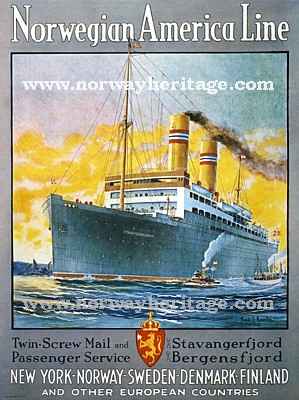
The Norwegian America Line, officially Den Norske Amerikalinje A/S and commonly known internationally as NAL, was formally established in 1910. Its purpose was to establish a regular Norwegian passenger, mail and cargo service between Norway and the United States.
The idea of a direct Norwegian steamship service to America was not new. During the nineteenth century, most Norwegian emigrants traveling by steamship had first crossed the North Sea to Britain or traveled through Germany before continuing across the Atlantic with companies such as Cunard, White Star, HAPAG and Norddeutscher Lloyd.
An earlier Norwegian attempt, the Norwegian-American Steamship Company established by Peter Jebsen in 1871, had maintained a direct service from Bergen to New York for a few years before it was abandoned in 1876. Later, the Danish Thingvalla Line, and subsequently the Scandinavian American Line, provided direct Scandinavian services that included Norwegian ports.
Following the dissolution of the union between Norway and Sweden in 1905, renewed interest developed in establishing a transatlantic service under the Norwegian flag. The project attracted considerable public interest, although several prominent Norwegian shipowners questioned whether such an expensive undertaking could be economically viable.
A Direct Route Between Norway and America
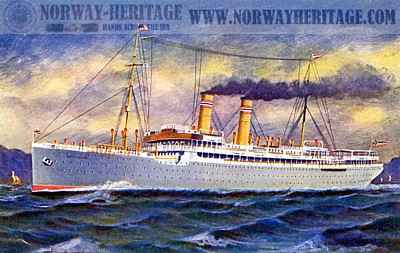
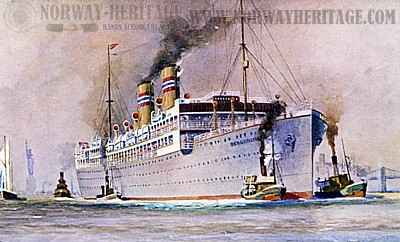
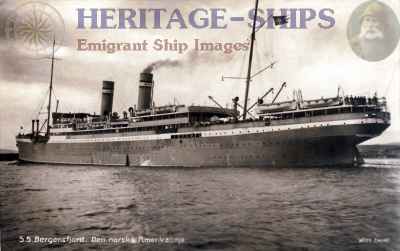
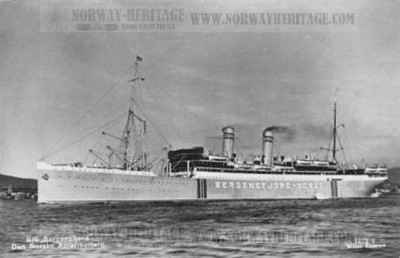
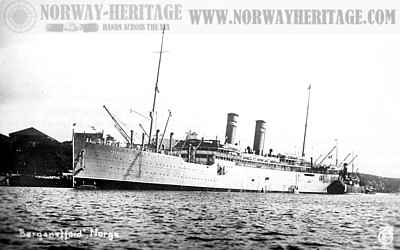
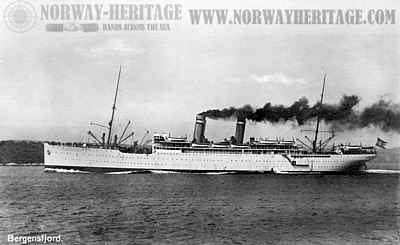
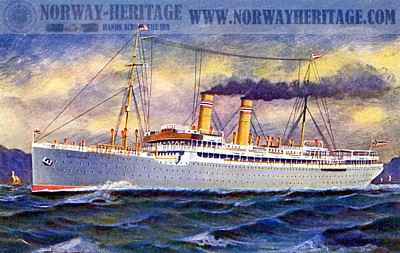
In 1911, NAL placed an order with Cammell, Laird & Co. of Birkenhead for its first passenger liner. A second, nearly identical vessel was ordered the following month. They were named Kristianiafjord and Bergensfjord, establishing the tradition of giving the company's ships names ending in -fjord.
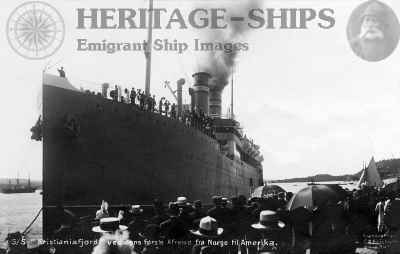
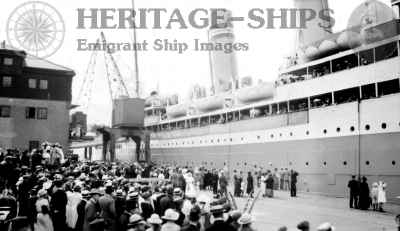
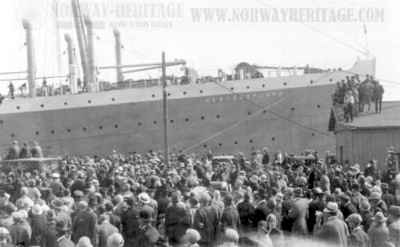
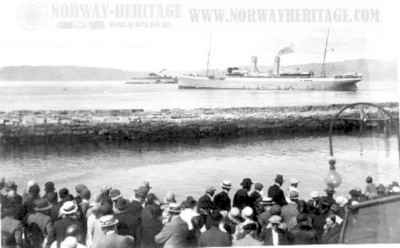
The Kristianiafjord inaugurated the service when she sailed from Kristiania (Oslo) on June 4, 1913, continuing from Bergen on June 7 for New York. The occasion attracted considerable attention. King Haakon VII and members of the Norwegian government accompanied the ship on the coastal voyage from Kristiania to Bergen. Her sister ship, the Bergensfjord, entered service in September.
The new service was immediately successful. Passenger numbers exceeded expectations, while the number of Norwegian passengers using the competing Scandinavian American Line declined sharply. NAL consequently ordered a third passenger liner from Cammell Laird.
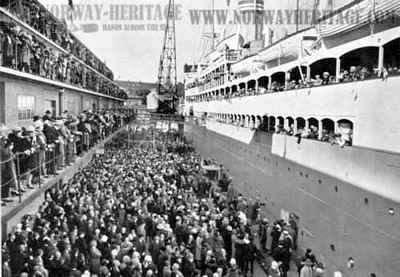
For Norwegian travelers, the significance of the new line was considerable. They could now board a Norwegian transatlantic steamship in Norway and remain aboard for the ocean crossing to New York, rather than traveling by feeder steamer and railway to one of the major continental or British emigrant ports.
The Route
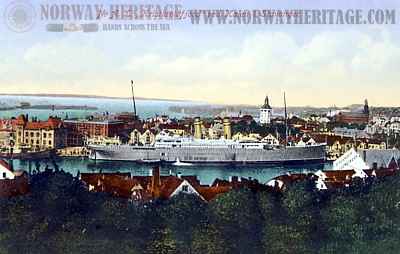
The passenger ships served several Norwegian ports before crossing the Atlantic. In the years between the world wars, the principal route connected Oslo, Kristiansand, Stavanger and Bergen with New York.
A company booklet from the period advertised the service as “The Short Direct Route to Norway.” From New York the ships followed the northern Atlantic route, passing north of Scotland before reaching the Norwegian coast. Bergen was the first Norwegian port of call, followed by Stavanger, Kristiansand and Kristiania (Oslo). Passengers could also make connections at Bergen with coastal steamships serving Ålesund, Molde, Kristiansund, Trondheim and northern Norway.
This made NAL more than a direct service to the principal Norwegian ports. Through connections with the Norwegian railway and coastal steamship networks, the line provided access to destinations throughout much of the country.
The Kristianiafjord and Bergensfjord were approximately 11,000 gross tons and had been built specifically for the new passenger service. Their success soon demonstrated the need for additional capacity.
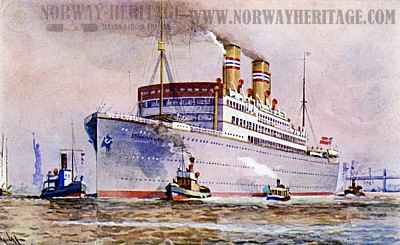
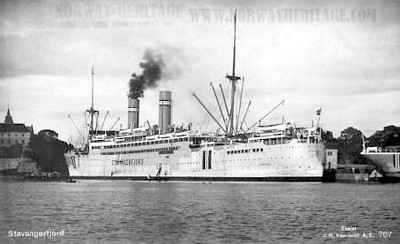
A third passenger liner was ordered from Cammell Laird in January 1915. Construction was delayed by the First World War, and the British government temporarily cancelled the contract as the demand for British shipbuilding capacity increased. Following representations from NAL after the loss of the Kristianiafjord in 1917, construction was allowed to proceed. The 13,156-ton Stavangerfjord entered service in 1918.
The Bergensfjord and Stavangerfjord subsequently maintained the company's passenger service for almost twenty years. Between the inauguration of the service in 1913 and the outbreak of the Second World War, NAL carried more than 236,000 westbound and 182,000 eastbound passengers.
Passenger Accommodation
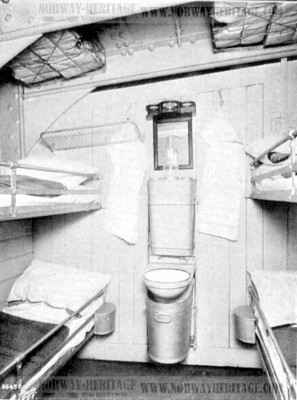
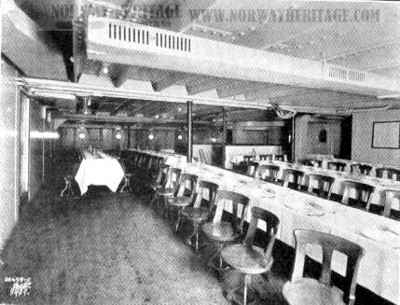
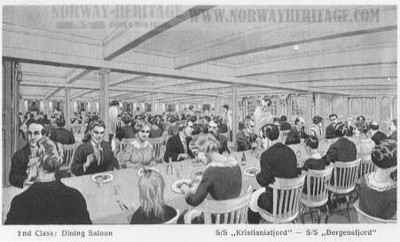
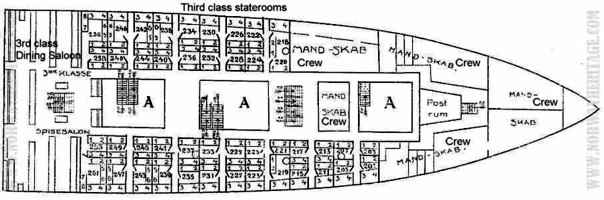
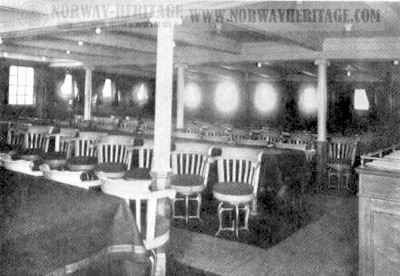
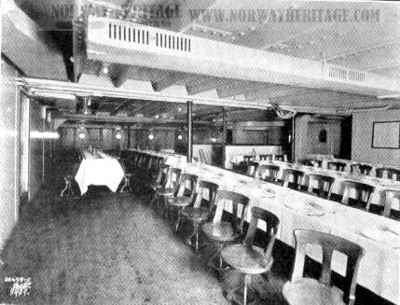
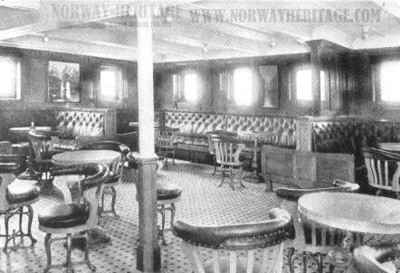
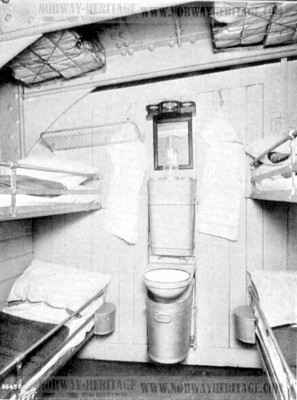
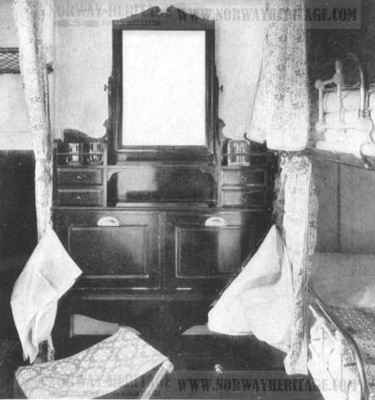
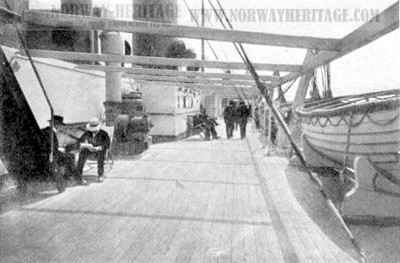
Four-berth stateroom aboard the Bergensfjord and KristianiafjordThird Class dining saloon aboard the Bergensfjord and Kristianiafjord
The new NAL steamships were designed for three classes of passengers. Contemporary company literature placed considerable emphasis on modern equipment, safety and passenger comfort.
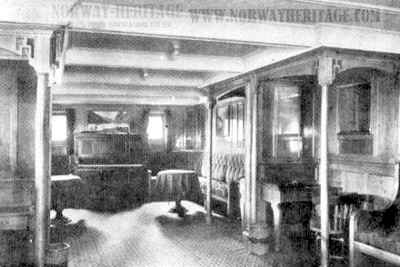
According to a NAL booklet published in 1916, first-class accommodation was situated amidships and included outside staterooms, lounges, music, reading and writing rooms, a smoking room and a veranda café. Two deluxe suites included a sitting room, bedroom, private bathroom and toilet. The first-class dining saloon extended across the width of the vessel and was large enough for all first-class passengers to dine at one sitting.
Second-class passengers were accommodated in two- and four-berth staterooms, with their own dining saloon, music room and smoking room.
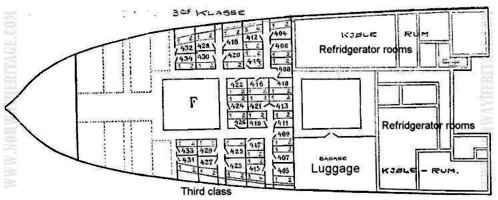
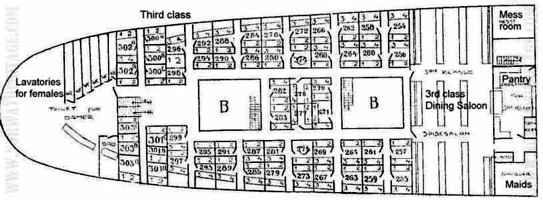
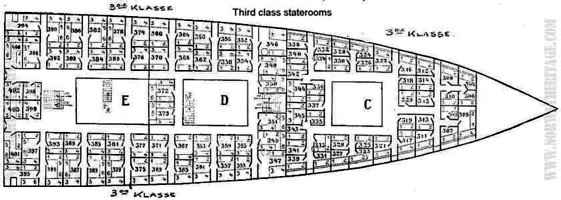
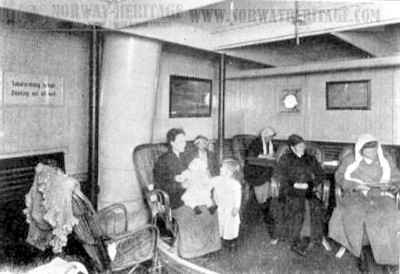
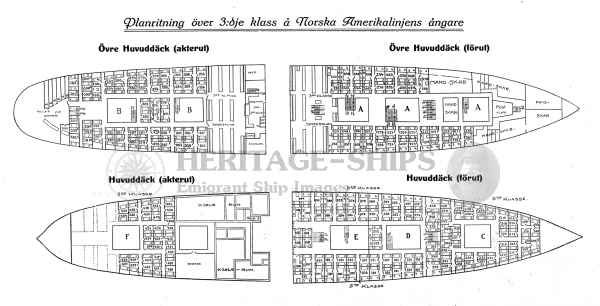
Of particular interest for the history of migration was the extensive third-class accommodation. The ships could accommodate approximately 860 third-class passengers, in cabins arranged for two, four or six persons. The berths were fitted with mattresses, pillows, sheets and blankets, and the cabins were equipped with washbasins and mirrors. Third-class passengers also had sitting rooms and smoking rooms, while the dining saloons could seat 354 passengers.
The booklet stated that meals were prepared and served by the ship's stewards and emphasized the attention given to passenger comfort. As with other contemporary shipping-company publications, these descriptions represented NAL's own presentation of conditions aboard rather than an independent assessment of the passenger experience.
The First World War
The Stavangerfjord painted in Norwegian neutrality colors during the First World War.
The First World War began only a little more than a year after NAL inaugurated its passenger service. Although Norway remained neutral, the war created serious difficulties for Norwegian shipping and made the importation of food and other supplies from North America increasingly important.
NAL rapidly expanded its cargo operations. Cargo vessels were chartered and purchased to carry supplies from North America to Norway, and by the end of the war the company had developed far beyond its original two-ship passenger operation.
The greatest loss to the passenger service occurred in July 1917, when the Kristianiafjord ran aground near Cape Race, Newfoundland, and became a total loss. No lives were lost.
The war also affected passenger traffic directly. Following the entry of the United States into the war in 1917, both Kristianiafjord and Bergensfjord made voyages without passengers. Nevertheless, the company succeeded in maintaining much of its transatlantic operation during an exceptionally difficult period.
From Emigrant Traffic to Visits and Tourism
The character of transatlantic travel changed considerably after the First World War. New restrictive immigration legislation in the United States had a serious effect on NAL's westbound passenger traffic during the 1920s. At the same time, however, the direct connection between New York and Norway made it much easier for Norwegian immigrants and their descendants in America to travel in the opposite direction.
For many Norwegian Americans, a visit to the old country no longer required a complicated journey through Britain or continental Europe. They could board a Norwegian America Line steamer in New York and travel directly to Norwegian ports. Visiting relatives and former home communities in Norway became an important part of the passenger traffic, while some emigrants also used the ships when returning permanently after years in America. The line was therefore no longer simply carrying emigrants westward, but increasingly served a well-established Norwegian-American community with close ties on both sides of the Atlantic.
NAL actively encouraged this traffic through its passenger offices and agents in the United States. Special excursions were organized for Norwegian Americans wishing to visit Norway, including journeys timed to allow passengers to spend Christmas in their old homeland.
In 1924, for example, the Norwegian-American newspaper Skandinaven advertised a special Christmas excursion to Norway aboard the Stavangerfjord. The ship was to leave New York on December 9 under the direction of Arne E. Williamson, head of NAL's passenger office in Chicago. Participants from the Midwest were to leave Chicago by special train on December 7, traveling via the Wabash and Lackawanna railroads. The journey even included a stop at Niagara Falls before continuing to New York.
The Stavangerfjord was scheduled to arrive at Bergen on December 18, allowing the passengers sufficient time to continue to their respective destinations before Christmas Eve. Skandinaven reported that these special Christmas excursions had already proved popular among Scandinavians in America and that reservations for the 1924 journey were arriving from several of the western states.
The arrangement illustrates how extensive NAL's passenger organization had become. The company did not merely provide the ocean passage between New York and Norway. Through its American passenger offices and connections with the railway network, it could organize journeys beginning far inland in the United States and bring Norwegian Americans back to their former homeland.
This eastbound traffic became a substantial part of the company's business. Between the inauguration of the service in 1913 and the outbreak of the Second World War, NAL carried more than 236,000 westbound and 182,000 eastbound passengers.
The Development of Cruise Traffic
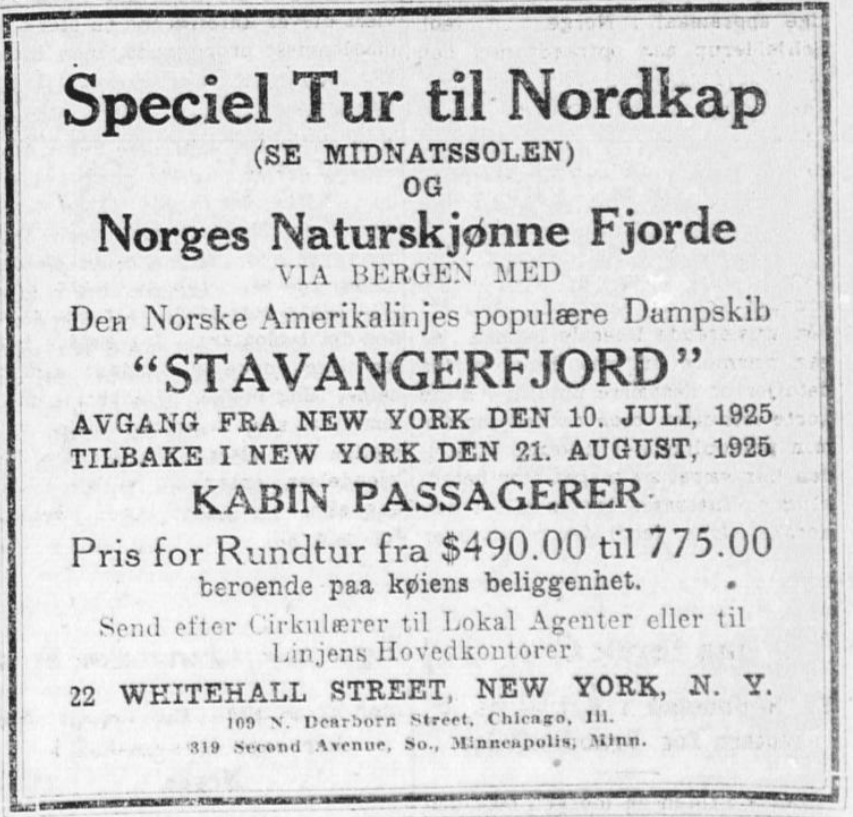
Nordisk Tidende 25. Dec 1924
NAL also began developing tourism and leisure travel for the Norwegian-American market. By December 1924, the company was advertising a special summer voyage aboard the Stavangerfjord for the following year. Departing New York on July 10, 1925, the voyage offered passengers a tour of the North Cape, the midnight sun and the Norwegian fjords, before returning to New York on August 21. The advertisement, published in the Norwegian-American newspaper Nordisk Tidende, offered round-trip cabin fares from $490 to $775 and directed prospective passengers to NAL's offices in New York, Chicago and Minneapolis.
This was part of NAL's introduction of cruise travel in 1925. The Bergensfjord and Stavangerfjord were used for cruises to destinations that included the North Cape and the Norwegian fjords, as well as Scotland, Iceland and the Baltic. What began as an additional use of the company's transatlantic liners eventually developed into an increasingly important part of NAL's passenger business.
War and the Postwar Passenger Service
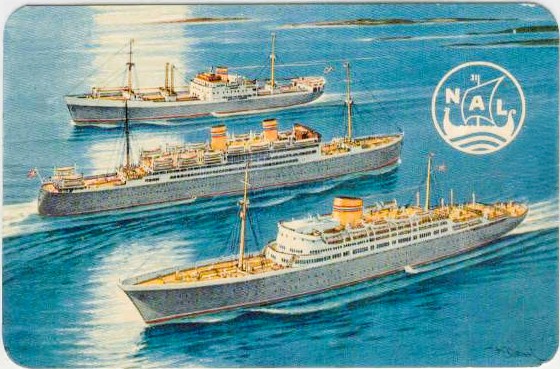
A new Oslofjord entered the New York service in 1938, providing NAL with a modern addition to the aging Bergensfjord and Stavangerfjord. The Second World War soon disrupted the service. The Oslofjord was lost after striking a mine off the mouth of the River Tyne in December 1940. The Bergensfjord served as an Allied troopship during the war, while the Stavangerfjord remained in Norway during the German occupation and returned to transatlantic service in 1945.
After the war, NAL rebuilt and modernized its passenger fleet. A new Oslofjord entered service in 1949, followed by a new Bergensfjord in 1956. That year the company carried a record 25,400 transatlantic passengers.
The record came at a time when the traditional ocean passenger service was approaching a fundamental change. Rapidly expanding commercial aviation offered an increasingly fast and convenient alternative for travel between Europe and North America. During the following years, NAL increasingly turned toward cruising as scheduled transatlantic passenger traffic declined.