S.S. Mauretania (1), Cunard Line

Ship Data

Type Built Burden Dimensions Line / Owner
S.S. 1906 at Wallsend-on-Tyne by Swan, Hunter & Wigham Richardson 31,938 gross 762.2ft x 88ft x 61ft Cunard Line


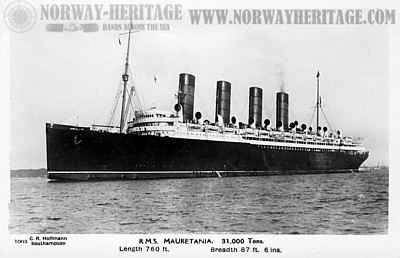
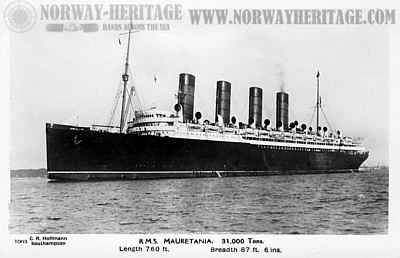
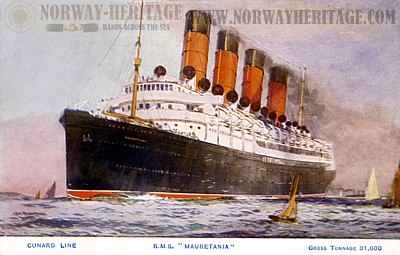
Mauretania, Cunard Line steamship
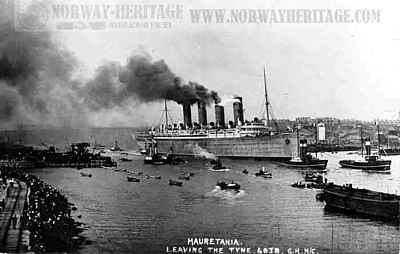
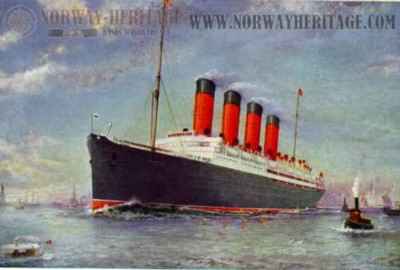
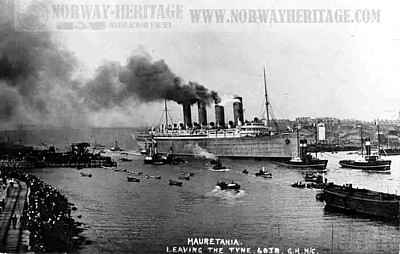
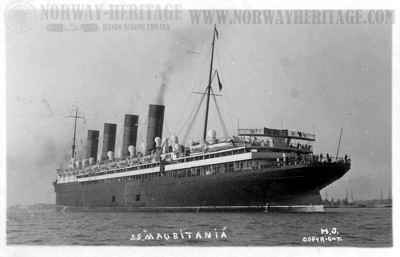
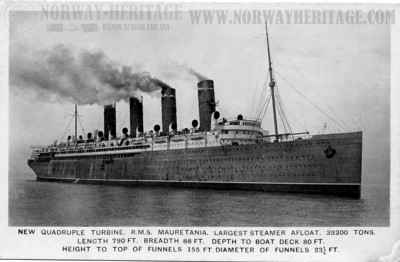
Photo of the S/S Mauretania from an old postcard
Support Norway Heritage: Purchase a copy

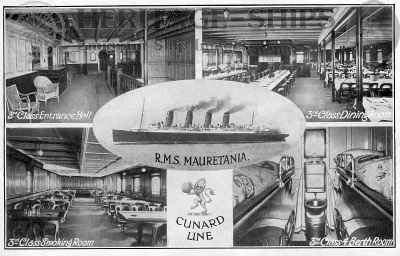
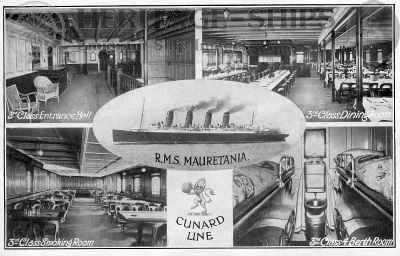
Mauretania (1) - Cunard Line steamship, interiors from the 3rd class (steerage) accommodations aboard the Mauretania - 3rd class Entrance Hall, 3rd class Dining Room, 3rd class Smoking Room and a 3rd class 4 Berth Room.
Mauretania (1) - Cunard Line steamship, interiors from the 3rd class accommodations; 3rd class Entrance Hall, 3rd class Dining Room, 3rd class Smoking Room and a 3rd class 4 Berth Room.
Support Norway Heritage: Purchase a copy


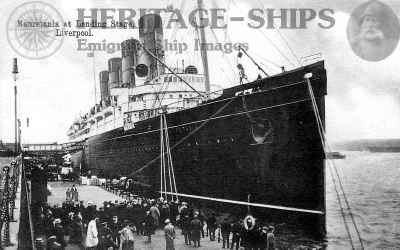
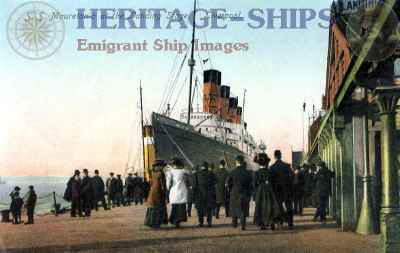
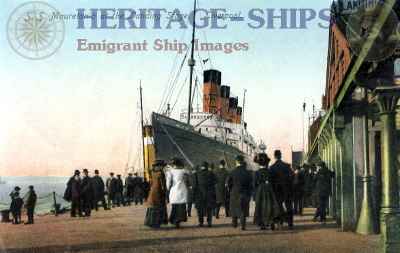
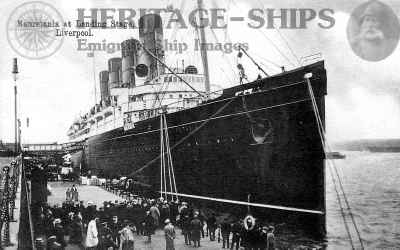
Cunard Line steamship Mauretania - at the landing stage, Liverpool
Support Norway Heritage: Purchase a copy

Cunard Line steamship Mauretania at Liverpool landing stage
Support Norway Heritage: Purchase a copy

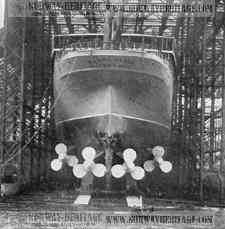
This fantastic ship was built to regain the blue ribbon from the German liners. She was equipped with 4 direct-action Parson steam turbines; two high pressure and two low pressure, producing 70,000 HP. Quadruple propellers of improved design gave her a service speed of 25 knots. On her trials she attained a speed of 27.04 knots. Assuming that she could maintain her best record speed of 27.04 knots, along the line of the equator, she would encircle the globe in 38 days, 12 hours, 33 minutes and 22 seconds. To increase the speed with 1.5 knots they had to go from 40,000 HP. to 70,000 HP. She had 11 watertight bulkheads and 6 decks. The doors between the bulkheads could be closed from the bridge, where the captain stood 100 feet above the sea level. For her hull they used 4 million steel rivets, at a total weight of 500 tons. Her four funnels were each 155 feet high and the two masts 216 feet high, which was actually 2 feet longer than the length of the S/S Britannia, the first steamship of the line. There were 3 anchors weighing 10 tons each, and anchor chains of 1,800 feet. There was accommodation for 563 first class passengers, 464 second class passengers and 1400 third class (steerage) passengers. The majority of the emigrants travelled as steerage passengers. The number of officers and crew was 812. There were two electric elevators for the passengers, and 6 elevators for cargo and mail. She had 1200 windows and 5000 electric lamps. Below is a selection of images of the famous oceanliner which brought thousands of passengers across the Atlantic to their new homeland in America
 
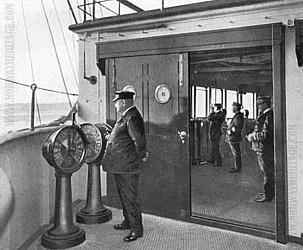
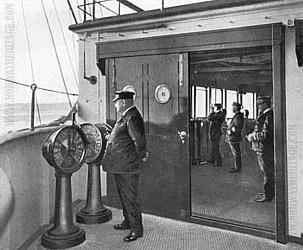
S/S Mauretania, on the bridge
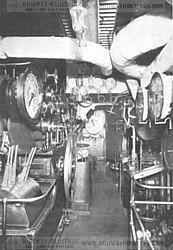
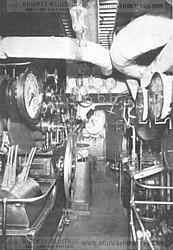
the engine room of the S/S Mauretania
S/S Mauretania, the engine room

 
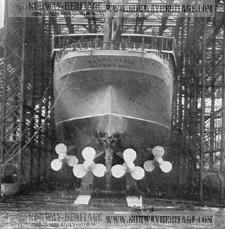
Quadruple propellers on the Mauretania of improved design
 
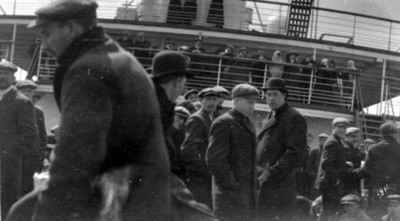
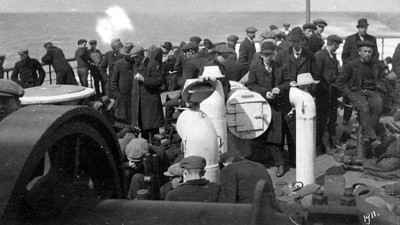
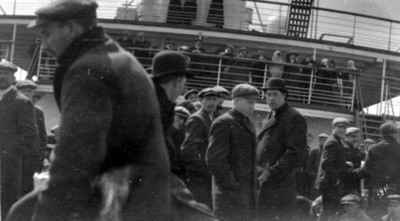
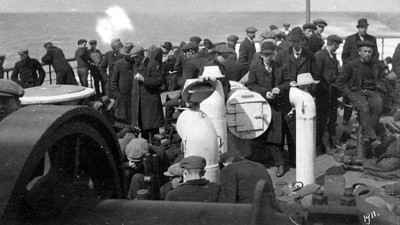
Passengers on the aft of the S/S Mauretania
Passengers on the aft of the S/S Mauretania (Photo 1911)
 
Passengers on the aft of the S/S Mauretania
Passengers on the aft of the S/S Mauretania (Photo 1911)
 
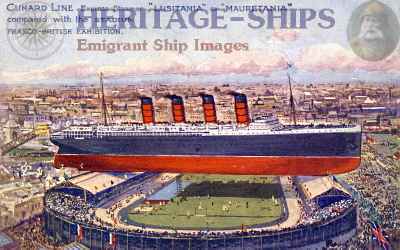
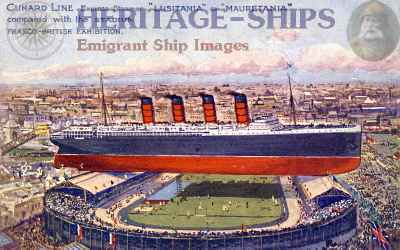
S/S Mauretania compared to a football stadium
Support Norway Heritage: Purchase a copy
 
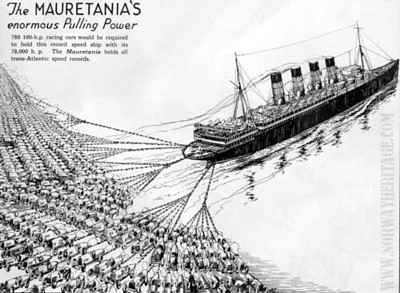
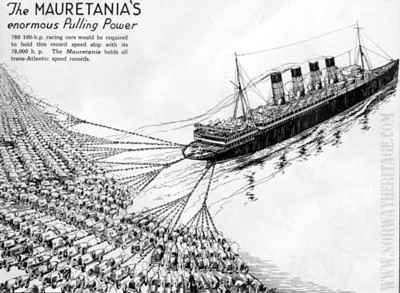
S/S Mauretania's enormous Pulling Power

This image is from a Cunard Line comparisions booklet, it shows the S/S Mauretania's enormous Pulling Power. 780 100-h.p. racing cars would be required to hold this record speed ship with its 78,000h.p.

A voyage from Norway to America in 1911 - An account of a voyage from Bergen to Newcastle on the S/S Hera, then from Liverpool to New York on the S/S Mauretania.

Chronological History

Year Event
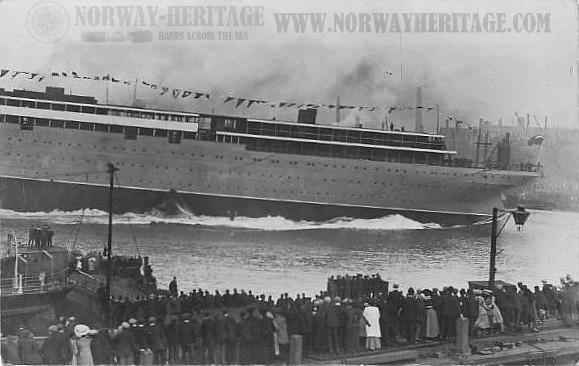
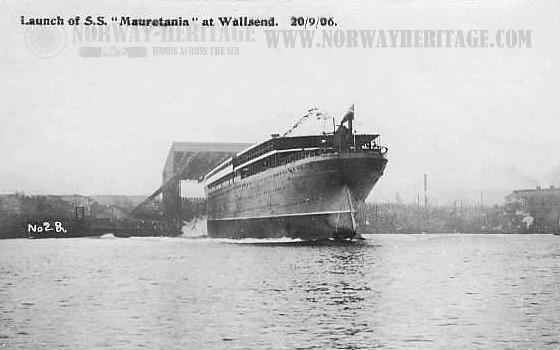
1906 Sept. 20, launched
1907 Nov. 16, maiden voyage Liverpool-Queenstown-New York, on the return voyage she took the record from the Lusitania (4 days, 22 hours and 29 min.)
1907 Liverpool-Queenstown-New York service
1909 Took the record, crossing in 4 days, 17 hrs. and 20 min., and held the record until 1929 - beaten by the Bremen
1914 Hospital ship
1915 Hospital ship
1916 Laid up at Greenock
1917 US troop transport
1918 US troop transport
1919 Southampton - New York
1920 Southampton - New York
1921 Southampton - New York
1921 Damaged by fire at Southampton, repaired and rebuilt to 30,696 tons, converted from coal to oil fuel, refitted to carry 589 1st-class , 400 2nd-class and 767 3rd-class passengers
1922 Mar. 25, resumed Southampton - Cherbourg - New York
1931 Refitted to carry 1st-class, tourist-class and 3rd-class
1935 July 1, left Southampton for Rosyth, where she was scrapped.

Pictures

Leave a Comment

Comments are reviewed before they appear publicly. Fields marked with * are required.

Your email will never be shown publicly.
10000 characters remaining