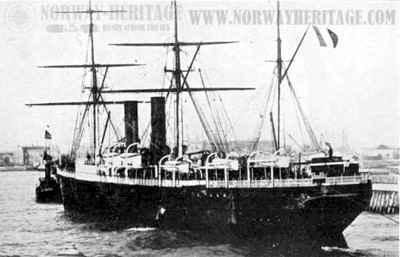
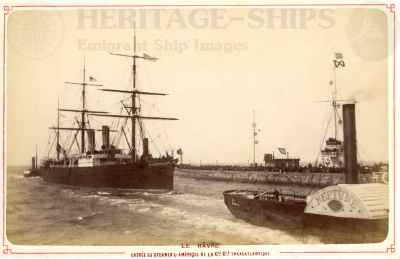
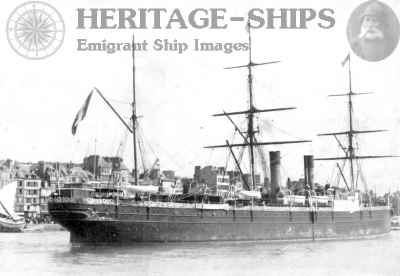
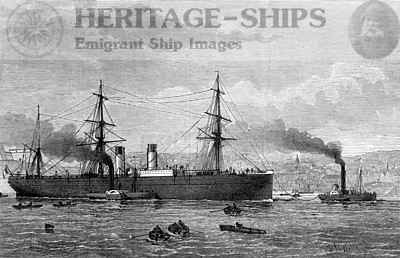
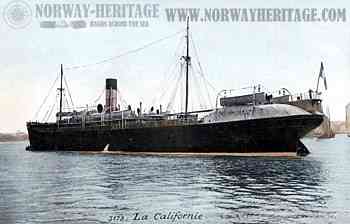
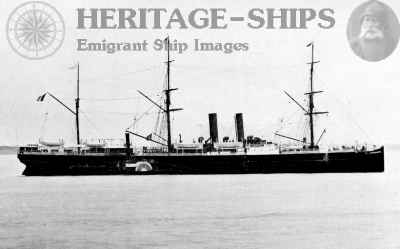
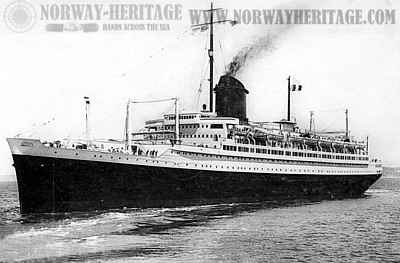
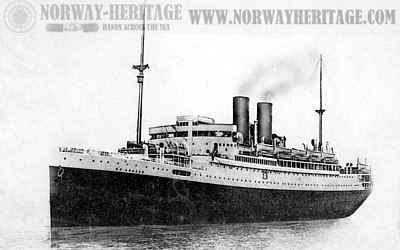
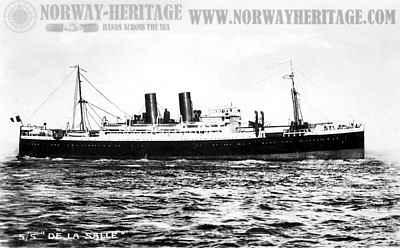
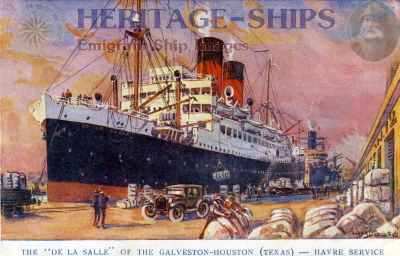
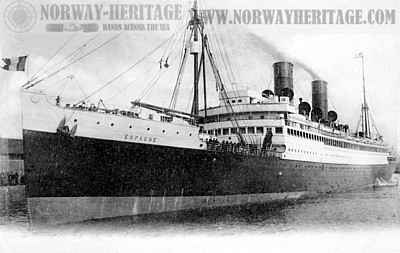
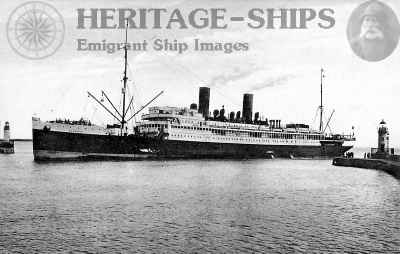
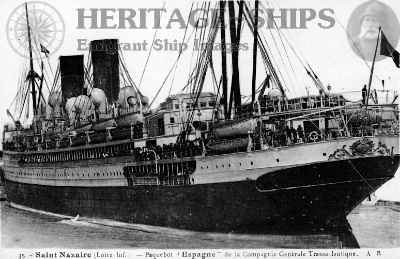
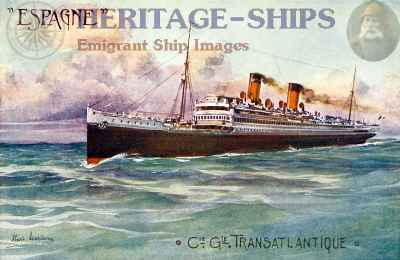
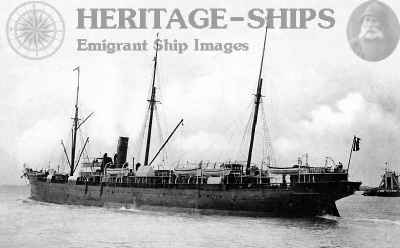
The Compagnie Générale Transatlantique, generally known in the English-speaking world as the French Line or C.G.T., became France's principal passenger line on the North Atlantic.
Earlier attempts to establish a French-owned steamship service across the Atlantic had been unsuccessful.
In 1861 the French government awarded a mail contract to the Compagnie Générale Maritime, which had been established in 1855 under the direction of the brothers Emile and Isaac Pereire. The contract called for services between France and the United States, the West Indies, Mexico and Central America. The company was renamed Compagnie Générale Transatlantique in August 1861.
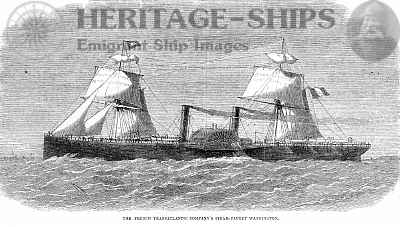
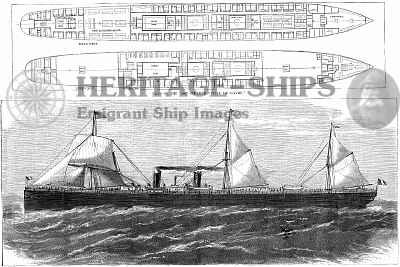
The company's regular North Atlantic service began on June 15, 1864, when the paddle steamer Washington sailed from Havre for New York. From 1865 the ships also called at Brest, and in 1866 the service was increased from monthly to fortnightly departures.
During the following years the early paddle steamers were gradually replaced or converted to screw propulsion. A new French mail contract in 1873 increased the number of New York sailings to forty a year, with weekly departures during the busy season. By 1878 the ships were sailing directly between Havre and New York.
The line suffered a serious disaster in November 1873 when the Ville du Havre collided with the sailing ship Loch Earn and sank with the loss of more than 200 lives. Another major disaster occurred in 1898 when La Bourgogne collided with the Cromartyshire in dense fog off Sable Island and sank within minutes, with the loss of more than 500 lives.
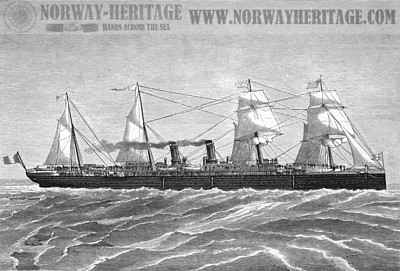
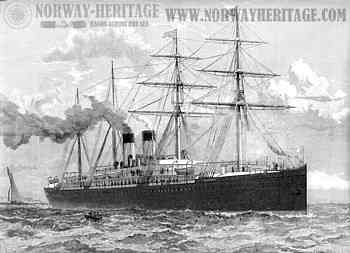
During the 1880s the French Line introduced a new generation of larger and faster passenger ships. La Normandie entered service in 1883, followed in 1886 by La Champagne, La Bourgogne, La Bretagne and La Gascogne. These five ships took over the Havre–New York service. The larger twin-screw La Touraine followed in 1891.
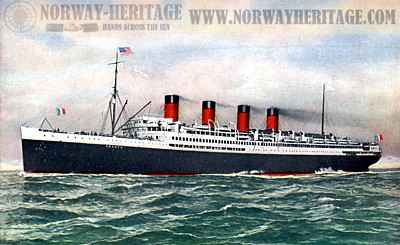
At the beginning of the twentieth century the company expanded rapidly. Among the new ships were La Lorraine, La Savoie and La Provence. The 23,000-ton France, which entered service in 1912, was nearly twice the tonnage of any previous C.G.T. ship and made her maiden passage from Havre to New York in 6 days and 49 minutes.
Emigrant Traffic
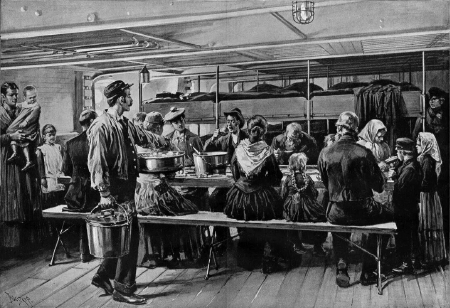
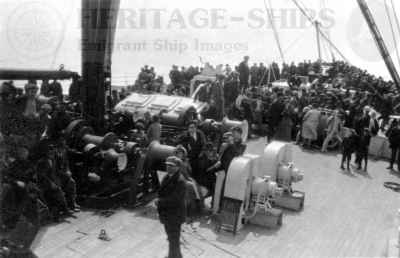
Steerage on a French Line steamerThe Chicago — Buy a copy
Although the French Line later became particularly associated with its large luxury liners, emigrants and other lower-fare passengers also formed part of its North Atlantic business.
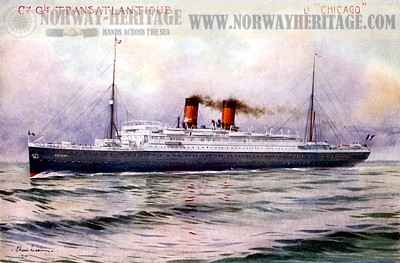
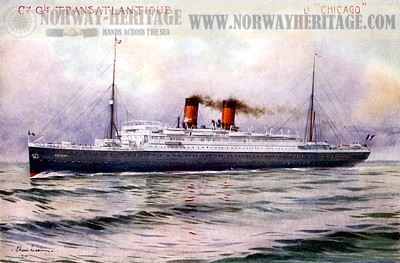
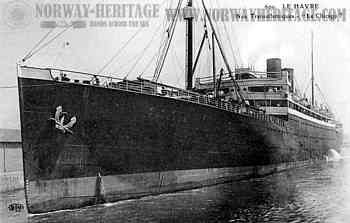
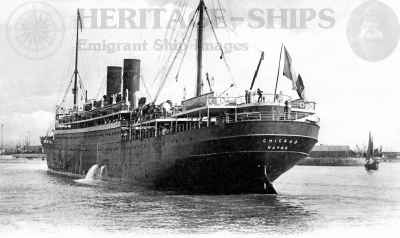
The Chicago, completed in 1908, and the Rochambeau, completed in 1911, carried second and third class passengers only. The company also operated ships specifically described as emigrant steamers.
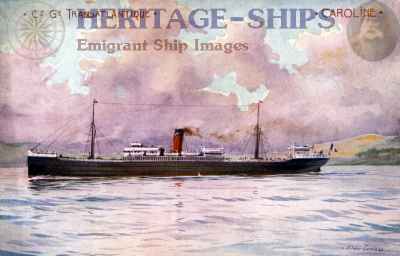
In 1912 the Floride, Caroline and Niagara opened a combined cargo and emigrant service from Havre to Quebec during the summer and Halifax during the winter.
The First World War interrupted normal operations. Many French Line ships were requisitioned for military service, and several of the larger liners later carried American troops to France. Altogether the company lost 29 ships during the war.
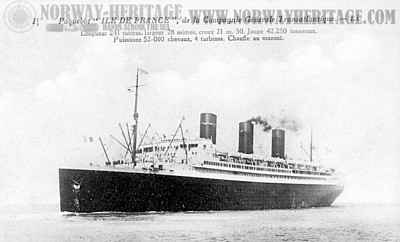
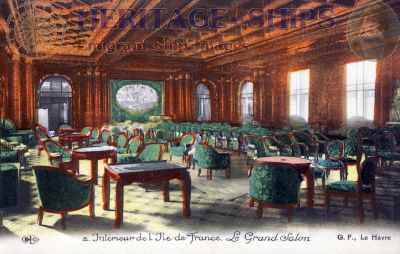
The Havre–New York service was restored after the war, and by 1921 the French Line was again operating two sailings a week. The Paris entered service that year, followed by the De Grasse in 1924 and the Île de France in 1927. The latter became especially noted for her modern French interiors and was highly successful in the first class passenger trade.
The culmination came with the Normandie, which entered service in 1935. At 79,280 tons she combined elaborate passenger accommodation with exceptional speed. On her maiden voyage she crossed from Bishop's Rock to Ambrose Light in 4 days 3 hours 2 minutes at an average speed of 29.98 knots, breaking the existing North Atlantic record.
The Second World War brought this era to an abrupt end. Normandie was laid up in New York and seized by the United States government in 1941. During conversion to a troopship she caught fire and capsized at her berth in February 1942.
Sources:
[N. R. P. Bonsor, North Atlantic Seaway (1955), pp. 207–217.]