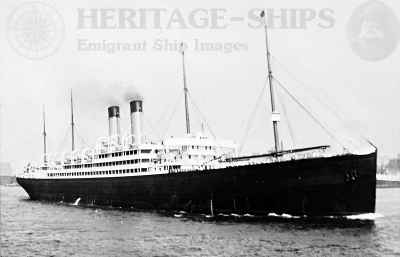
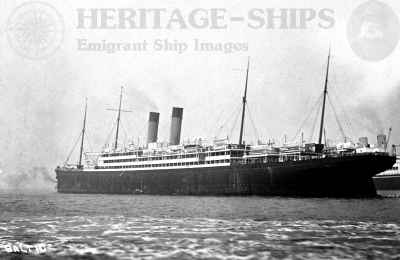
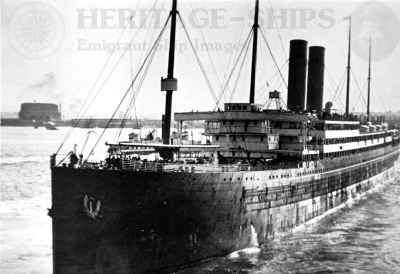
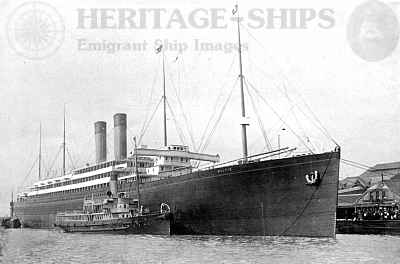
S.S. Baltic (2), White Star Line

Ship Data

Type Built Burden Dimensions Line / Owner
S.S. 1904 at Belfast, Ireland by Harland & Wolff 23,876 gross 725ft x 75ft White Star Line
Baltic (2) - White Star Line Steamship
Support Norway Heritage: Purchase a copy

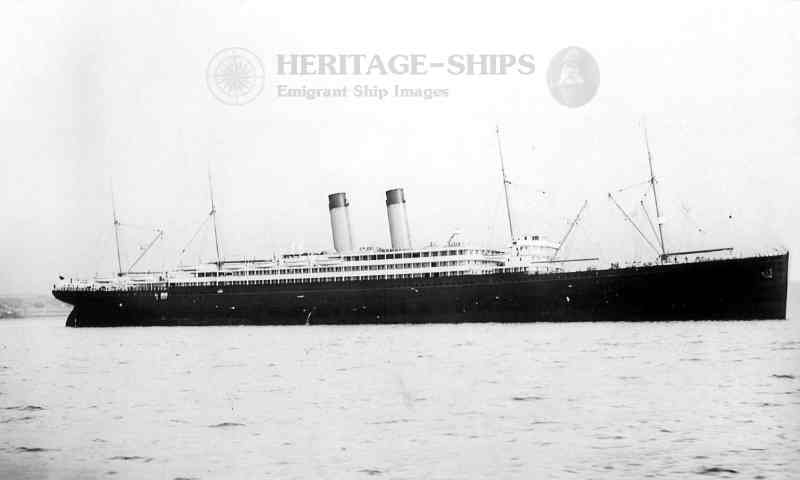
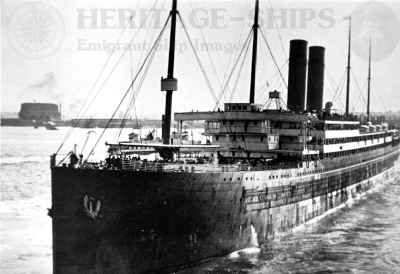
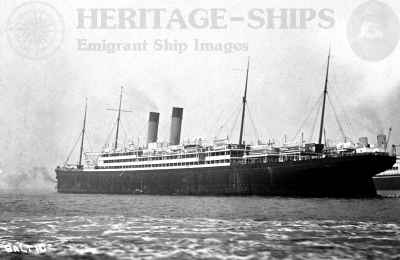
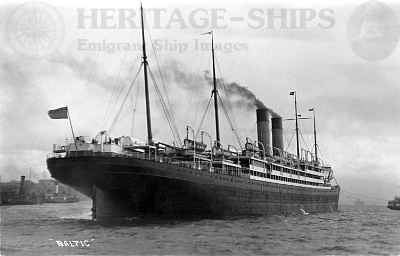
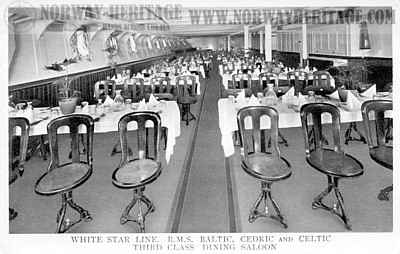
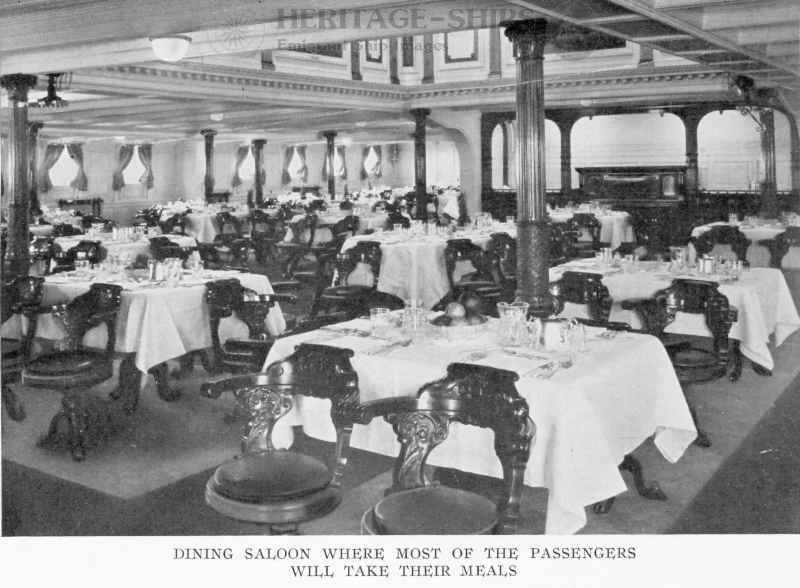
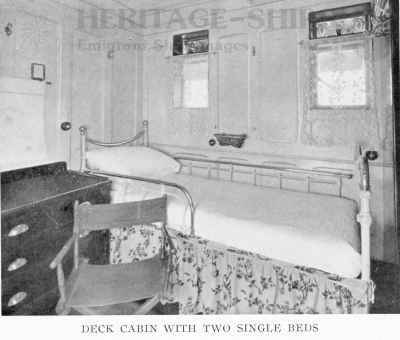
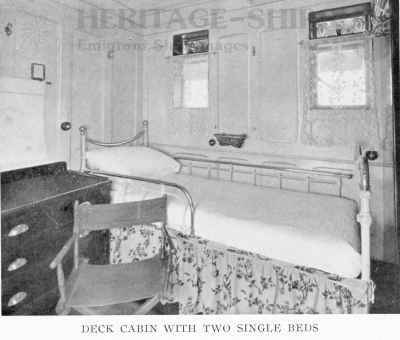
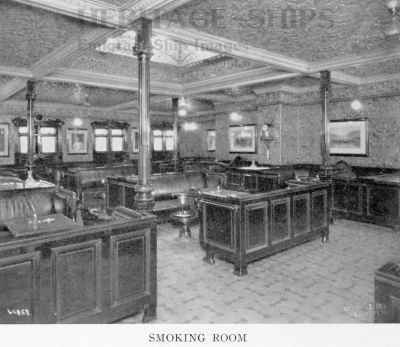
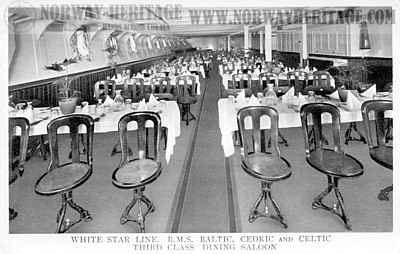
The White Star Line steamship Baltic was the largest vessel afloat when launched, with a tonnage of 23,876 tons gross, 21,693 under deck and 15,295 net. Her capacity for cargo was about 28,000 tons; and the displacement at her load draft about 40,000 tons. Her dimensions were reported as follows: Length 725ft 9in and breadth 75ft. She had been lengthened by about 20 feet during the construction which made her longer then har previously built sisters, the Celtic and Cedric. She had two funnels, four masts, 4 decks and shelter deck. There was a continuous shade deck running fore and aft, with three tiers of deck houses and two promenade decks above same. The 1st class smokingroom and library was situated on the upper promenade deck, and the two houses below contained the deck staterooms. The 1st class dining saloon was on the upper deck, and all the 1st class accommodation amidships. Immediately abaft the 1st class was the 2nd class accommodation, and there was also a comfortable smokingroom and library for the 2nd class passengers. The 3rd class passengers were provided for abaft the 2nd class, and, to a limited extent, at the fore end of the vessel. A great feature in this accommodation was a large number of state rooms, two, three, and four berth, and commodious and comfortable dining rooms fitted with tables and revolving chairs. There was accommodation in all for nearly 3,000 passengers, besides quarters for a crew of about 350. The decorations were of the most striking and artistic kind, and all the appointments handsome and luxurious. In addition to the ordinary staterooms, there were suites consisting of bed, sitting, and bath rooms. Tere were also somme single berth staterooms which was a new feature on the Atlantic. The heating and ventilation arrangements of the ship were most complete, and she was fitted with electric light and heating. As in the other large steamers of this type, one of the most notable features in the Baltic was the grand dining saloon, a very handsome apartment. Situated on the upper deck, it extended the full width of the ship (75ft). It was exceptionally lofty and airy with domed skylight. The saloon had seating accommodation for 370 people. There was originally accommodation for 425-1st, 450-2nd and 2,000-3rd class (steerage) passengers. In 1921, what was originally immigrant steerage accommodation was upgraded from 2,000 steerage cabins to 1,000 third class cabins.
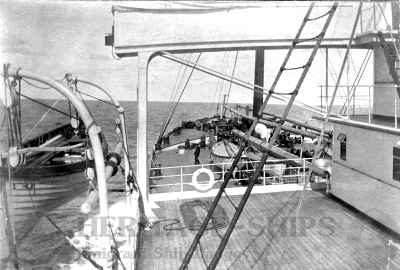
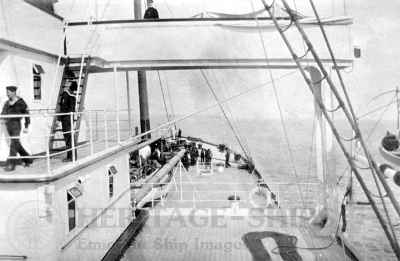
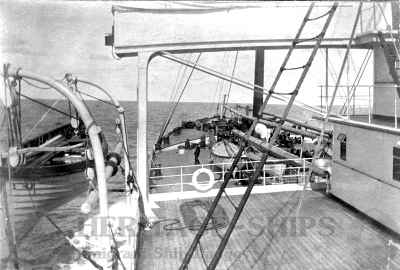
Baltic (2) - lifeboat No. 2, the forward deck with steerage passengers and part of the bridge in 1905
Baltic (2) - lifeboat No. 2, the forward deck and part of the bridge in 1905
Support Norway Heritage: Purchase a copy
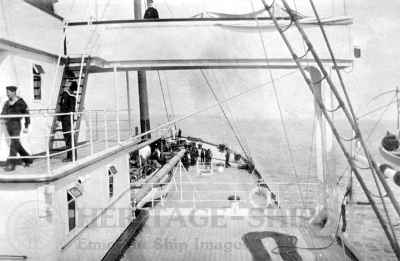
Baltic (2) - the forward deck with steerage passengers and in the foreground part of the bridge house with two sailors and the actual bridge with captain Edward J. Smith overlooking the deck in 1905
Baltic (2) - forward deck and bridge with captain Edward J. Smith overlooking the deck in 1905
Support Norway Heritage: Purchase a copy
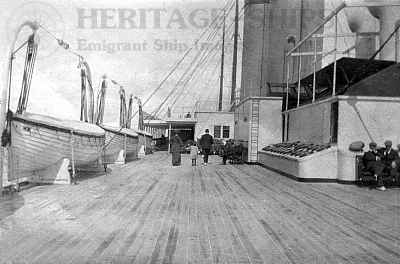
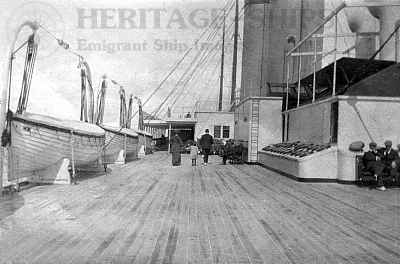
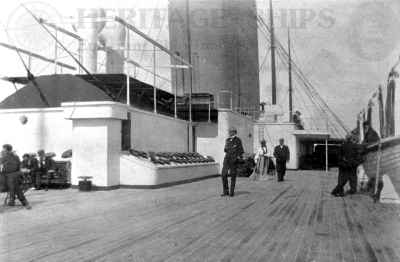
Baltic (2) - old snapshot showing passengers on the upper promenade deck in 1905
Baltic (2) - passengers on the upper promenade deck in 1905
Support Norway Heritage: Purchase a copy
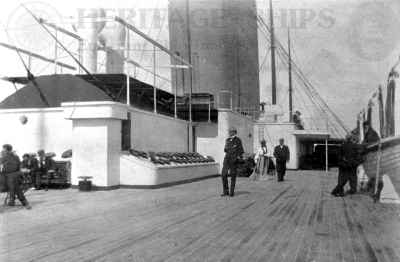
Baltic (2) - upper promenade deck in 1905
Support Norway Heritage: Purchase a copy

The Baltic was the first steamer to have a complete electric cooking and refrigerating apparatus. There was a refrigerating plant and large refrigerating chambers for the carriage of beef and food. The refrigerating machinery was of the C-O2 principle.

The Baltic was equipped with an electrical device for preventing collisions with other vessels. The moment another ship entered the magnetic field of the Baltic the needle of an indicator on board pointed in the direction of the vessel. Even the beats of an un seen steamer's propeller would be registered by it. Another safeguard showed if the lights were burning properly. The Baltic also had an electric log, an electric lead for telling the depth, and electric device for registering all signals.

The Baltic was fitted with engines of Harland and Wolff's quadruple expansion type with 8 cylinders of 33, 47½, 68½ & 98 inches diameter each pair and stroke 63 inches and gave about 13,000 I.H.P., 1,524 nominal horsepower. Her speed was about 17 knots. The engines were arranged on the balance principle, which reduced the problem with vibration. The twin engines and twin screws afforded another element of safety to the ship and passengers, and the possibility of danger was reduced to a minimum. She was built with a double bottom for carrying water ballast. The tanks or cells of the double box-like bottom could hold 6,500 tons of water, and powerful pumps enabled the spaces to be filled or emptied of water in a very short time. She was also was fitted with winches and other loading and discharging arrangements of the latest and most efficient type.

Call sign: VRSF. Official registration #: 118101.
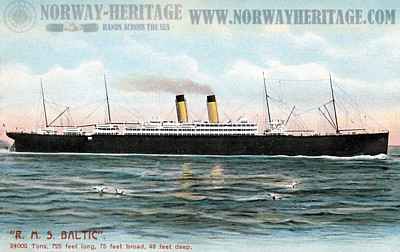
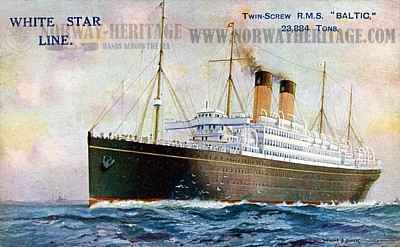
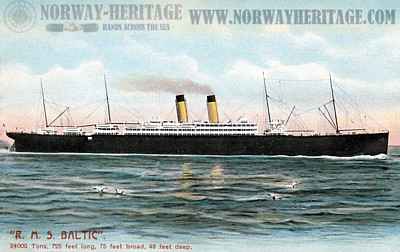
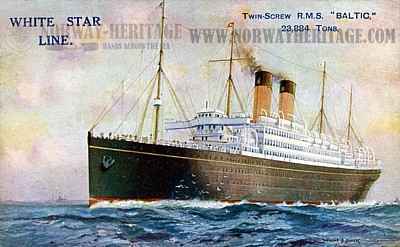
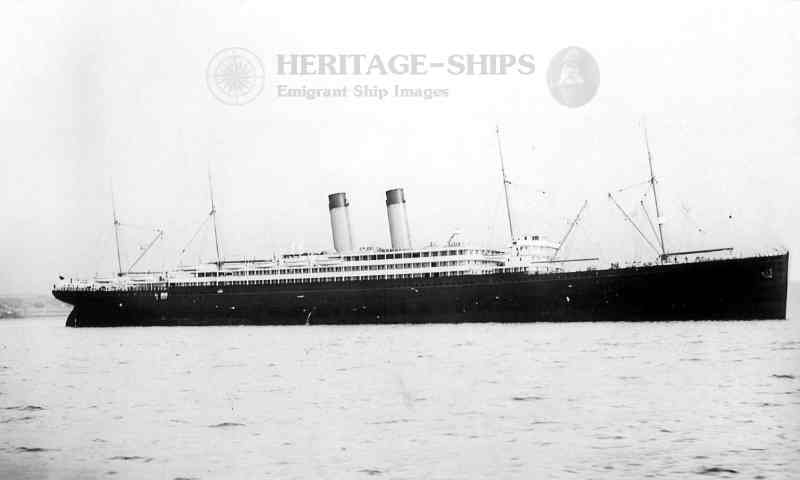
Baltic (2), White Star Line steamship
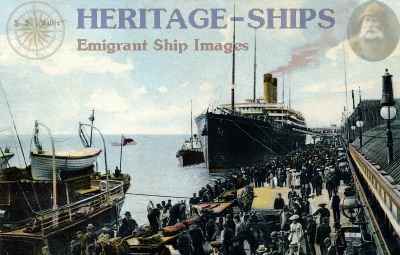
Picture of the S/S Baltic (2) from an old postcard
Support Norway Heritage: Purchase a copy
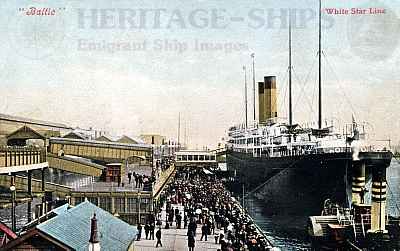
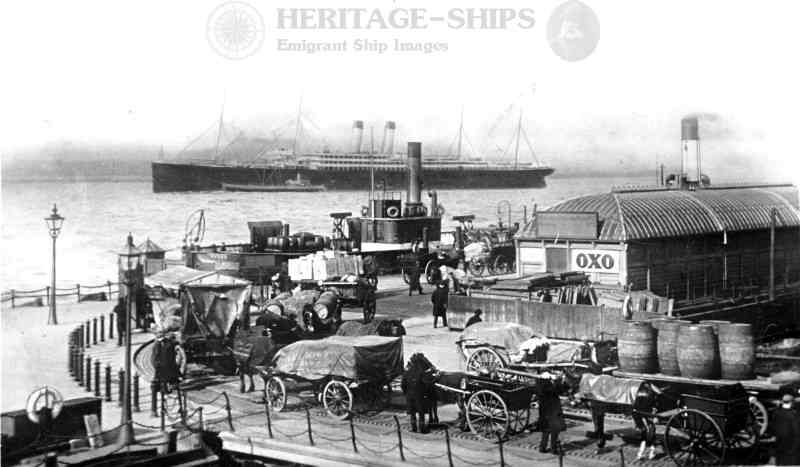
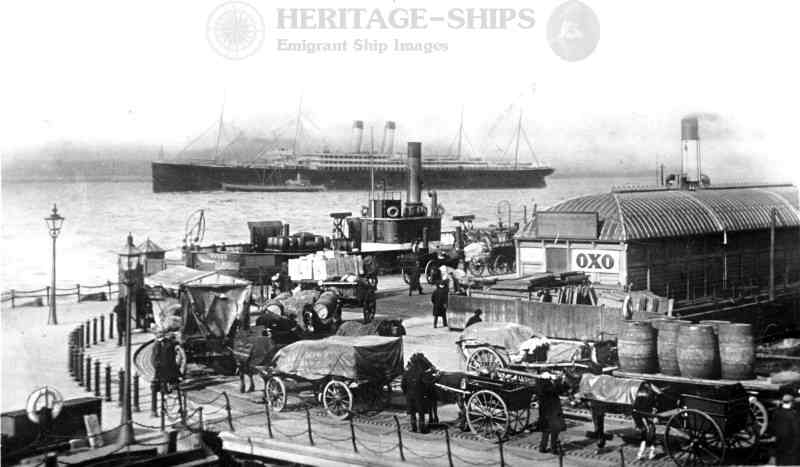
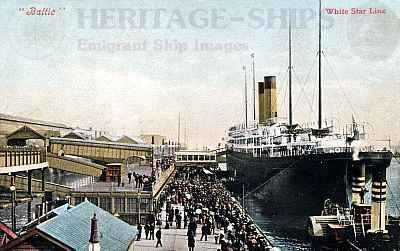
Baltic (2) - at the landing stage
Baltic (2) - at the landing stage, Liverpool
Support Norway Heritage: Purchase a copy
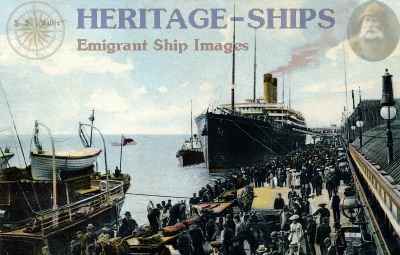
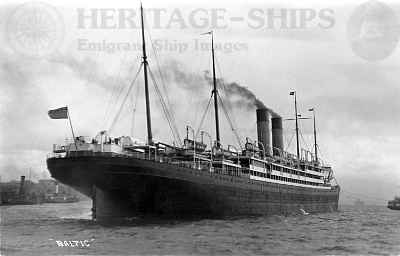
S/S Baltic (2)
S/S Baltic (2)
Support Norway Heritage: Purchase a copy
S/S Baltic (2)
S/S Baltic (2)
Support Norway Heritage: Purchase a copy
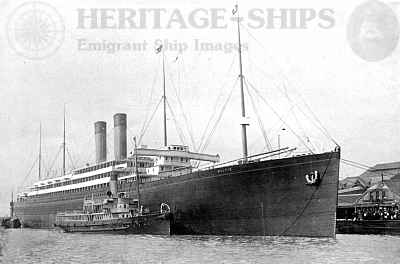
Baltic (2) - White Star Line Steamship at Liverpool
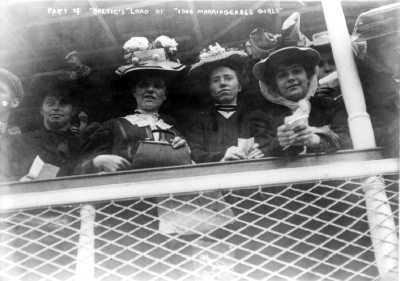
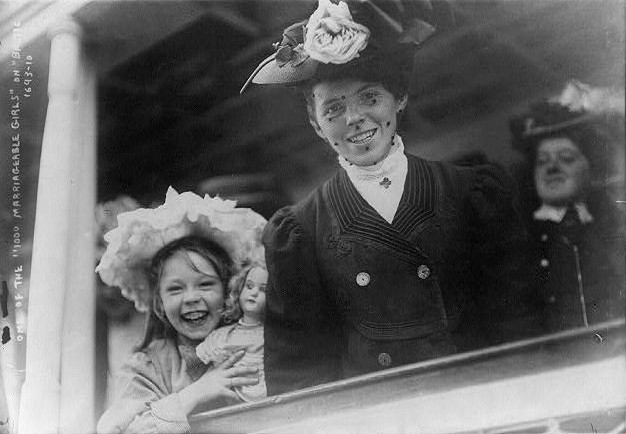
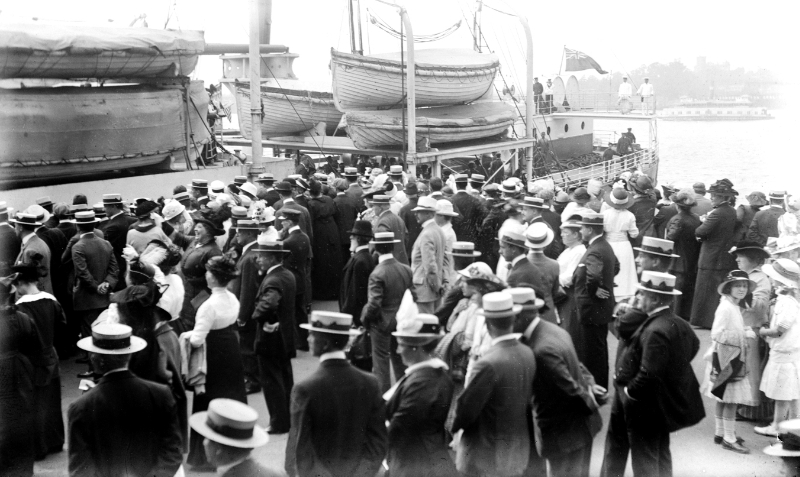
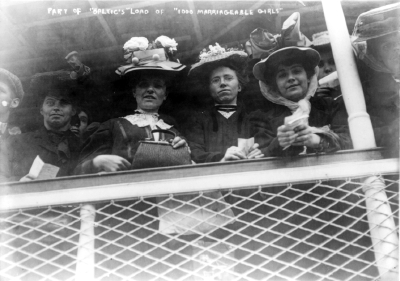
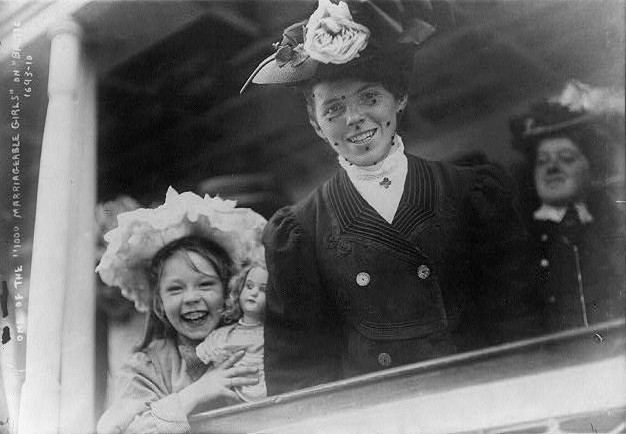
Baltic (2) - Part of the boatload of 1000 marriageable Girls arriving New York on the Baltic September 27, 1907
Part of the 1000 marriageable Girls arriving New York Sept. 27, 1907

Library of Congress, Prints & Photographs Division
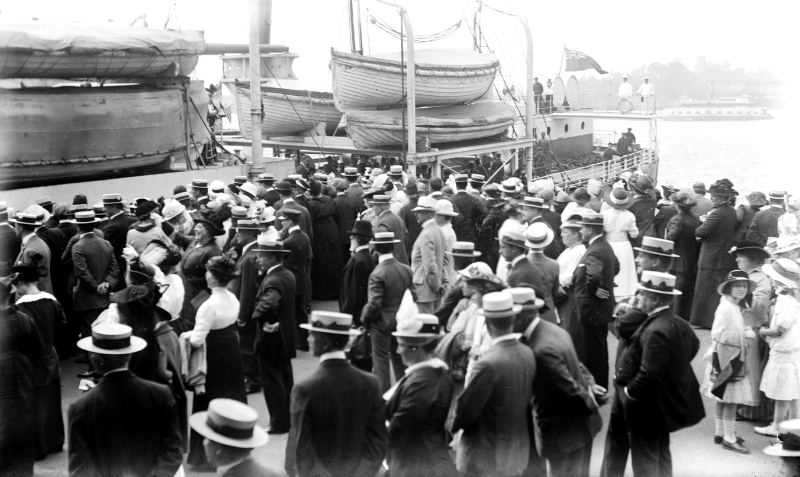
Baltic (2) - passengers arriving New York September 27, 1907

Library of Congress, Prints & Photographs Division
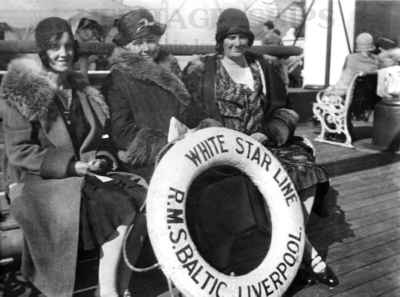
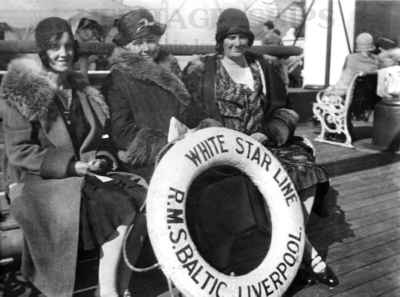
Baltic (2), White Star Line steamship - passengers on deck
Baltic (2), White Star Line steamship - passengers on deck.
Support Norway Heritage: Purchase a copy
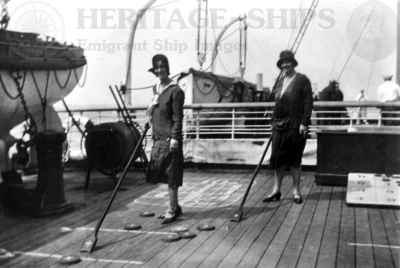
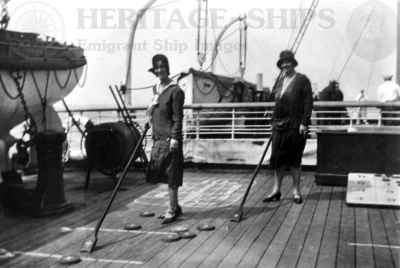
Baltic (2) - passengers playing Shuffleboard
Support Norway Heritage: Purchase a copy
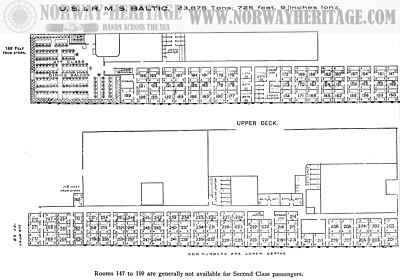
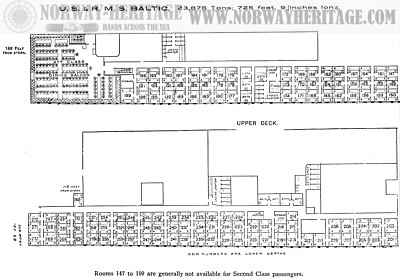
Baltic (2), White Star Line steamship second class plan
Baltic (2) - Second class plan, showing the
dining saloon and berthing on the upper deck.
Support Norway Heritage: Purchase a copy
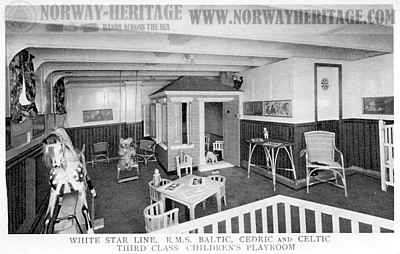
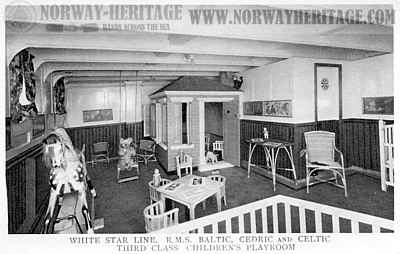
3rd class childrens playroom on the R.M.S. Baltic, Cedric and Celtic
Support Norway Heritage: Purchase a copy
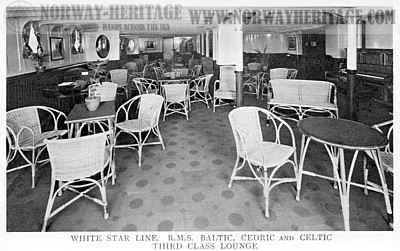
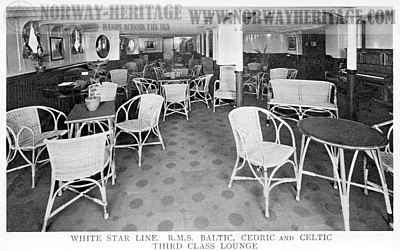
3rd class lounge on the R.M.S. Baltic, Cedric and Celtic
Support Norway Heritage: Purchase a copy
Baltic (2) - departing New York Aug. 27, 1914 with less then 100 passengers, most of them were Red Cross nurses
The steamship Baltic departing New York Aug. 27, 1914 with less then 100 passengers, most of them were Red Cross nurses
Library of Congress, Prints & Photographs Division

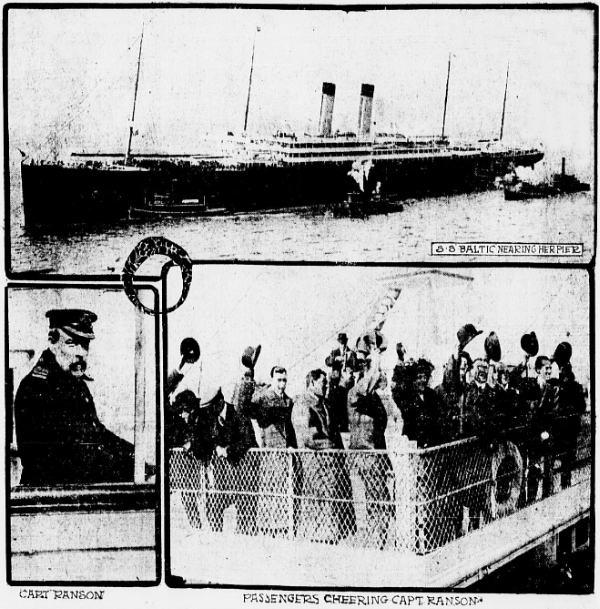
Captain Ranson's story of how the Baltic found the Republic in 1909 - told in a newspaper interview:


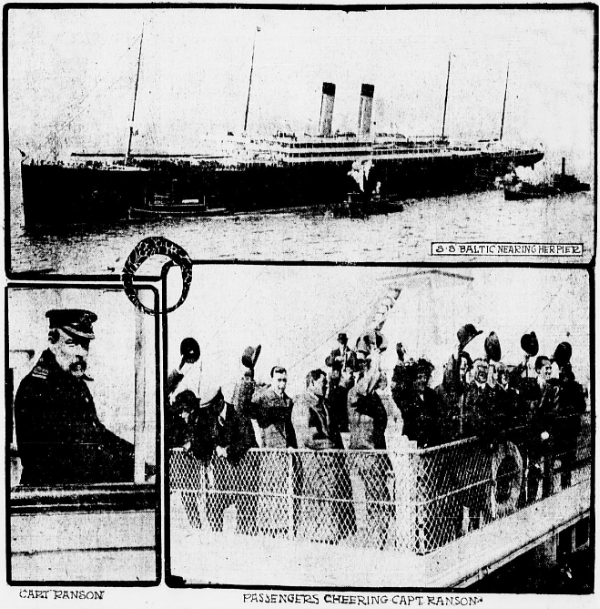
Baltic (2) - White Star Line steamship arriving New York with rescued passengers from the Republic - Capt. J. B. Ranson
Baltic (2) - White Star Line steamship arriving New York with rescued passengers from the Republic Jan. 25, 1909 - Capt. J. B. Ranson
From: The evening world., January 25, 1909
THE WONDERS OF WIRELESS.
HOW THE BALTIC FOUND THE REPUBLIC - A REMARKABLE STORY.
The story of how, by means of wireless telegraphy, the Baltic rescued the passengers of the Republic, which had been cut in two by the Florida, has won the admiration of the world. And the Marconi Company, through the hands of the inventor of the system, Signor Marconi, has presented to Mr. Binns, the gallant operator on the Republic, a gold watch in honor of the occasion. But no English paper has yet told, in detail what messages were sent to and fro in those long hours between the time when Binns sent out that historic signal C.Q.D. and the moment of the arrival of the Baltic as rescuer, nor in detail how science and seamanship cooperated.

The "Outlook" of New York, however, has secured from the captain of the Baltic, Capt. J. B. Ranson, a story of extraordinary interest, in which he tells how he got the signal, how he kept In touch with and found the Republic. In days to come this sort of knowledge will be commonplace. But his story tells what an endless series of messages were needed to bring about the rescue.

THE CAPTAIN'S TASK.
What the rescue meant to Captain Ranson may be guessed from this statement of his: - "I went up on the bridge about 6 o'clock on Saturday morning, and stayed there until we docked at 1 o'clock on Monday afternoon - about eighty hours. Food? My food was brought up to me. Sleep? Why, no, I was there on the bridge walking around. I couldn't have slept even had I gone below." "On the morning of the disaster we had already made the Nantucket lightship by the submarine bell. The Baltic was inward bound for New York from Liverpool, and we were going at a reduced speed in a very heavy fog. We had located the lightship about midnight, and had proceeded about eighty miles to the westward. At seven-fifteen on that Saturday morning the wireless operator came rushing up to me on the bridge, he did not take time to write the message on the usual printed form, but had put it down on the first slip of paper he could lay his hands on - and handed me this message:- "The Republic dangerously. Latitude 4017 north; longitude 70 west."

THE FIRST MESSAGE.
"You can see from the wording of this message, from which some such word as "injured" is apparently omitted after the word "dangerously", in what urgent haste it was sent. It came from the wireless station at Siasconset, on the island of Nantucket. My first move was to throw the helm hard a-starboard, and make for the position of the Republic with all possible speed. We knew her latitude and longitude, and our job was to find her in the thickest kind of a fog. At that time we were sixty-four miles from the position given us in the first message from the Republic, but of course she was drifting all the time, and during our twelve hours’ search I estimate we travelled two hundred miles in our zigzag course before we found her, and all within a sea area of ten square miles.

AN ALL-DAY HUNT.
"We pursued the Republic all day long, like a hound on the scent, and finally found her, at about half-past 6 in the evening, after steering and zigzagging about all day. I was getting wireless messages thick and fast all the time from Captain Sealby on the Republic, from the company's office in New York, via Siasconset, and from the other ships which had joined in the search for the Republic in response to the C.Q.D. distress call, of which we have heard so much during the past, few, days. This is a general danger signal to all ships equipped with wireless apparatus within range, and warns them to be on the alert to render help if necessary. The initials C.Q.D. may naturally be supposed to stand for “Come Quick! Danger!"

RECEIVING THE MESSAGES.
"The message I received was as follows:" "Hear general call and message repeated. Republic fifteen miles south of Nantucket light vessel. Requires immediate assistance. Do utmost to reach her. - Siasconset." "You can easily imagine that our operator was kept pretty busy receiving these messages and sending them to the bridge, and that on the bridge we were kept busy, not merely responding to them by wireless replies, but changing the course of our ship in response to the directions or instructions which they gave. As a matter of fact, it may literally be said that my ship, the Baltic, was steered some of the time by Captain Sealby, on the Republic. For example, read these messages from Captain Sealby."

Here Captain Ranson selected from a pile of a hundred or more telegrams written on the thin paper blanks of the Marconi Company the following dispatches, apologizing for their somewhat bedraggled appearance, which he explained was due to the fog and rain that enveloped the Baltic's bridge, where they had been received and read. "You are getting louder. Keep steering south-south-east. Listen for our ship's bell. - Sealby."
"Steer south-east now. - Sealby."

HOW THE TELEGRAMS HELPED.
"But it was not only these direct instructions that helped me, which were received, of course, after we were near enough to the Republic so that she could hear our whistle and the bombs we were firing. Some of Captain Sealby's telegrams helped me by inference. For example, quite early in the day I received this wireless:
"Have picked up Nantucket by submarine bell bearing north-north-east. Sounding thirty-five fathoms. -Sealby."
"Now this gave me very important and useful information. I knew that the Nantucket lightship's bell could be heard by the submarine telephone not over seventeen miles, and that therefore the Republic must be within a radius of seventeen miles from the lightship. Consequently, when I could not hear the submarine bell myself, I know that I was outside of the Republic's position."

THE DEDUCTIONS OF SEAMANSHIP.
"In the second place, I knew the Republic was in thirty-five fathoms of water. So we kept sounding continually, and as soon as we struck forty fathoms we changed our course lo strike thirty five fathoms, for I knew there was no use of our being in forty fathoms when they were in thirty-five; and so it was when we got near enough to the Republic for them to hear our whistle. "When I received a message from Captain Sealby saying, "We heard your whistle, but, it has gone out of range now", we immediately chanced our course to get within range again. Here are some of the messages received during the day that indicate the kind of wireless conversation that was continually going on:
"Lucania says please listen for his four blasts."
"Republic says we can hear a bomb to the west of us. Is it you?"
"La Lorraine says he hears Republic's bell, and is steering straight towards him."
"La Lorraine says tell Captain Ranson we are blowing a whistle, not a horn. Please make as much noise as possible."
"Have not heard Lucania, but she is still around. Am in touch with Lorraine. - Sealby."
"La Lorraine and Baltic ask Republic if he hears bell, bomb, or whistle. He replies he hears steamer's whistle' and thinks we must be close to him - Baltic operator."
Republic operator says, "We are sinking rapidly. We are keeping everything clear and standing by for Republics signals. - Baltic operator."
"Captain Baltic: Am cruising round trying to locate you. - Captain Lucania"
"Captain Baltic: There is a bomb bearing north-west from me. Keep firing. - Sealby."
"Siasconset says hear from Republic: says to Baltic to hurry; they are sinking fast. - Baltic operator."
"You are very close now. Right abeam. Come carefully. You are on our port side. Have just seen your rocket. You are very close to us. - Sealby."

THE DAMAGED SHIP FOUND.
"These' messages, taken at random from scores of others, may seem some way matter-of-fact to you, but I can assure you they meant a good deal to us on the bridge of the Baltic, and they indicate how we had to feel our way. After twelve hours search zigzagging and circling in the fog, changing our course as each new bit of information came by wireless, we at last found the Republic. We came within a hundred feet of the ship before we could see anything, and then we saw only the faint glare of a green light they were burning - like the illumination you burn on the Fourth of July."


Description of the steamship Baltic published in connection with the Mediterranean cruise in 1924 (Clark's 21st cruise):


THE WHITE STAR LINER "BALTIC"
The "Baltic" is one of the largest and finest vessels in the regular North Atlantic passenger trade between New York and Liverpool, being exceeded in size by only one vessel in that trade. She registers 23,884 tons, and is one of the world's first dozen of giant ships. Her length is 726 feet and breadth 75.5 feet.

UNUSUAL STEADINESS
Owing to her breadth and depth, the "Baltic" is famous for her steadiness. Many experienced transatlantic travelers prefer her to any other ship on this account alone. Seamen swear by her as "a great seaboat." Even in winter storms in the North Atlantic she is remarkable for steadiness. The most delicate passenger will find the great ship so delightfully steady that no thought of seasickness need be permitted to spoil a single day's pleasure.

A MONSTER PRIVATE YACHT- NO CROWDING
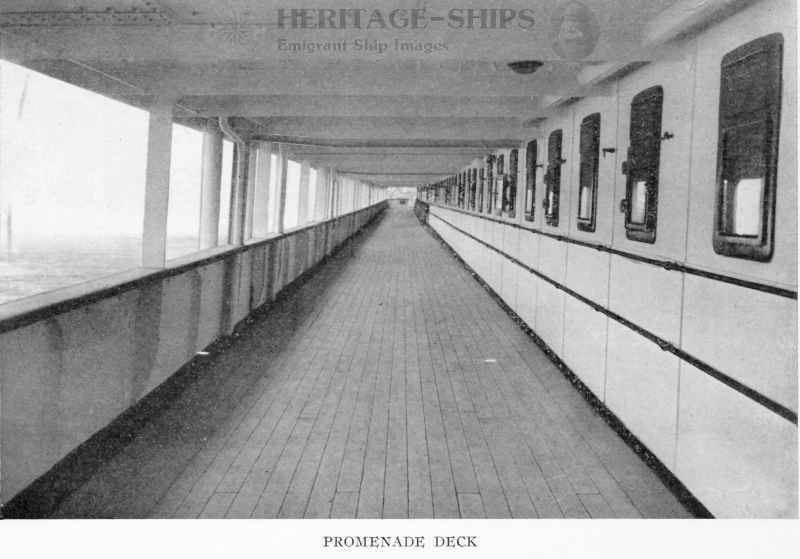
Another feature of the "Baltic" that appeals to discriminating travelers is the large amount of room on board. The ship has a total capacity for 2,775 passengers, but on the Clark Cruise the number is restricted to much less than a third of that capacity of the ship's accommodations. That these accommodations are exceedingly comfortable goes without saying. Built at the famous yards of Harland & Wolff at Belfast, Ireland, the same yards that produced the "Olympic," the "Baltic" represents the same standard of construction as that celebrated vessel. As in construction so also in upkeep, the "Baltic" represents the best in ocean travel service. Her immaculate condition at all times is traditional, while her construction, with broad straight decks, wide corridors, and large, airy rooms, is notable. In short, breadth, bigness, noble lines and extreme spaciousness, distinguish this popular vessel.

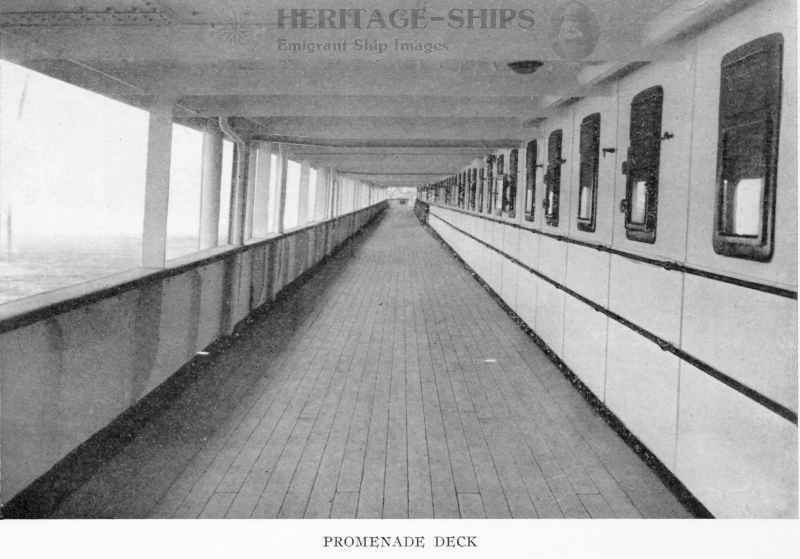
Baltic (2) - sheltered promenade deck


PUBLIC ROOMS OF SUMPTUOUS APPOINTMENTS
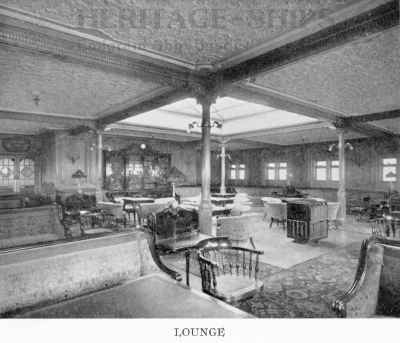
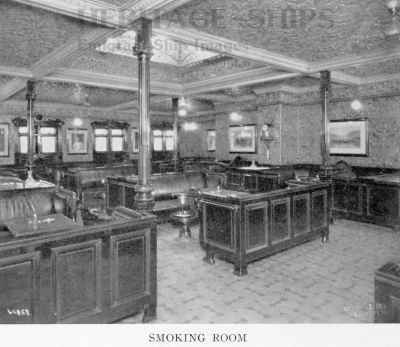
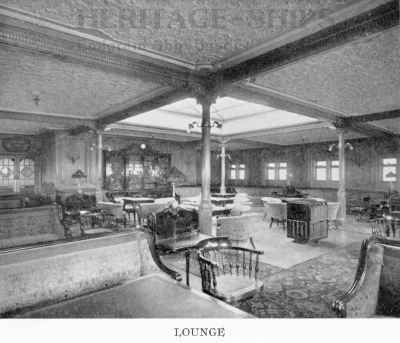
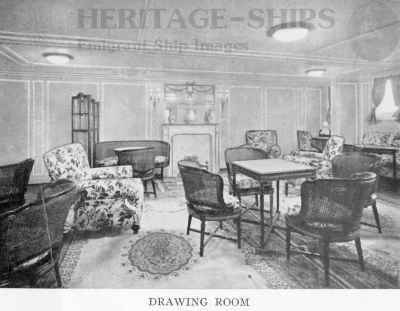
The "Baltic's" public rooms are so located that they have a maximum of outside light and ventilation. On the topmost deck are the lounge and smoking room. The latter is finished in dark woods, with walls of Spanish leather embossed in gold, and with many comfortable bays, having leather-cushioned seats, in which parties large or small may have the privacy and comforts of a high-class club. At the forward end of this same deck is the lounge, a truly beautiful room, with windows giving a view straight ahead of the ship, and on both sides. The size of the "Baltic" may be judged from the single fact that though this room is so commandingly situated, it is still 254 feet from the bow. The fittings of this room are substantially elegant, with sofas and chairs upholstered in tapestry, with tables, writing desks and other furniture in polished woods, and with walls panelled in oak, and hung with choice engravings. The ship's well-stocked library is in this room. Further aft is still another public apartment devoted to similar uses. The lounge is the social centre of the ship, and is used by both sexes. Afternoon tea and after-dinner coffee are served here, while liqueurs, cigars and cigarettes are obtainable. Cards, chess and other games are played here, and every evening there is a concert by the ship's orchestra. Directly under the lounge, on B deck, is a cozy drawing room. The key-note of the decoration in the drawing room is delicacy and fine harmony of color, and the style is based upon one of the small private rooms of Marie Antoinette at Versailles. The walls are panelled and painted in delicate shades of lavender and white; there is a charming mantelpiece with logs glowing on a marble hearth; several writing tables and tea tables are provided; while some of the most luxurious settees and easy chairs stand on sumptuous Persian rugs of the finest quality. All the chairs and sofas are provided with chintz loose covers, giving at once a home-like look to the room, which is beautifully lighted in the day time from large casement windows and at night with magnificent electric fittings. Smoking is not allowed in this room, which is used principally for reading, conversation and correspondence. Numerous convenient writing desks here are supplied with crested note paper. The room is much favored by women passengers.


SPACIOUS DINING SALOON WITH SMALL TABLES
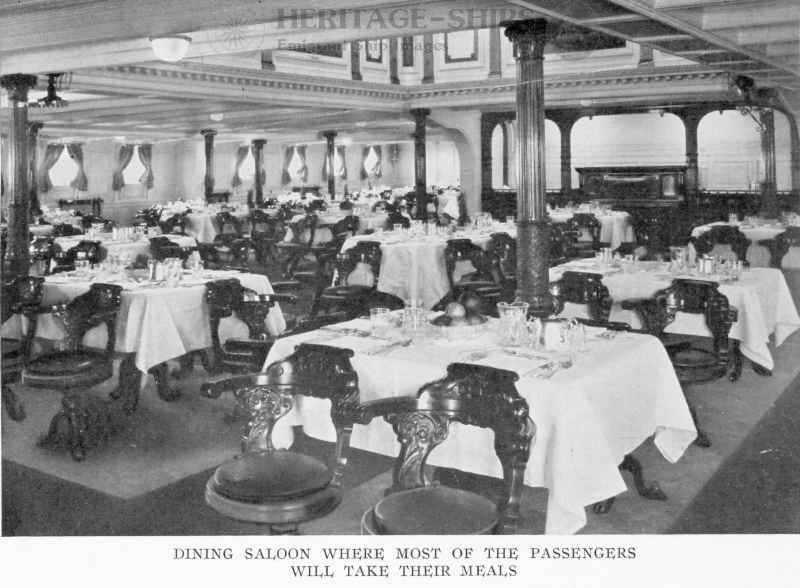
(Where most of the passengers will take their meals)
On the deck below is the spacious forward dining room which extends the full width of the ship and is lighted by numerous ports. The prevailing decorations are flat white relieved by carved oak, and at the entrance by a grill of polished brass. The effect of the room is exceedingly homelike and cheerful. The tables are arranged on the restaurant plan, the average table seating four or six people. Practically every table in the room commands a view of the whole apartment. Further aft on the same deck is another dining saloon where meals will be served of the same high standard and at the same times. The sleeping rooms on the "Baltic" are not only spacious but are arranged to meet the demands of travelers who require a maximum of comfort and all modern arrangements.

Baltic (2) - dining saloon


ROOMS EN SUITE, WITH PRIVATE BATH
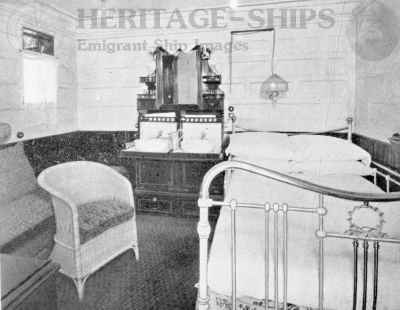
There are no less than 33 rooms which can be arranged en suite with bath connecting. Practically all the rooms of this class have comfortable beds as well as berths and couches. For the rooms not equipped with private baths there is a generous provision of conveniently located public bath rooms which are kept in immaculate condition. The outside rooms on the "Baltic" are notable for the size of the ports and windows which afford an excellent view of the sea, and also ample ventilation. The ship is notable for her small number of inside rooms, and many of these also are especially ventilated and lighted by ingenious arrangements of ports through the deck. It is interesting to recall that it was our good ship "Baltic" that carried General Pershing, his staff, and headquarters company (the very first contingent), to the other side when we entered the Great War on the side of the Allies.


BATH ROOM EQUIPMENT
The bath room facilities are most ample. The bath room stewards and stewardesses will make stated arrangements for baths according to the preference of the passengers. LAUNDRY can be given to the room stewards to be laundered on shore, but it is better to have it done at the Hotels in Cairo, Jerusalem and Rome, where it is done well and quickly. SHOES will be cleaned and polished if left outside the stateroom door.

Chronological History

Year Event
1903 Nov. 21, successfully launched in the teeth of a severe gale at Belfast
1904 June 23: arrived Liverpool from Belfast
1904 June 29, departed on her maiden voyage from Liverpool to New York (Capt. Edward J. Smith) This was the 10th command of Capt. Smith, formerly of the Majestic. He was later to command the Titanic on her fatal maiden voyage in 1912
1904 June 30: called at Queenstown
1904 Liverpool → New York July 8
1904 Made the maiden voyage in 7 days 13 hours and 37 minutes - brought 906 passengers - 209 first class, 142 second class and 555 steerage
1904 July 27: departed Liverpool for New York via Queenstown (Capt. Edward J. Smith)
1904 Liverpool → New York Aug. 4
1904 Aug. 24: departed Liverpool for New York via Queenstown (Capt. Edward J. Smith)
1904 Liverpool → New York Sept. 1
1904 Sep. 21: departed Liverpool for New York via Queenstown (Capt. Edward J. Smith)
1904 Liverpool → New York Sept. 29
1904 Oct. 19: departed Liverpool for New York via Queenstown (Capt. Edward J. Smith)
1904 Liverpool → New York Oct. 27
1904 Nov. 16: departed Liverpool for New York via Queenstown (Capt. Edward J. Smith)
1904 Liverpool → New York Nov. 24
1904 Dec. 14: departed Liverpool for New York via Queenstown (Capt. Edward J. Smith)
1904 Dec. 23: arrived New York from Liverpool via Queenstown (Capt. Edward J. Smith)
1905 Jan. 18: departed Liverpool for New York via Queenstown (Capt. Edward J. Smith)
1905 Jan. 28: arrived New York from Liverpool via Queenstown (Capt. Edward J. Smith)
1905 Feb. 15: departed Liverpool for New York via Queenstown (Capt. Edward J. Smith)
1905 Feb. 24: arrived New York from Liverpool via Queenstown (Capt. Edward J. Smith)
1905 Mar. 15: departed Liverpool for New York via Queenstown (Capt. Edward J. Smith)
1905 Liverpool → New York Mar. 23
1905 Apr. 12: departed Liverpool for New York via Queenstown (Capt. Edward J. Smith)
1905 Liverpool → New York Apr. 20
1905 May 10: departed Liverpool for New York via Queenstown
1905 May 11: called at Queenstown
1905 Experienced terrific weather which with some mishap retarded her passage
1905 Liverpool → New York May 19
1905 June 7: departed Liverpool for New York via Queenstown
1905 Liverpool → New York June 15
1905 July 12: departed Liverpool for New York via Queenstown (Capt. Edward J. Smith)
1905 Liverpool → New York July 20
1905 Aug. 9: departed Liverpool for New York via Queenstown (Capt. Edward J. Smith)
1905 Liverpool → New York Aug. 17
1905 Sep. 6: departed Liverpool for New York via Queenstown (Capt. Edward J. Smith)
1905 Liverpool → New York Sept. 14
1905 Oct. 4: departed Liverpool for New York via Queenstown (Capt. Edward J. Smith)
1905 Liverpool → New York Oct. 12
1905 Oct. 27: arrived Liverpool from new York
1905 Nov. 1: departed Liverpool for New York via Queenstown (Capt. Edward J. Smith)
1905 Nov. 2: called at Queenstown on way from Liverpool to New York, among the passengers were Andrew Carnegie and wife
1905 Liverpool → New York Nov. 11
1905 Nov. 29: departed Liverpool for New York via Queenstown (Capt. Edward J. Smith)
1905 Liverpool → New York Dec. 8
1906 Jan. 3: departed Liverpool for New York via Queenstown (Capt. Edward J. Smith)
1906 Jan. 12: arrived New York from Liverpool via Queenstown (Capt. Edward J. Smith)
1906 Jan. 31: departed Liverpool for New York via Queenstown (Capt. Edward J. Smith)
1906 Feb. 8: arrived New York from Liverpool via Queenstown (Capt. Edward J. Smith)
1906 Feb. 28: departed Liverpool for New York via Queenstown (Capt. Edward J. Smith)
1906 Mar. 9: arrived New York from Liverpool via Queenstown (Capt. Edward J. Smith)
1906 Mar. 28: departed Liverpool for New York via Queenstown (Capt. Edward J. Smith)
1906 Apr. 5: arrived New York from Liverpool via Queenstown (Capt. Edward J. Smith)
1906 Apr. 23: departed Liverpool for New York via Queenstown (Capt. Edward J. Smith)
1906 May 5: arrived New York from Liverpool via Queenstown (Capt. Edward J. Smith)
1906 May 23: departed Liverpool for New York via Queenstown (Capt. Edward J. Smith)
1906 June 1: arrived New York from Liverpool via Queenstown (Capt. Edward J. Smith)
1906 June 6: departed New York for Liverpool
1906 June 20: departed Liverpool for New York via Queenstown (Capt. Edward J. Smith)
1906 June 29: arrived New York from Liverpool via Queenstown (Capt. Edward J. Smith)
1906 July 18: departed Liverpool for New York via Queenstown (Capt. Edward J. Smith)
1906 July 26: arrived New York from Liverpool via Queenstown (Capt. Edward J. Smith)
1906 Aug. 15: departed Liverpool for New York via Queenstown (Capt. Edward J. Smith)
1906 Aug. 23: arrived New York from Liverpool via Queenstown (Capt. Edward J. Smith)
1906 Sep. 12: departed Liverpool for New York via Queenstown (Capt. Edward J. Smith)
1906 Sep. 21: arrived New York from Liverpool via Queenstown (Capt. Edward J. Smith)
1906 Oct. 10: departed Liverpool for New York via Queenstown (Capt. Edward J. Smith)
1906 Oct. 18: arrived New York from Liverpool via Queenstown (Capt. Edward J. Smith)
1906 Nov. 7: departed Liverpool for New York via Queenstown (Capt. Edward J. Smith)
1906 Nov. 15: arrived New York from Liverpool via Queenstown (Capt. Edward J. Smith)
1906 Dec. 5: departed Liverpool for New York via Queenstown (Capt. Edward J. Smith)
1906 Dec. 14: arrived New York from Liverpool via Queenstown (Capt. Edward J. Smith)
1907 Jan. 30: departed Liverpool for New York via Queenstown (Capt. Edward J. Smith)
1907 Feb. 8: arrived New York from Liverpool via Queenstown (Capt. Edward J. Smith)
1907 Feb. 27: departed Liverpool for New York via Queenstown (Capt. Edward J. Smith)
1907 Mar. 8: arrived New York from Liverpool via Queenstown (Capt. Edward J. Smith)
1907 Mar. 27: departed Liverpool for New York via Queenstown (Capt. Edward J. Smith)
1907 Feb. 5: arrived New York from Liverpool via Queenstown (Capt. Edward J. Smith) - after this voyage Capt. Smith was given the command of the new White Star liner Adriatic (2)
1907 Apr. 24: departed Liverpool for New York via Queenstown - her new commander was Joseph Barlow Ranson, formerly in command of the White Star steamers Medic, Suevic and Ionic
1907 May 2: arrived New York from Liverpool via Queenstown (Capt. J. B. Ranson)
1907 May 8: departed New York for Liverpool via Queenstown - ran her bow up in the mud at the outer edge of the Swash Channel - was delayed for several hours before she came float, no damages
1907 May 31: departed Liverpool for New York via Queenstown (Capt. J. B. Ranson)
1907 June 8: arrived New York from Liverpool via Queenstown (Capt. J. B. Ranson)
1907 June 27: departed Liverpool for New York via Queenstown (Capt. J. B. Ranson)
1907 July 7: arrived New York from Liverpool via Queenstown (Capt. J. B. Ranson)
1907 July 25: departed Liverpool for New York via Queenstown (Capt. J. B. Ranson)
1907 Aug. 3: arrived New York from Liverpool via Queenstown (Capt. J. B. Ranson)
1907 Aug. 22: departed Liverpool for New York via Queenstown (Capt. J. B. Ranson)
1907 Aug. 30: arrived New York from Liverpool via Queenstown (Capt. J. B. Ranson)
1907 Sep. 19: departed Liverpool for New York via Queenstown (Capt. J. B. Ranson)
1907 Sep. 27: arrived New York from Liverpool via Queenstown with abouth 1,000 marriageable girls aboard (Capt. J. B. Ranson)
1907 Oct. 17: departed Liverpool for New York via Queenstown (Capt. J. B. Ranson)
1907 Oct. 26: arrived New York from Liverpool via Queenstown (Capt. J. B. Ranson)
1907 Nov. 14: departed Liverpool for New York via Queenstown (Capt. J. B. Ranson)
1907 Nov. 22: arrived New York from Liverpool via Queenstown (Capt. J. B. Ranson)
1907 Dec. 12: departed Liverpool for New York via Queenstown (Capt. J. B. Ranson)
1907 Dec. 21: arrived New York from Liverpool via Queenstown (Capt. J. B. Ranson)
1908 Jan. 9: departed Liverpool for New York via Queenstown (Capt. J. B. Ranson)
1908 Jan. 18: arrived New York from Liverpool via Queenstown (Capt. J. B. Ranson)
1908 Feb. 6: departed Liverpool for New York via Queenstown (Capt. J. B. Ranson)
1908 Feb. 15: arrived New York from Liverpool via Queenstown (Capt. J. B. Ranson)
1908 Mar. 5: departed Liverpool for New York via Queenstown (Capt. J. B. Ranson)
1908 Mar. 14: arrived New York from Liverpool via Queenstown (Capt. J. B. Ranson)
1908 Apr. 2: departed Liverpool for New York via Queenstown (Capt. J. B. Ranson)
1908 Apr. 11: arrived New York from Liverpool via Queenstown (Capt. J. B. Ranson)
1908 Apr. 30: departed Liverpool for New York via Queenstown (Capt. J. B. Ranson)
1908 May 9: arrived New York from Liverpool via Queenstown (Capt. J. B. Ranson)
1908 May 28: departed Liverpool for New York via Queenstown (Capt. J. B. Ranson)
1908 June 6: arrived New York from Liverpool via Queenstown (Capt. J. B. Ranson)
1908 June 25: departed Liverpool for New York via Queenstown (Capt. J. B. Ranson)
1908 July 3: arrived New York from Liverpool via Queenstown (Capt. J. B. Ranson)
1908 July 26: departed Liverpool for New York via Queenstown (Capt. J. B. Ranson)
1908 Aug. 1: arrived New York from Liverpool via Queenstown (Capt. J. B. Ranson)
1908 Aug. 20: departed Liverpool for New York via Queenstown (Capt. J. B. Ranson)
1908 Aug. 28: arrived New York from Liverpool via Queenstown (Capt. J. B. Ranson)
1908 Sep. 17: departed Liverpool for New York via Queenstown (Capt. J. B. Ranson)
1908 Sep. 25: arrived New York from Liverpool via Queenstown (Capt. J. B. Ranson)
1908 Oct. 15: departed Liverpool for New York via Queenstown (Capt. J. B. Ranson)
1908 Oct. 23: arrived New York from Liverpool via Queenstown (Capt. J. B. Ranson)
1908 Nov. 13: departed Liverpool for New York via Queenstown (Capt. J. B. Ranson)
1908 Nov. 21: arrived New York from Liverpool via Queenstown (Capt. J. B. Ranson)
1908 Dec. 11: departed Liverpool for New York via Queenstown (Capt. J. B. Ranson)
1908 Dec. 20: arrived New York from Liverpool via Queenstown (Capt. J. B. Ranson)
1909 Jan. 13: departed Liverpool for New York via Queenstown (Capt. J. B. Ranson)
1909 Jan. 23-24: rescued surviving passengers after the collision between the White Star liner Republic (Capt. Sealby) and Italian Lloyd liner Florida. Baltic was commanded by Capt. Ranson
1909 Jan. 25: arrived New York carrying 1,659 rescued passengers after the collision between the steamers Republic and Florida
1909 Feb. 12: arrived New York from Liverpool via Queenstown (Capt. J. B. Ranson)
1909 Feb. 20: arrived New York from Liverpool via Queenstown (Capt. J. B. Ranson)
1909 Mar. 12: departed Liverpool for New York via Queenstown (Capt. J. B. Ranson)
1909 Mar. 21: arrived New York from Liverpool via Queenstown (Capt. J. B. Ranson)
1909 Apr. 9: departed Liverpool for New York via Queenstown (Capt. J. B. Ranson)
1909 Apr. 18: arrived New York from Liverpool via Queenstown (Capt. J. B. Ranson)
1909 May 7: departed Liverpool for New York via Queenstown (Capt. J. B. Ranson)
1909 May 15: arrived New York from Liverpool via Queenstown (Capt. J. B. Ranson)
1909 June 4: departed Liverpool for New York via Queenstown (Capt. J. B. Ranson)
1909 June 12: arrived New York from Liverpool via Queenstown (Capt. J. B. Ranson)
1909 July 2: departed Liverpool for New York via Queenstown (Capt. J. B. Ranson)
1909 July 10: arrived New York from Liverpool via Queenstown (Capt. J. B. Ranson)
1909 July 31: departed Liverpool for New York via Queenstown (Capt. J. B. Ranson)
1909 Aug. 8: arrived New York from Liverpool via Queenstown (Capt. J. B. Ranson)
1909 Aug. 28: departed Liverpool for New York via Queenstown (Capt. J. B. Ranson)
1909 Sep. 5: arrived New York from Liverpool via Queenstown (Capt. J. B. Ranson)
1909 Sep. 25: departed Liverpool for New York via Queenstown (Capt. J. B. Ranson)
1909 Oct. 3: arrived New York from Liverpool via Queenstown (Capt. J. B. Ranson)
1909 Oct. 23: departed Liverpool for New York via Queenstown (Capt. J. B. Ranson)
1909 Oct. 31: arrived New York from Liverpool via Queenstown (Capt. J. B. Ranson)
1909 Nov. 11: departed Liverpool for New York via Queenstown (Capt. J. B. Ranson)
1909 Nov. 28: arrived New York from Liverpool via Queenstown (Capt. J. B. Ranson)
1910 Jan. 8: departed Liverpool for New York via Queenstown (Capt. J. B. Ranson)
1910 Jan. 18: arrived New York from Liverpool via Queenstown (Capt. J. B. Ranson)
1910 Feb. 5: departed Liverpool for New York via Queenstown (Capt. J. B. Ranson)
1910 Feb. 15: arrived New York from Liverpool via Queenstown (Capt. J. B. Ranson)
1910 Mar. 5: departed Liverpool for New York via Queenstown (Capt. J. B. Ranson)
1910 Mar. 13: arrived New York from Liverpool via Queenstown (Capt. J. B. Ranson)
1910 Apr. 2: departed Liverpool for New York via Queenstown (Capt. J. B. Ranson)
1910 Apr. 10: arrived New York from Liverpool via Queenstown (Capt. J. B. Ranson)
1910 Apr. 30: departed Liverpool for New York via Queenstown (Capt. J. B. Ranson)
1910 May 8: arrived New York from Liverpool via Queenstown (Capt. J. B. Ranson)
1910 May 28: departed Liverpool for New York via Queenstown (Capt. J. B. Ranson)
1910 June 5: arrived New York from Liverpool via Queenstown (Capt. J. B. Ranson)
1910 June 25: departed Liverpool for New York via Queenstown (Capt. J. B. Ranson)
1910 June 30: collided with the German oil tanker Standard when 1,089 miles east of Ambrose Channel Lightship
1910 July 4: arrived New York from Liverpool with a hole six feet by four in her port side, about fifty feet from the stem (Capt. Ranson)
1910 July 23: departed Liverpool for New York via Queenstown (Capt. J. B. Ranson)
1910 July 31: arrived New York from Liverpool via Queenstown (Capt. J. B. Ranson)
1910 Aug. 20: departed Liverpool for New York via Queenstown (Capt. J. B. Ranson)
1910 Aug. 28: arrived New York from Liverpool via Queenstown (Capt. J. B. Ranson)
1910 Sep. 17: departed Liverpool for New York via Queenstown (Capt. J. B. Ranson)
1910 Sep. 25: arrived New York from Liverpool via Queenstown (Capt. J. B. Ranson)
1910 Oct. 15: departed Liverpool for New York via Queenstown (Capt. J. B. Ranson)
1910 Oct. 23: arrived New York from Liverpool via Queenstown (Capt. J. B. Ranson)
1910 Nov. 12: departed Liverpool for New York via Queenstown (Capt. J. B. Ranson)
1910 Nov. 20: arrived New York from Liverpool via Queenstown (Capt. J. B. Ranson)
1910 Dec. 10: departed Liverpool for New York via Queenstown (Capt. J. B. Ranson)
1910 Dec. 19: arrived New York from Liverpool via Queenstown (Capt. J. B. Ranson)
1911 Jan. 28: departed Liverpool for New York via Queenstown (Capt. J. B. Ranson)
1911 Feb. 6: arrived New York from Liverpool via Queenstown (Capt. J. B. Ranson)
1911 Feb. 25: departed Liverpool for New York via Queenstown (Capt. J. B. Ranson)
1911 Mar. 6: arrived New York from Liverpool via Queenstown (Capt. J. B. Ranson)
1911 Mar. 25: departed Liverpool for New York via Queenstown (Capt. J. B. Ranson)
1911 Apr. 3: arrived New York from Liverpool via Queenstown (Capt. J. B. Ranson)
1911 Apr. 22: departed Liverpool for New York via Queenstown (Capt. J. B. Ranson)
1911 May 1: arrived New York from Liverpool via Queenstown (Capt. J. B. Ranson)
1911 May 20: departed Liverpool for New York via Queenstown (Capt. J. B. Ranson)
1911 May 28: arrived New York from Liverpool via Queenstown (Capt. J. B. Ranson)
1911 June 17: departed Liverpool for New York via Queenstown (Capt. J. B. Ranson)
1911 June 25: arrived New York from Liverpool via Queenstown (Capt. J. B. Ranson)
1911 July 15: departed Liverpool for New York via Queenstown (Capt. J. B. Ranson)
1911 July 23: arrived New York from Liverpool via Queenstown (Capt. J. B. Ranson)
1911 Aug. 10: departed Liverpool for New York via Queenstown (Capt. J. B. Ranson)
1911 Aug. 18: arrived New York from Liverpool via Queenstown (Capt. J. B. Ranson)
1911 Sep. 7: departed Liverpool for New York via Queenstown (Capt. J. B. Ranson)
1911 Sep. 15: arrived New York from Liverpool via Queenstown (Capt. J. B. Ranson)
1911 Oct. 5: departed Liverpool for New York via Queenstown (Capt. J. B. Ranson)
1911 Oct. 13: arrived New York from Liverpool via Queenstown (Capt. J. B. Ranson)
1911 Nov. 2: departed Liverpool for New York via Queenstown (Capt. J. B. Ranson)
1911 Nov. 11: arrived New York from Liverpool via Queenstown (Capt. J. B. Ranson)
1911 Nov. 30: departed Liverpool for New York via Queenstown (Capt. J. B. Ranson)
1911 Dec. 9: arrived New York from Liverpool via Queenstown (Capt. J. B. Ranson)
1911 Dec. 30: departed Liverpool for New York via Queenstown (Capt. J. B. Ranson)
1912 Jan. 7: arrived New York from Liverpool via Queenstown (Capt. J. B. Ranson)
1912 Feb. 1: departed Liverpool for New York via Queenstown (Capt. J. B. Ranson)
1912 Feb. 10: arrived New York from Liverpool via Queenstown (Capt. J. B. Ranson)
1912 Feb. 29: departed Liverpool for New York via Queenstown (Capt. J. B. Ranson)
1912 Mar. 10: arrived New York from Liverpool via Queenstown (Capt. J. B. Ranson)
1912 Mar. 28: departed Liverpool for New York via Queenstown (Capt. J. B. Ranson)
1912 Apr. 6: arrived New York from Liverpool via Queenstown (Capt. J. B. Ranson)
1912 Apr. 25: departed Liverpool for New York via Queenstown (Capt. J. B. Ranson)
1912 May 4: arrived New York from Liverpool via Queenstown (Capt. J. B. Ranson)
1912 May 23: departed Liverpool for New York via Queenstown (Capt. J. B. Ranson)
1912 June 1: arrived New York from Liverpool via Queenstown (Capt. J. B. Ranson)
1912 June 20: departed Liverpool for New York via Queenstown (Capt. J. B. Ranson)
1912 June 29: arrived New York from Liverpool via Queenstown (Capt. J. B. Ranson)
1912 July 18: departed Liverpool for New York via Queenstown (Capt. J. B. Ranson)
1912 July 27: arrived New York from Liverpool via Queenstown (Capt. J. B. Ranson)
1912 Aug. 15: departed Liverpool for New York via Queenstown (Capt. J. B. Ranson)
1912 Aug. 24: arrived New York from Liverpool via Queenstown (Capt. J. B. Ranson)
1912 Sep. 12: departed Liverpool for New York via Queenstown (Capt. J. B. Ranson)
1912 Sep. 21: arrived New York from Liverpool via Queenstown (Capt. J. B. Ranson)
1912 Oct. 10: departed Liverpool for New York via Queenstown (Capt. J. B. Ranson)
1912 Oct. 19: arrived New York from Liverpool via Queenstown (Capt. J. B. Ranson)
1912 Nov. 7: departed Liverpool for New York via Queenstown (Capt. J. B. Ranson)
1912 Nov. 16: arrived New York from Liverpool via Queenstown (Capt. J. B. Ranson)
1912 Dec. 5: departed Liverpool for New York via Queenstown (Capt. J. B. Ranson)
1912 Dec. 16: arrived New York from Liverpool via Queenstown (Capt. J. B. Ranson)
1913 Jan. 9: departed Liverpool for New York via Queenstown (Capt. F. B. Howarth)
1913 Jan. 20: arrived New York from Liverpool via Queenstown (Capt. F. B. Howarth)
1913 Feb. 6: departed Liverpool for New York via Queenstown (Capt. J. B. Ranson)
1913 Feb. 15: arrived New York from Liverpool via Queenstown (Capt. J. B. Ranson)
1913 Mar. 6: departed Liverpool for New York via Queenstown (Capt. J. B. Ranson)
1913 Mar. 15: arrived New York from Liverpool via Queenstown (Capt. J. B. Ranson)
1913 Apr. 3: departed Liverpool for New York via Queenstown (Capt. J. B. Ranson)
1913 Apr. 12: arrived New York from Liverpool via Queenstown (Capt. J. B. Ranson)
1913 May 1: departed Liverpool for New York via Queenstown (Capt. J. B. Ranson)
1913 May 10: arrived New York from Liverpool via Queenstown (Capt. J. B. Ranson)
1913 May 29: departed Liverpool for New York via Queenstown (Capt. J. B. Ranson)
1913 June 7: arrived New York from Liverpool via Queenstown (Capt. J. B. Ranson)
1913 June 26: departed Liverpool for New York via Queenstown (Capt. J. B. Ranson)
1913 July 5: arrived New York from Liverpool via Queenstown (Capt. J. B. Ranson)
1913 July 24: departed Liverpool for New York via Queenstown (Capt. J. B. Ranson)
1913 Aug. 2: arrived New York from Liverpool via Queenstown (Capt. J. B. Ranson)
1913 Aug. 21: departed Liverpool for New York via Queenstown (Capt. J. B. Ranson)
1913 Aug. 30: arrived New York from Liverpool via Queenstown (Capt. J. B. Ranson)
1913 Sep. 18: departed Liverpool for New York via Queenstown (Capt. J. B. Ranson)
1913 Sep. 27: arrived New York from Liverpool via Queenstown (Capt. J. B. Ranson)
1913 Oct. 16: departed Liverpool for New York via Queenstown (Capt. J. B. Ranson)
1913 Oct. 25: arrived New York from Liverpool via Queenstown (Capt. J. B. Ranson)
1913 Nov. 20: departed Liverpool for New York via Queenstown (Capt. J. B. Ranson)
1913 Nov. 29: arrived New York from Liverpool via Queenstown (Capt. J. B. Ranson)
1914 Jan 1: departed Liverpool for New York via Queenstown (Capt. J. B. Ranson )
1914 Jan 10: arrived New York from Liverpool (Capt. J. B. Ranson )
1914 Feb. 26: departed Liverpool for New York via Queenstown (Capt. J. B. Ranson )
1914 Mar. 7: arrived New York from Liverpool via Queenstown (Capt. J. B. Ranson )
1914 Mar. 10: departed New York
1914 Apr. 5: arrived New York from Liverpool via Queenstown (Capt. J. B. Ranson )
1914 Apr. 23: departed Liverpool for New York via Queenstown Apr. 24 (Capt. J. B. Ranson )
1914 May 2: arrived New York from Liverpool via Queenstown (Capt. J. B. Ranson)
1914 May 22: collided with the steamer Clarrie off Holyhead, no damages, proceeded for New York
1914 May 30: arrived New York from Liverpool via Queenstown (Capt. J. B. Ranson)
1914 June 27: arrived New York from Liverpool via Queenstown (Capt. J. B. Ranson)
1914 July 24: arrived the Quarantine station at New York from Liverpool via Queenstown (Capt. J. B. Ranson, Chief Officer Hickson and Second Officer Brocklebank)
1914 July 25: 1 sailor killed and 9 injured during a lifeboat drill at the docks at Pier 60, North River when No. 13 starboard boat fell from the deck davits to the river
1914 July 30: departed New York
1914 Aug. 13: departed Liverpool for New York via Queenstown (Capt. J. B. Ranson)
1914 Aug. 22: arrived New York from Liverpool via Queenstown escorted by the HMS Essex. She was carrying 433 1st-, 606 2nd-, and 1033 steerage pasengers (433 wealthy American refugees in steerage) (Capt. J. B. Ranson)
1914 Aug. 27: departed New York for Liverpool carrying less then 100 passengers, most of them were Red Cross nurses (see image further down)
1914 Sep. 18: arrived New York from Liverpool via Queenstown (Capt. J. B. Ranson)
1914 Oct. 16: arrived New York from Liverpool via Queenstown (Capt. J. B. Ranson)
1914 Oct. 21: departed New York for Liverpool
1914 Nov. 13: arrived New York from Liverpool via Queenstown (Capt. J. B. Ranson)
1914 Nov. 18: departed New York for Liverpool
1914 Nov. 18: the Mallory liner Comal had her bow crumpled when colliding with the Baltic, the Baltic was not damaged
1914 Dec. 10: departed Liverpool for New York
1914 Dec. 19: arrived New York from Liverpool (Capt. J. B. Ranson)
1914 Dec. 24: departed New York
1915 Jan. 1: arrived Liverpool from New York
1915 Jan. 13: departed Liverpool for New York (Capt. J. B. Ranson)
1915 Jan. 22: arrived new York from Liverpool (Capt. J. B. Ranson)
1915 Jan. 27: departed New York for Liverpool
1915 Feb. 6: arrived Liverpool from New York, several submarines sighted on the way
1915 Feb. 17: departed Liverpool for New York (Capt. J. B. Ranson)
1915 Feb. 26: arrived new York from Liverpool (Capt. J. B. Ranson)
1915 Mar. 3: departed New York carrying war munitions and material consigned to the British Government. She also carried 145 passengers (Capt. J. B. Ranson)
1915 Mar. 24: her rudder was smashed as she was swung by the tide and bumped into a tug as she was leaving her dock to sail for New York - vent for repairs and was laid up in dry dock for several months
1915 June 30: departed Liverpool for New York (Capt. J. B. Ranson)
1915 July 11: arrived New York from Liverpool (Capt. J. B. Ranson)
1915 July 15: departed New York with 193 aeroplanes, 92 automobiles and other war munitions for WW1
1915 July 26: arrived Liverpool from New York after having been chased by German submarine off Fastnet
1915 Aug. 4: departed Liverpool for New York (Capt. J. B. Ranson)
1915 Aug. 13: arrived New York from Liverpool (Capt. J. B. Ranson)
1915 Sep. 17: arrived New York from Liverpool with 250 passengers and 4,700 tons of cargo (Capt. J. B. Ranson) - Capt. Ranson was transferred to the steamship Adriatic after this voyage
1915 Sep. 22: departed New York
1915 Oct. 13: departed Liverpool for New York (Capt. Frank E. Beadnell) - Capt. Beadnell was transferred from the steamship Cymric
1915 Oct. 22: arrived new York from Liverpool (Capt. Frank E. Beadnell)
1915 Nov. 14: departed Liverpool for New York (Capt. Frank E. Beadnell)
1915 Nov. 26: arrived New York from Liverpool (Capt. F. E. Beadnell)
1915 Dec. 2: departed New York for England with 16,500 tons of war munitions
1915 Dec. 22: departed Liverpool for New York (Capt. W. Finch)
1916 Jan 1: arrived New York from Liverpool with a cargo of $35,000,000 in gold (Capt. W. Finch)
1916 Jan. 26: departed Liverpool for New York (Capt. W. Finch)
1916 Feb. 5: arrived New York from Liverpool
1916 Mar. 4: departed Liverpool for New York (Capt. W. Finch)
1916 Mar. 15: arrived New York from Liverpool
1916 Sailings with passengers cancelled as all the available space was needed for freight of war material, the steerage accommodations removed before the return to Liverpool via Halifax
1916 Apr. 1: departed Halifax with Canadian troops: COTC Cadets, No. 6 Can General Hospital, 56th Inf., 62nd Inf.,
1916 Apr. 9: arrived Liverpool with Canadian troops for WW1
1916 Apr. 26: departed Liverpool for New York (Capt. W. Finch)
1916 May 6: arrived New York from Liverpool with 102 passengers and 2,300 sacks of mail
1916 Went from New York to Halifax
1916 May 22: departed Halifax with Canadian troops, Art. 66th Btty CFA, Inf. 79th Draft, 80th, Med. No. 1 C F Amb Depot C Sec, Eng. 4th Divl Signal Co. CE
1916 May 29: arrived Liverpool with Canadian troops for WW1
1916 June 7: departed Liverpool for New York (Capt. W. Finch)
1916 June 16: arrived New York from Liverpool
1916 July 12: departed Liverpool for New York (Capt. W. Finch)
1916 July 21: arrived New York from Liverpool
1916 July 26: departed New York for Liverpool with 18,500 tons of war munitions and 100 passengers
1916 Aug. 16: departed Liverpool for New York (Capt. W. Finch)
1916 Aug. 28: arrived New York from Liverpool
1916 Sep. 20: departed Liverpool for New York (Capt. W. Finch)
1916 Sep. 29: arrived New York from Liverpool
1916 Oct. 25: departed Liverpool for New York (Capt. W. Finch)
1916 Nov. 4: arrived New York from Liverpool
1916 Nov. 29: departed Liverpool for New York (Capt. W. Finch)
1916 Dec. 8: arrived New York from Liverpool
1917 Jan. 10: departed Liverpool for New York (Capt. W. Finch)
1917 Jan. 21: arrived New York from Liverpool
1917 Jan. 28: delayed at New York due to a shortage of coal
1917 Feb. 9: arrived Liverpool after a narrow escape from submarines off the Irish coast, she had sailed in company of the Anchor liner California which was torpedoed shortly after separating (Capt. W. Finch)
1917 Feb. 21: departed Liverpool for New York. She was equipped with a smoke screen apparatus and a six-inch naval gun aft as a protection against submarines (Capt. J. B. Ranson)
1917 Mar. 6: arrived New York from Liverpool (Capt. J. B. Ranson)
1917 Mar. 31: departed Liverpool for New York (Capt. W. Finch)
1917 Apr. 11: arrived New York from Liverpool (Capt. W. Finch)
1917 May 9: departed Liverpool for New York (Capt. W. Finch)
1917 May 22: arrived New York from Liverpool (Capt. W. Finch)
1917 June 8: arrived England carrying Major General John J. Pershing and his staff
1917 June 20: departed Liverpool for New York (Capt. W. Finch)
1917 June 30: arrived New York from Liverpool (Capt. W. Finch)
1917 Aug. 2: departed Liverpool for New York (Capt. R. O. Jones)
1917 Aug. 13: arrived New York from Liverpool (Capt. R. O. Jones)
1917 Sep. 22: departed Liverpool for New York (Capt. W. Finch)
1917 Oct. 2: arrived New York from Liverpool (Capt. W. Finch)
1917 Nov. 7: departed Liverpool for New York (Capt. W. Finch)
1917 Nov. 18: arrived New York from Liverpool (Capt. W. Finch)
1917 Dec. 22: departed Liverpool for New York (Capt. W. Finch)
1918 Jan. 2: arrived New York from Liverpool (Capt. W. Finch)
1918 Feb. 27: departed Liverpool for New York (Capt. W. Finch)
1918 Mar. 19: arrived New York from Liverpool (Capt. W. Finch)
1918 Apr. 10: departed Liverpool for New York (Capt. W. Finch)
1918 Apr. 19: arrived New York from Liverpool (Capt. W. Finch)
1918 May 15: departed Liverpool for New York (Capt. F. B. Howarth)
1918 May 26: arrived New York from Liverpool (Capt. F. B. Howarth)
1918 June 26: departed Liverpool for New York (Capt. W. Finch)
1918 July 6: arrived New York from Liverpool (Capt. W. Finch)
1918 July 17: departed New York for Liverpool carring American soldiers for WW1
1918 July 27: arrived Liverpool
1918 Aug. 7: departed Liverpool for New York (Capt. W. Finch)
1918 Aug. 22: arrived New York from Liverpool (Capt. W. Finch)
1918 Sep. 20: departed Liverpool for New York (Capt. W. Finch)
1918 Oct. 2: arrived New York from Liverpool (Capt. W. Finch)
1918 Oct. 31: departed Liverpool for New York (Capt. Geo. Metcalfe)
1918 Nov. 9: arrived New York from Liverpool (Capt. Geo. Metcalfe)
1918 Dec. 12: departed Liverpool for New York (Capt. W. Finch)
1918 Dec. 22: arrived New York from Liverpool with 136 officers and 1,943 men from the war in Europe (Capt. W. Finch)
1918 Dec. 30: departed New York for Liverpool
1919 Jan. 29: departed Liverpool for New York via Halifax (Capt. W. Finch)
1919 Feb. 8: arrived New York from Liverpool via Halifax
1919 Feb. 15: departed New York for Liverpool
1919 Mar. 12: departed Liverpool for New York (Capt. W. Finch)
1919 Mar. 22: arrived New York from Liverpool via Halifax, with 400 passengers and mails - docked at Pier 59, North River (Capt. W. Finch)
1919 Mar. 29: departed New York for Liverpool with about 650 passengers
1919 Apr. 29: departed Liverpool for New York (Capt. W. Finch)
1919 May 9: arrived New York from Liverpool (Capt. W. Finch)
1919 June 26: departed Liverpool for New York (Capt. W. Finch)
1919 July 6: arrived New York from Liverpool (Capt. W. Finch)
1919 Aug. 12: departed Liverpool for New York (Capt. W. Finch)
1919 Aug. 26: arrived New York from Liverpool (Capt. W. Finch)
1919 Sep. 18: departed Liverpool for New York (Capt. W. Finch)
1919 Sep. 27: arrived New York from Liverpool (Capt. W. Finch)
1919 Oct. 8: departed New York for Liverpool
1919 Oct. 31: departed Liverpool for New York via Halifax (Capt. W. Finch)
1919 Nov. 10: arrived New York from Liverpool via Halifax (Capt. W. Finch)
1919 Dec. 19: arrived New York from Liverpool, total crew was 509 including Capt. W. Finch
1920 Jan. 14: departed Liverpool for New York (Capt. W. Finch)
1920 Jan. 24: arrived New York from Liverpool (Capt. W. Finch)
1920 Feb. 23: departed Liverpool for New York (Capt. W. Finch)
1920 Mar. 7: arrived New York from Liverpool (Capt. W. Finch)
1920 Mar. 13: departed New York for Liverpool (Capt. W. Finch)
1920 Apr. 1: departed Liverpool for New York (Capt. W. Finch)
1920 Apr. 10: arrived New York from Liverpool (Capt. W. Finch)
1920 May 8: departed Liverpool for New York (Capt. W. Finch)
1920 May 17: arrived New York from Liverpool (Capt. W. Finch)
1920 June 9: departed Liverpool for New York via Queenstown (Capt. W. Finch)
1920 June 18: arrived New York from Liverpool via Queenstown (Capt. W. Finch)
1920 June 26: departed New York for Liverpool - last voyage of Capt. William Finch before retirement
1920 July 15: departed Liverpool for New York via Queenstown (Capt. J. O. Carter)
1920 July 24: arrived New York from Liverpool via Queenstown (Capt. J. O. Carter)
1920 Aug. 18: departed Liverpool for New York via Queenstown (Capt. A. Hambelton)
1920 Aug. 27: arrived New York from Liverpool via Queenstown (Capt. A. Hambelton)
1920 Sep. 22: departed Liverpool for New York via Queenstown (Capt. A. Hambelton)
1920 Oct. 2: arrived New York from Liverpool via Queenstown (Capt. A. Hambelton)
1920 Nov. 3: departed Liverpool for New York via Queenstown (Capt. A. Hambelton)
1920 Nov. 12: arrived New York from Liverpool via Queenstown (Capt. A. Hambelton)
1920 Dec. 8: departed Liverpool for New York via Queenstown (Capt. A. Hambelton)
1920 Dec. 19: arrived New York from Liverpool via Queenstown (Capt. A. Hambelton)
1921 July 16: departed Liverpool for New York via Queenstown - first voyage after 6 months of overhauling and refitting (Capt. F. B. Howarth)
1921 July 25: arrived New York from Liverpool via Queenstown (Capt. F. B. Howarth)
1921 Aug. 13: departed Liverpool for New York via Queenstown (Capt. F. B. Howarth)
1921 Aug. 22: arrived New York from Liverpool via Queenstown (Capt. F. B. Howarth)
1921 Oct 10: departed Liverpool for New York via Queenstown (Capt. F. B. Howarth)
1921 Oct 17: arrived New York from Liverpool via Queenstown (Capt. F. B. Howarth)
1921 Nov. 5: departed Liverpool for New York via Queenstown (Capt. Frank E. Beadnell)
1921 Nov. 14: arrived New York from Liverpool via Queenstown (Capt. Frank E. Beadnell)
1921 Dec. 2: departed Liverpool for New York via Queenstown (Capt. Frank E. Beadnell)
1921 Dec. 11: arrived New York from Liverpool via Queenstown (Capt. Frank E. Beadnell)
1921 Dec. 31: departed Liverpool for New York via Queenstown (Capt. Frank E. Beadnell)
1922 Jan. 9: arrived New York from Liverpool via Queenstown (Capt. Frank E. Beadnell)
1922 Feb. 1: departed Liverpool for New York via Queenstown (Capt. Frank E. Beadnell)
1922 Feb. 11: arrived New York from Liverpool via Queenstown (Capt. Frank E. Beadnell)
1922 Mar. 4: departed Liverpool for New York (Capt. Frank E. Beadnell)
1922 Mar. 13: arrived New York from Liverpool (Capt. Frank E. Beadnell)
1922 Apr. 1: departed Liverpool for New York via Queenstown (Capt. Frank E. Beadnell)
1922 Apr. 10: arrived New York from Liverpool via Queenstown (Capt. Frank E. Beadnell)
1922 Apr. 29: departed Liverpool for New York via Queenstown (Capt. Frank E. Beadnell)
1922 May 8: arrived New York from Liverpool via Queenstown (Capt. Frank E. Beadnell)
1922 May 27: departed Liverpool for New York via Queenstown (Capt. Frank E. Beadnell)
1922 June 5: arrived New York from Liverpool via Queenstown (Capt. Frank E. Beadnell)
1922 June 24: departed Liverpool for New York via Queenstown (Capt. Frank E. Beadnell)
1922 July 3: arrived New York from Liverpool via Queenstown (Capt. Frank E. Beadnell)
1922 July 22: departed Liverpool for New York (Capt. Frank E. Beadnell)
1922 July 31: arrived New York from Liverpool (Capt. Frank E. Beadnell)
1922 Aug. 19:departed Liverpool for New York via Queenstown (Capt. Frank E. Beadnell)
1922 Aug. 28: arrived New York from Liverpool via Queenstown (Capt. Frank E. Beadnell)
1922 Sep. 16: departed Liverpool for New York via Queenstown (Capt. Frank E. Beadnell)
1922 Sep. 24: arrived New York from Liverpool via Queenstown (Capt. Frank E. Beadnell)
1922 Oct. 14: departed Liverpool for New York via Queenstown (Capt. Frank E. Beadnell)
1922 Oct. 22: arrived New York from Liverpool via Queenstown (Capt. Frank E. Beadnell)
1922 Nov. 11: departed Liverpool for New York via Queenstown (Capt. Frank E. Beadnell)
1922 Nov. 20: arrived New York from Liverpool via Queenstown (Capt. Frank E. Beadnell)
1922 Dec. 9: departed Liverpool for New York via Queenstown (Capt. J. Roberts)
1922 Dec. 19: arrived New York from Liverpool via Queenstown (Capt. J. Roberts)
1923 Jan. 6: departed Liverpool for New York via Queenstown (Capt. J. Roberts)
1923 Jan. 16: arrived New York from Liverpool via Queenstown (Capt. J. Roberts)
1923 Feb. 3: departed Liverpool for New York via Queenstown (Capt. J. Roberts)
1923 Feb. 13: arrived New York from Liverpool via Queenstown (Capt. J. Roberts)
1923 Mar. 3: departed Liverpool for New York via Queenstown (Capt. J. Roberts)
1923 Mar. 13: arrived New York from Liverpool via Queenstown (Capt. J. Roberts)
1923 Apr. 14: departed Liverpool for New York via Queenstown Apr. 15 (Capt. J. Roberts)
1923 Apr. 24: arrived New York from Liverpool via Queenstown (Capt. J. Roberts)
1923 May 12: departed Liverpool for New York via Queenstown (Capt. J. Roberts)
1923 May 21: arrived New York from Liverpool via Queenstown (Capt. J. Roberts)
1923 June 13: departed Liverpool for New York via Queenstown (Capt. J. Roberts)
1923 June 22: arrived New York from Liverpool via Queenstown (Capt. J. Roberts)
1923 July 7: departed Liverpool for New York via Queenstown (Capt. J. Roberts)
1923 July 15: arrived New York from Liverpool via Queenstown (Capt. J. Roberts)
1923 Aug. 4: departed Liverpool for New York via Queenstown (Capt. J. Roberts)
1923 Aug. 13: arrived New York from Liverpool via Queenstown (Capt. J. Roberts)
1923 Aug. 31: departed Liverpool for New York via Queenstown (Capt. J. Roberts)
1923 Sep. 8: arrived New York from Liverpool via Queenstown (Capt. J. Roberts)
1923 Sept. 29: departed Liverpool for New York via Queenstown (Capt. J. Roberts)
1923 Oct. 9: arrived New York from Liverpool via Queenstown (Capt. J. Roberts)
1923 Oct. 25: departed Liverpool for New York via Queenstown (Capt. J. Roberts)
1923 Nov. 4: arrived New York from Liverpool via Queenstown (Capt. J. Roberts)
1923 Nov. 24: departed Liverpool for New York via Queenstown (Capt. J. Roberts)
1923 Dec. 3: arrived New York from Liverpool via Queenstown (Capt. J. Roberts)
1924 Jan 19: departed Liverpool for New York via Queenstown (Capt. J. Roberts)
1924 Jan. 29: arrived New York from Liverpool via Queenstown (Capt. J. Roberts)
1924 Feb. 2: departed New York for a 65 days cruise in the Mediterranean organized by Frank C. Clark - calling at Funchal, Cadiz, Gibraltar, Algiers, Athens, Constantinople, Haifa, Alexandria, Naples, Nice, Monte Carlo, Cherbourg, Liverpool
1924 Apr. 12: departed Liverpool for New York via Queenstown (Capt. J. Roberts)
1924 Apr. 21: arrived New York from Liverpool via Queenstown (Capt. J. Roberts)
1924 May 10: departed Liverpool for New York via Queenstown (Capt. J. Roberts)
1924 May 19: arrived New York from Liverpool via Queenstown (Capt. J. Roberts)
1924 June 7: departed Liverpool for New York via Queenstown (Capt. J. Roberts)
1924 June 16: arrived New York from Liverpool via Queenstown (Capt. J. Roberts)
1924 July 5: departed Liverpool for New York via Queenstown (Capt. J. Roberts)
1924 July 14: arrived New York from Liverpool via Queenstown (Capt. J. Roberts)
1924 Aug. 2: departed Liverpool for New York via Queenstown (Capt. J. Roberts)
1924 Aug. 11: arrived New York from Liverpool via Queenstown (Capt. J. Roberts)
1924 Aug. 30: departed Liverpool for New York via Queenstown (Capt. J. Roberts)
1924 Sep. 8: arrived New York from Liverpool via Queenstown (Capt. J. Roberts)
1924 Sep. 27: departed Liverpool for New York via Queenstown (Capt. J. Roberts)
1924 Oct. 7: arrived New York from Liverpool via Queenstown (Capt. J. Roberts)
1924 Oct. 24: departed Liverpool for New York via Queenstown (Capt. V. W. Hickson)
1924 Nov. 3: arrived New York from Liverpool via Queenstown (Capt. V. W. Hickson)
1924 Nov. 21: departed Liverpool for New York via Queenstown Nov. 23 (Capt. V. W. Hickson)
1924 Dec. 1: arrived New York from Liverpool via Queenstown (Capt. V. W. Hickson)
1925 Liverpool Aug. 15 → New York Aug. 24. Subm. by Alan Glass.
1929 December 6, rescued the crew of the schooner Northern Lights off Newfoundland.
1931 September 17, commenced her last voyage Liverpool - New York - Liverpool
1933 Scrapped at Osaka

Pictures

Leave a Comment

Comments are reviewed before they appear publicly. Fields marked with * are required.

Your email will never be shown publicly.
3000 characters remaining