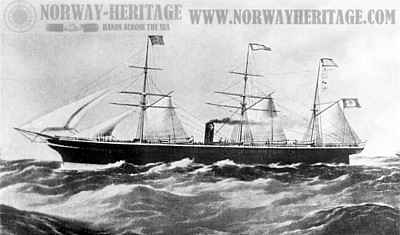
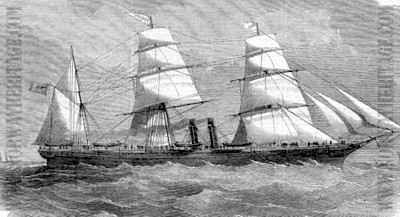
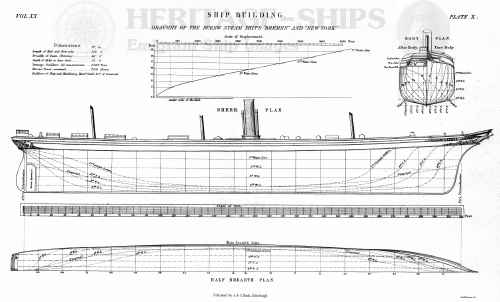
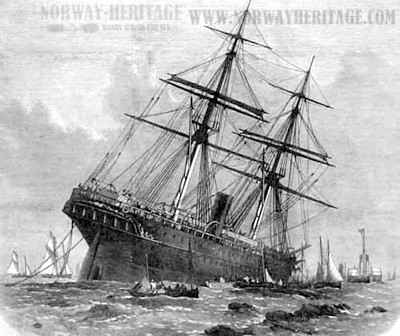
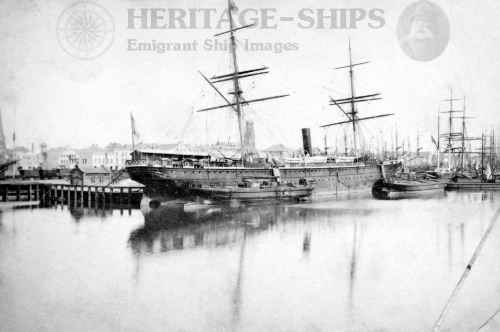
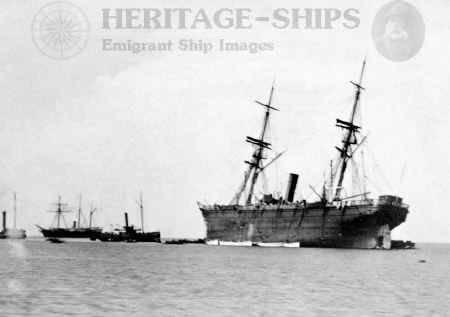
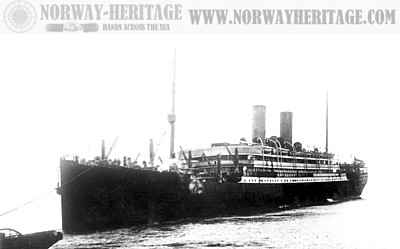
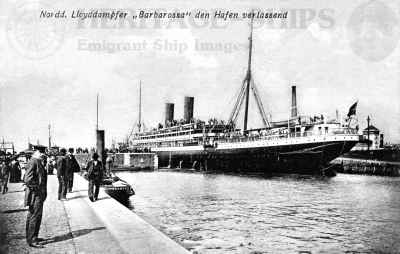
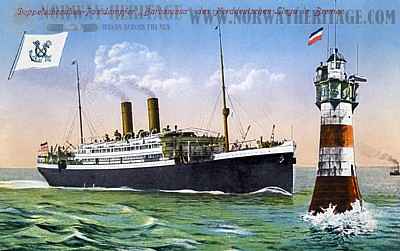
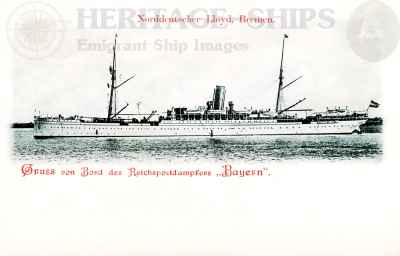
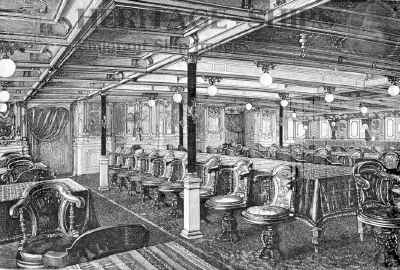
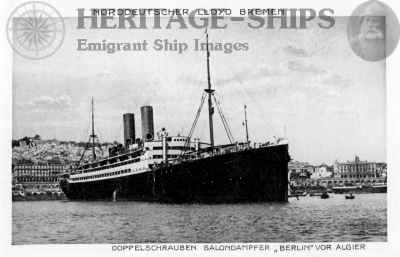
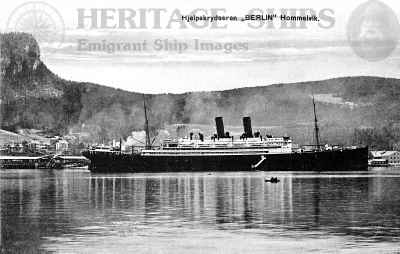
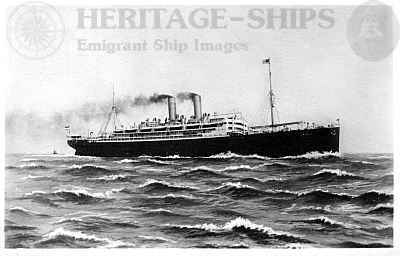
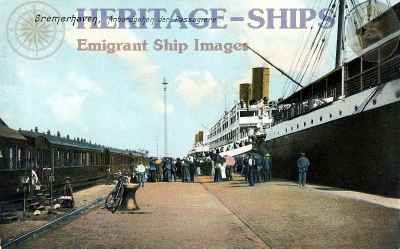
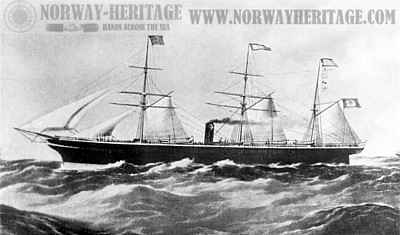
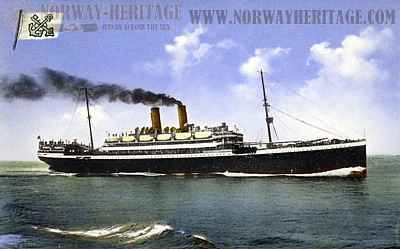
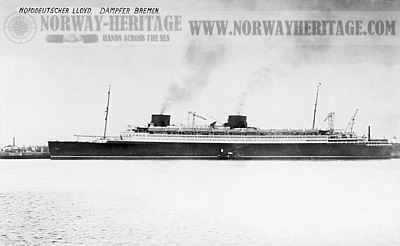
Norddeutscher Lloyd was founded in Bremen in 1857 and began its transatlantic service the following year. The company's first Atlantic steamer, the Bremen, left Bremerhaven for New York on June 19, 1858, carrying 100 tons of cargo, one cabin passenger and 93 steerage passengers. She arrived at New York on July 4. The Bremen could accommodate 60 first-class, 110 second-class and 401 steerage passengers, illustrating the importance of the emigrant trade from the beginning of the company's Atlantic service.
Three more transatlantic steamers, the Hudson, Weser and New York, entered service during the same year. An important improvement came in 1859 with the completion of the railway between Bremen and Bremerhaven. Passengers arriving in Bremen could now continue by train almost directly to the waiting ocean steamers at Bremerhaven. With four steamships in service, Norddeutscher Lloyd established a regular fortnightly service to New York.
The importance of the emigrant trade was already reflected in the arrangement of these early steamships. The Bremen could accommodate 60 first-class passengers, 110 in second class and as many as 401 in steerage. Three additional transatlantic steamships, , entered service during the same year.
Traffic increased rapidly after the American Civil War. A weekly Bremen–New York service was introduced in 1867, and the following year Norddeutscher Lloyd opened a regular service to Baltimore. The Baltimore route was developed in cooperation with the Baltimore & Ohio Railroad, providing an important connection between the Atlantic steamships and the expanding American railroad network.
North German Lloyd in Norway
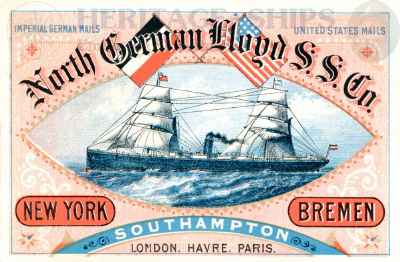
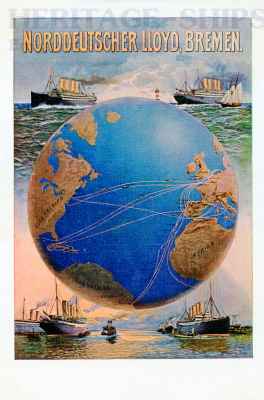
Advertising card for Norddeutscher Lloyd. “New York – Bremen via Southampton. — Buy a copy
Norddeutscher Lloyd entered the Norwegian emigrant market in 1879 and established a network of agents and representatives throughout the country. O. Svenson in Christiania (Oslo) served as the company's first general agent for Norway.
From the beginning, the service offered to Norwegian emigrants was organized as a complete journey rather than simply a ticket for the Atlantic crossing. An advertisement published in July 1879 offered two principal routes to New York. Passengers could travel from Norway by steamship to Frederikshavn in Denmark and from there by train to Bremen, or by steamship across the North Sea to Hull and from there by train to Southampton. The fare was advertised as being the same as on the competing British lines and included meals which, according to the advertisement, were prepared in accordance with Scandinavian customs.
The route could also vary according to the American port of destination. Passengers traveling by the Baltimore service could travel from Christiania by steamship to Hamburg and continue via Hamburg and Bremen. The schedules were carefully coordinated with the transatlantic departures. Emigrants taking the Bremen route to New York, for example, were instructed to be in Christiania by Tuesday evening in order to make the necessary connections for that week's departure to America.
These arrangements illustrate how the emigrant journey was assembled from several connecting services. Steamship connections across the North Sea, railway transportation through Denmark, Germany or Britain, the Atlantic crossing, and onward transportation in America could all be sold as parts of a coordinated journey.
The company also adapted its services and advertising to the Scandinavian emigrant market. Food suited to Scandinavian customs was emphasized, and the company's Norwegian organization extended beyond Christiania through agents in coastal towns and inland districts.
Direct Sailings from Christiania
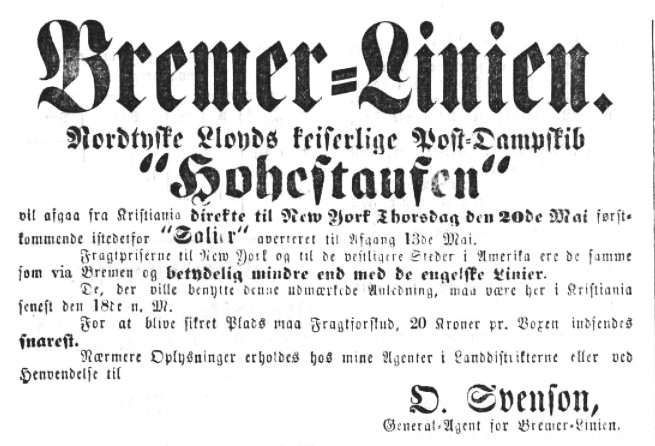
Announcemtn in the Norwegian newspaper Kongsberg Adresse, May 1st 1880
In the spring of 1880, Norddeutscher Lloyd briefly introduced direct transatlantic sailings from Christiania to New York, allowing Norwegian emigrants to avoid the usual transfers through Bremen or Britain.
The Hohenstaufen, commanded by Captain Heimbeck, sailed from Christiania on April 8 and arrived at New York on April 23. Her arrival in Christiania had been delayed by a snowstorm. A second direct sailing followed on May 20, when the Hohenstaufen, arriving from Bremen, called at Christiania before proceeding directly to New York. She arrived there on June 4.
The May sailing had originally been advertised for the Salier on May 13, but the schedule was changed and the Hohenstaufen substituted for departure one week later. Passengers were instructed to be in Christiania by May 18, and a deposit of 20 kroner per adult was required to secure a berth. Fares to New York and destinations farther west in America were advertised as being the same as those offered via Bremen and, according to the company's advertising, considerably lower than those charged by the British lines.
The direct sailings did not develop into a permanent service. Instead, Norddeutscher Lloyd continued to develop its network of connecting services between Norway and its transatlantic departures from Bremen.
By 1882, advertisements offered departures from Christiania via Frederikshavn and Bremen every Thursday and via Hamburg and Bremen every Saturday. The schedules were coordinated with the Atlantic steamships. Passengers leaving Christiania on Thursday could depart from Bremen for America the following Sunday, while those leaving Christiania on Saturday could connect with sailings from Bremen on the following Wednesday or Friday.
Norddeutscher Lloyd described these arrangements as “direct connections” from Christiania, even though the journey could involve connecting steamships and railway transportation. This distinction is important when interpreting contemporary emigrant advertisements: a “direct connection” did not necessarily mean that the same ship carried the passenger from Norway across the Atlantic. In 1882, the company advertised four departures each week from Bremen to North America, three to New York and one to Baltimore.
The Atlantic Crossing
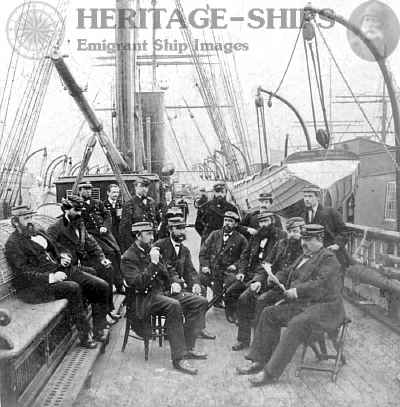
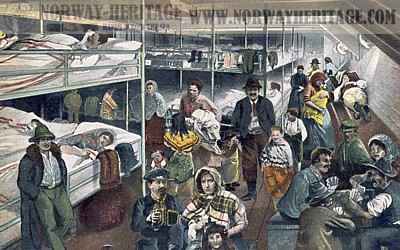
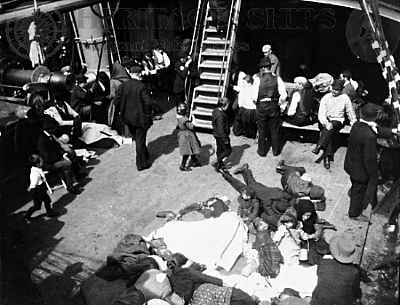
The image is from an old stereoview and shows a scene on board the S.S. Mosel, with officers and members of the crew gathered on the afterdeck. — Buy a copyThe steerage on a North German Lloyd steamship - Im Zwischendeck — Buy a copyCredit: Photographie und verlag von W. Sander & Sohn, Geestemünde
For most Norwegian emigrants traveling with the Norddeutscher Lloyd, reaching the transatlantic steamship involved several stages depending on the route. The connecting schedules were arranged around the departures of the ocean steamships, making the different stages part of a coordinated journey.
Passengers traveling through Bremen continued by rail to Bremerhaven, where they boarded the ocean steamer. The completion of the railway between Bremen and Bremerhaven in 1859 had greatly simplified this part of the journey, allowing passengers to be brought by train from Bremen almost directly to the waiting steamships. Other passengers could join the same transatlantic service at Southampton.
After arrival in America, the journey often continued far beyond the port of arrival. Through tickets could include railroad transportation to destinations in the American interior. Baltimore was particularly well connected with the developing railroad network, and Norddeutscher Lloyd's service there had been established in cooperation with the Baltimore & Ohio Railroad. For an emigrant traveling to the Midwest or farther west, the Atlantic crossing was therefore only one stage of a journey combining steamships and railroads from Norway to the final destination in America.
Norddeutscher Lloyd maintained frequent services across the Atlantic. By 1882 the company advertised three weekly departures from Bremen to New York and one to Baltimore, giving emigrants several opportunities each week to connect with an Atlantic sailing.
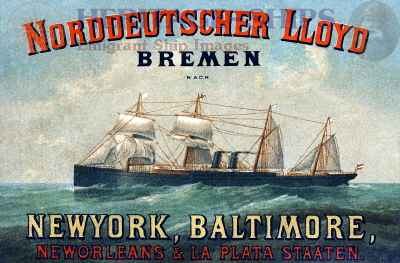
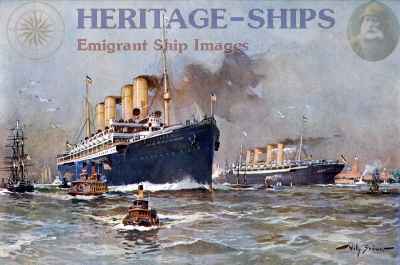
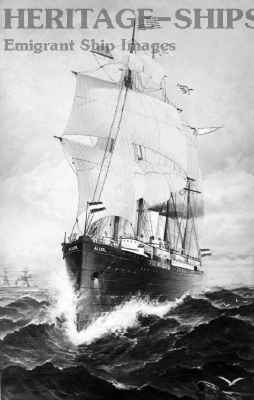
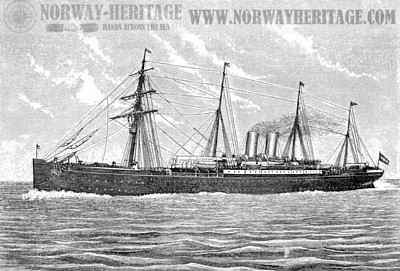
Norddeutscher Lloyd advertising card. “Norddeutscher Lloyd – Bremen nach New York, Baltimore, New Orleans & La Plata Staaten.” The ship depicted in the advertisement appears to be a Werra-class steamer, a class of ships introduced in the early 1880s. — Buy a copyWerra class steamer — Buy a copy
Competition for speed became increasingly important on the North Atlantic during the late nineteenth century. After the Arizona of the Guion Line demonstrated the possibilities of faster Atlantic steamships in 1879, Norddeutscher Lloyd began developing its own express service.
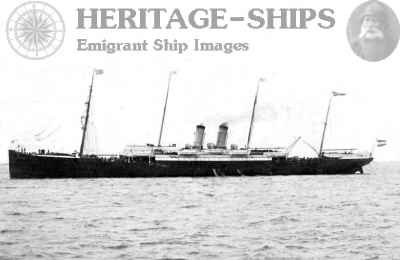
The first of the company's new express steamers was the Elbe, which entered service in 1881. She was followed by the Werra and Fulda, and by 1883 the company was able to maintain a regular weekly express service between Bremerhaven and New York. The Atlantic passage was reduced to approximately eight or nine days.
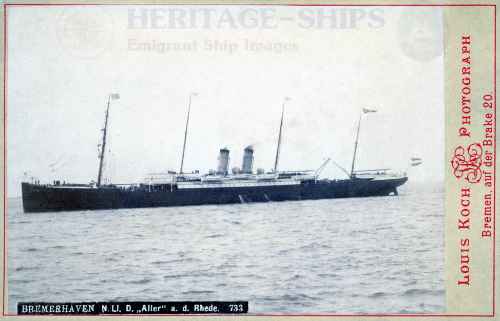
Further express steamers followed, including the Eider, Ems, Aller, Trave, Saale, Lahn, Kaiser Wilhelm II, Spree and Havel.
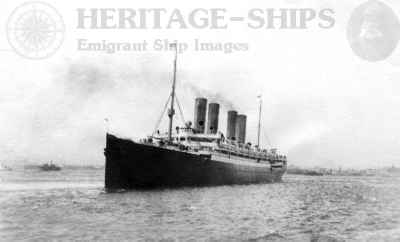
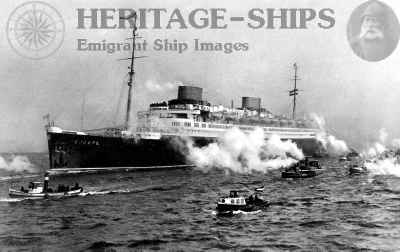
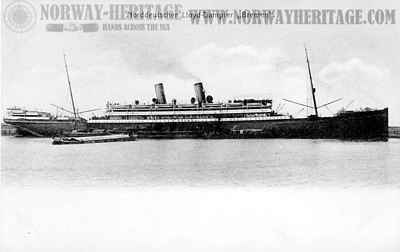
In 1897 the company introduced the four-funnelled Kaiser Wilhelm der Grosse. She represented a new generation of German express liners and was followed by other large and fast ships, including the Kronprinz Wilhelm and Kaiser Wilhelm II (2). By the beginning of the twentieth century, Norddeutscher Lloyd was competing at the highest level of the North Atlantic express passenger trade.
Emigrant Ships and Steerage Traffic
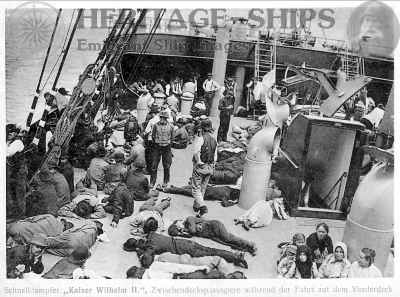
Steerage passengers on the S.S. Kaiser Wilhelm der Grosse — Buy a copySteerage passengers on the Kaiser Wilhelm II (2) — Buy a copy
Alongside its express steamers, Norddeutscher Lloyd developed ships specifically for the growing combination of freight and passenger traffic. The Dresden and Gera classes represented a new type of combined cargo and passenger steamer, capable of carrying substantial quantities of freight together with large numbers of cabin and steerage passengers.
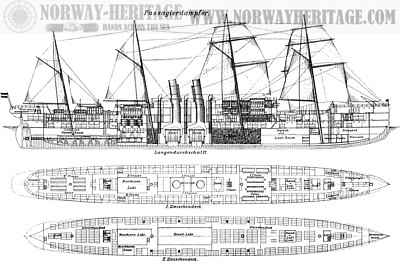
Around the turn of the century, further classes were developed to meet the requirements of freight and mass passenger traffic. The Rhine class included the Neckar,Rhein and Main, while the General class included the Zieten, Seydlitz, Gneisenau, Roon and Scharnhorst. These ships were designed particularly with the requirements of freight and steerage traffic on the New York routes in mind. On the Rhine-class ships, steerage passengers were accommodated in the two between-deck spaces beneath the upper deck in the after part of the ship.
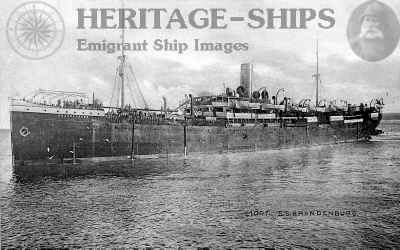
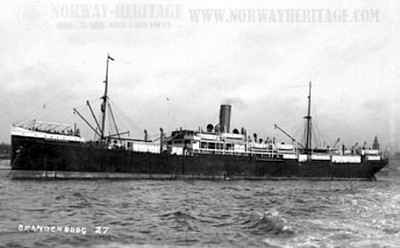
The Köln class, built primarily for the Baltimore and Galveston routes, had only limited cabin accommodation but considerable capacity for steerage passengers as well as large quantities of grain and cotton. The class included the Köln, Frankfurt, Hannover, Cassel, Breslau, Chemnitz and Brandenburg.
These vessels illustrate how important emigrant transportation remained even as Norddeutscher Lloyd became famous for its large express liners. The North Atlantic passenger business ranged from wealthy travelers aboard the fastest steamships to hundreds of thousands of European emigrants traveling in steerage. The scale of this traffic became particularly apparent in 1908, when a sharp decline in emigration to the United States resulted in Norddeutscher Lloyd carrying about 185,000 fewer steerage passengers, a reduction large enough to have a major effect on the company's financial results.
Norddeutscher Lloyd's activities extended far beyond the North Atlantic. A South American service was established in 1875 and was subsequently divided into separate services to Brazil and the River Plate.
In 1885 the company concluded an agreement with the German government to establish imperial mail services to East Asia and Australia. The East Asian service opened in 1886 with the Oder, followed shortly afterwards by the Australian service with the Salier.
Mediterranean services were also developed, and in 1891 the company established a Genoa–Gibraltar–New York route using the Werra and Fulda. By this period Norddeutscher Lloyd had developed from a Bremen–New York steamship company into a worldwide shipping organization.
The company also cooperated with competitors when commercial interests made this advantageous. In 1909 it participated in a joint summer service to Quebec and Montreal with the Hamburg America Line, Red Star Line and Holland America Line.
War, Reconstruction and Merger
The First World War brought the company's expansion to an abrupt end. Many Norddeutscher Lloyd ships sought refuge in American ports and were seized by the United States after its entry into the war in 1917. Following the Armistice, the company lost virtually all of its major ocean-going steamships as war reparations.
Services were gradually rebuilt during the 1920s, initially with chartered ships. The company again suffered devastating losses during the Second World War and once more had to rebuild its fleet after the conflict.
In 1970 Norddeutscher Lloyd merged with the Hamburg America Line to form Hapag-Lloyd, bringing more than a century of operation under the Norddeutscher Lloyd name to an end.
Sources:
[Norddeutscher Lloyd Bremen, English Edition, ca. 1907] [North Atlantic Seaway by N.R.P. Bonsor, 1960] [Verdens Gang 1880-03-11Contemporary newspaper accounts, advertisements and other advertising material.] [Die Entwickelung des Norddeutschen Lloyd, Bremen, 1907]