
Ship Data
| Type | Built | Burden | Dimensions | Line / Owner |
|---|---|---|---|---|
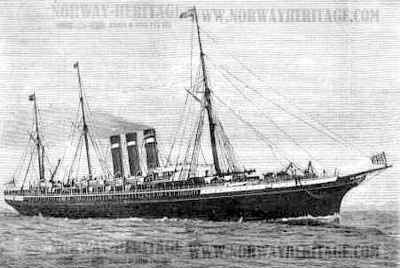
| S.S. | 1888 at Glasgow by J. & G. Thomson & Co. | 10,499 gross | 527.6ft x 63.2ft | Inman Line |
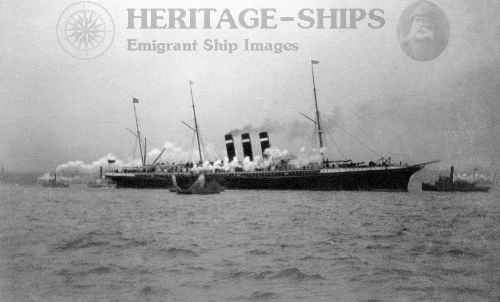
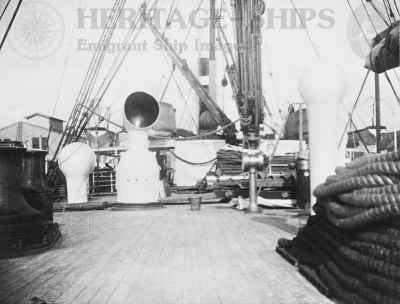
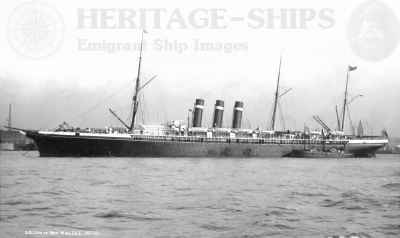
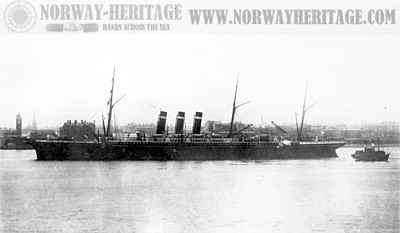
Chronological History
| Year | Event |
|---|---|
| 1888 | March 15, launched |
| 1888 | Aug. 1, maiden voyage Liverpool - New York |
| 1888 | Liverpool → New York Aug. 9. Also reported arrive 1888-08-10. |
| 1888 | Liverpool → New York Aug. 9. Also reported arrive 1888-08-10. |
| 1888 | Liverpool → New York Sept. 14. Journey of 8 days from England. |
| 1888 | Liverpool → New York Oct. 17. 907 passengers. |
| 1888 | Liverpool → New York Oct. 17. 907 passengers. |
| 1888 | Liverpool → New York Nov. 14. Journey of 7 days from England. |
| 1888 | Liverpool → New York Nov. 14. Journey of 7 days from England. |
| 1889 | Liverpool → New York Mar. 12. Queenstown 1889-03-07, a journey of 6 days from England<BR>Also reported arrive New York 1889-03-13. |
| 1889 | Liverpool → New York Mar. 12. Queenstown 1889-03-07, a journey of 6 days from England<BR>Also reported arrive New York 1889-03-13. |
| 1889 | Liverpool → New York Apr. 24. Arrived in the morning<BR>Also reported arrive 1889-04-25. |
| 1889 | Liverpool → New York May 22. Also reported arrive 1889-05-23. |
| 1889 | Liverpool → New York May 22. Also reported arrive 1889-05-23. |
| 1889 | Liverpool → New York June 21. Queenstown 1889-06-14, arrived New York at 01:30 morning. |
| 1889 | Liverpool → New York Aug. 14. Queenstown 1889-08-08, a journey of 6 days from England. |
| 1889 | Liverpool → New York Aug. 14. Queenstown 1889-08-08, a journey of 6 days from England. |
| 1889 | Liverpool → New York Sept. 11. Queenstown 1889-09-05, 1200 passengers arrived New York at 17:00 afternoon. |
| 1889 | Liverpool → New York Sept. 11. Queenstown 1889-09-05, 1200 passengers arrived New York at 17:00 afternoon. |
| 1889 | Liverpool → New York Oct. 9. Arrived in New York at 18:00 evening after crossing the Ocean in 6 days from England. |
| 1889 | Ran aground and fastened on a sandbar off Sandy Hook |
| 1889 | Liverpool → New York Oct. 17 |
| 1889 | Liverpool → New York Nov. 6. Queenstown 1889-10-31, arrived New York on a Wednesday at noon. |
| 1889 | Liverpool → New York Nov. 6. Queenstown 1889-10-31, arrived New York on a Wednesday at noon. |
| 1889 | Arrived at Queenstown with her machinery partially disabled |
| 1890 | Liverpool → New York May 14. Queenstown 1890-05-08. Arrived in New York at 03:00 morning after 6 days journey from England. |
| 1890 | Liverpool → New York May 14. Queenstown 1890-05-08. Arrived in New York at 03:00 morning after 6 days journey from England. |
| 1890 | Liverpool → New York June 11. Queenstown 1890-06-05, journey of 5 days from England. |
| 1890 | Liverpool → New York June 11. Queenstown 1890-06-05, journey of 5 days from England. |
| 1890 | Liverpool → New York July 8. Also reported arrive 1890-07-09. |
| 1890 | Liverpool → New York July 8. Also reported arrive 1890-07-09. |
| 1890 | Liverpool → New York Aug. 13. Queenstown 1890-08-07, arrived New York at 07:00 morning crossing the Atlantic Ocean in 5 days and 18 hours. |
| 1890 | Liverpool → New York Sept. 10. Queenstown 1890-09-04, arrived in New York at 10:00 morning. |
| 1890 | Liverpool → New York Sept. 10. Queenstown 1890-09-04, arrived in New York at 10:00 morning. |
| 1890 | Liverpool → New York Oct. 8. Queenstown 1890-10-02, arrived New York at 06:00 morning after crossing the Atlantic Ocean in only 5 days and 16 hours. |
| 1890 | Liverpool → New York Oct. 8. Queenstown 1890-10-02, arrived New York at 06:00 morning after crossing the Atlantic Ocean in only 5 days and 16 hours. |
| 1890 | Liverpool → New York Nov. 5. Queenstown 1890-10-30. |
| 1890 | Liverpool → New York Nov. 5. Queenstown 1890-10-30. |
| 1890 | Liverpool → New York Dec. 3. Also reported arrive 1890-12-04<BR>Arrived at 07:00 morning. |
| 1891 | Liverpool → New York Feb. 11. Queenstown 1891-02-05. |
| 1891 | Liverpool → New York Mar. 14. Also reported arrival 1891-03-13. |
| 1891 | Liverpool → New York Apr. 8. Queenstown 1891-04-02. |
| 1891 | Liverpool → New York May 7. Also reported arrive 1891-05-06. |
| 1891 | Liverpool → New York May 7. Also reported arrive 1891-05-06. |
| 1891 | Liverpool → New York June 3 |
| 1891 | Liverpool → New York July 1. Queenstown 1891-06-25. |
| 1891 | Liverpool → New York July 1. Queenstown 1891-06-25. |
| 1891 | Liverpool → New York July 29. Queenstown 1891-07-23<BR>Pass. from Trondheim left 1891-07-16). |
| 1891 | Liverpool → New York Aug. 26. Queenstown 1891-08-20, a journey of 6 days from England. |
| 1891 | Liverpool → New York Aug. 26. Queenstown 1891-08-20, a journey of 6 days from England. |
| 1891 | Liverpool → New York Sept. 23. Queenstown 1891-09-19. |
| 1891 | Liverpool → New York Sept. 23. Queenstown 1891-09-19. |
| 1891 | Liverpool → New York Oct. 21. Queenstown 1891-10-15. |
| 1891 | Liverpool → New York Oct. 21. Queenstown 1891-10-15. |
| 1891 | Liverpool → New York Nov. 18. Queenstown 1891-11-12. |
| 1891 | Liverpool → New York Nov. 18. Queenstown 1891-11-12. |
| 1892 | Liverpool → New York Mar. 16. Queenstown 1892-03-10<BR>Also reported arrive 1892-03-17. |
| 1892 | Liverpool → New York Apr. 13 |
| 1892 | Liverpool → New York May 10 |
| 1892 | Liverpool → New York June 7. Also reported arrive 1892-06-09. |
| 1892 | Liverpool → New York June 7. Also reported arrive 1892-06-09. |
| 1892 | Liverpool → New York June 7. Also reported arrive 1892-06-09. |
| 1892 | Liverpool → New York July 5. Also reported arrive July 6 and 7. |
| 1892 | Liverpool → New York Aug. 13 |
| 1892 | Liverpool → New York Sept. 6. Also reported arrive 1892-09-07. |
| 1892 | Liverpool → New York Sept. 6. Also reported arrive 1892-09-07. |
| 1892 | Liverpool → New York Oct. 4 |
| 1892 | Liverpool → New York Nov. 2 |
| 1892 | Liverpool → New York Nov. 30. Queenstown 1892-11-24. Crossing the Ocean in 6 days from England. |
| 1892 | Liverpool → New York Nov. 30. Queenstown 1892-11-24. Crossing the Ocean in 6 days from England. |
| 1893 | Liverpool → New York Feb. 11 |
| 1893 | Transferred to American Line, renamed New York, came under US flag |
| 1893 | Accommodation altered to carry 290-1st, 250-2nd and 725-3rd class passengers |
| 1893 | Feb. 25, sailed from New York on her first voyage to Southampton |
| 1898 | April, became US Armed Cruiser Harvard |
| 1898 | July, rescued survivors of destroyed Spanish fleet near Santiago |
| 1899 | January, returned to American Line, resumed New York - Southampton service |
| 1899 | Jan 14, starboard engine broke down, repaired at Southampton |
| 1901 | Rebuilt: fitted with new triple expansion engines, number of funnels reduced to two, size increased to 10,798 tons gross |
| 1903 | April 15, resumed New York - Cherbourg - Southampton service |
| 1913 | The first class passenger accommodation was downgraded to second class |
| 1918 | May, became the US Transport Plattsburg |
| 1920 | February, returned to American Line, resumed the New York - Plymouth - Southampton service as the New York, masts were reduced to two. |
| 1921 | Sold to the Polish Navigation Co., name retained - used her for one round voyage New York - Antwerp - Danzig - Southampton - Cherbourg - Brest - New York |
| 1922 | Went to the Irish American Line |
| 1922 | Went to the United Transatlantic Line |
| 1922 | June 10, left New York for the last time for the American Black Sea Line on a voyage to Naples and Constantinople where she was sold at auction by order of the US government |
| 1923 | Scrapped at Genoa |
Pictures
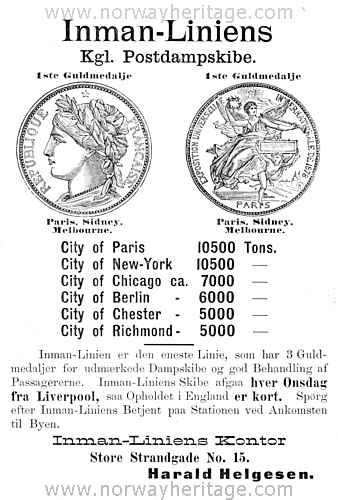
Advert by agent Helgesen
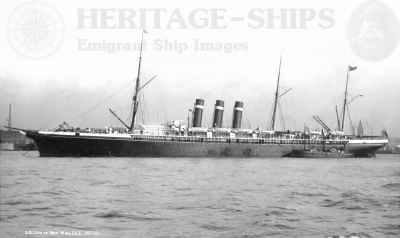
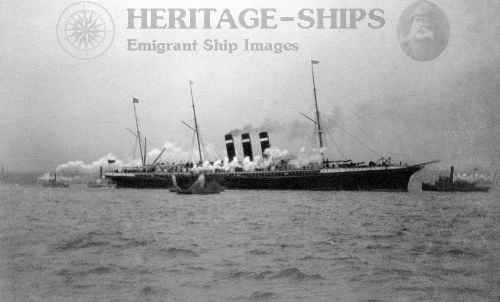
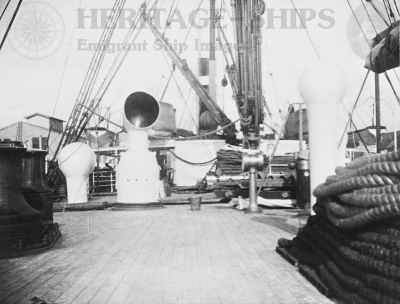
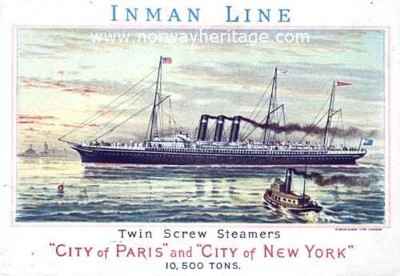
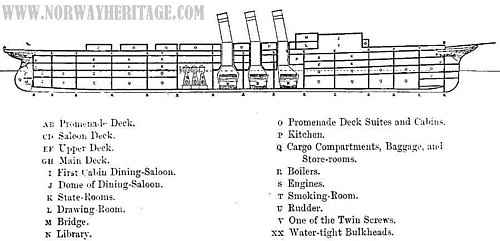
City of New York and City of Paris
Leave a Comment
Comments are reviewed before they appear publicly. Fields marked with * are required.